Samyang Bio Today

Samyang Hot Chicken Flavor Ramen (Buldak) Brand Profile | Project Ramen

Project Ramen · Brand Profile

Samyang Hot Chicken Flavor Ramen (Buldak)

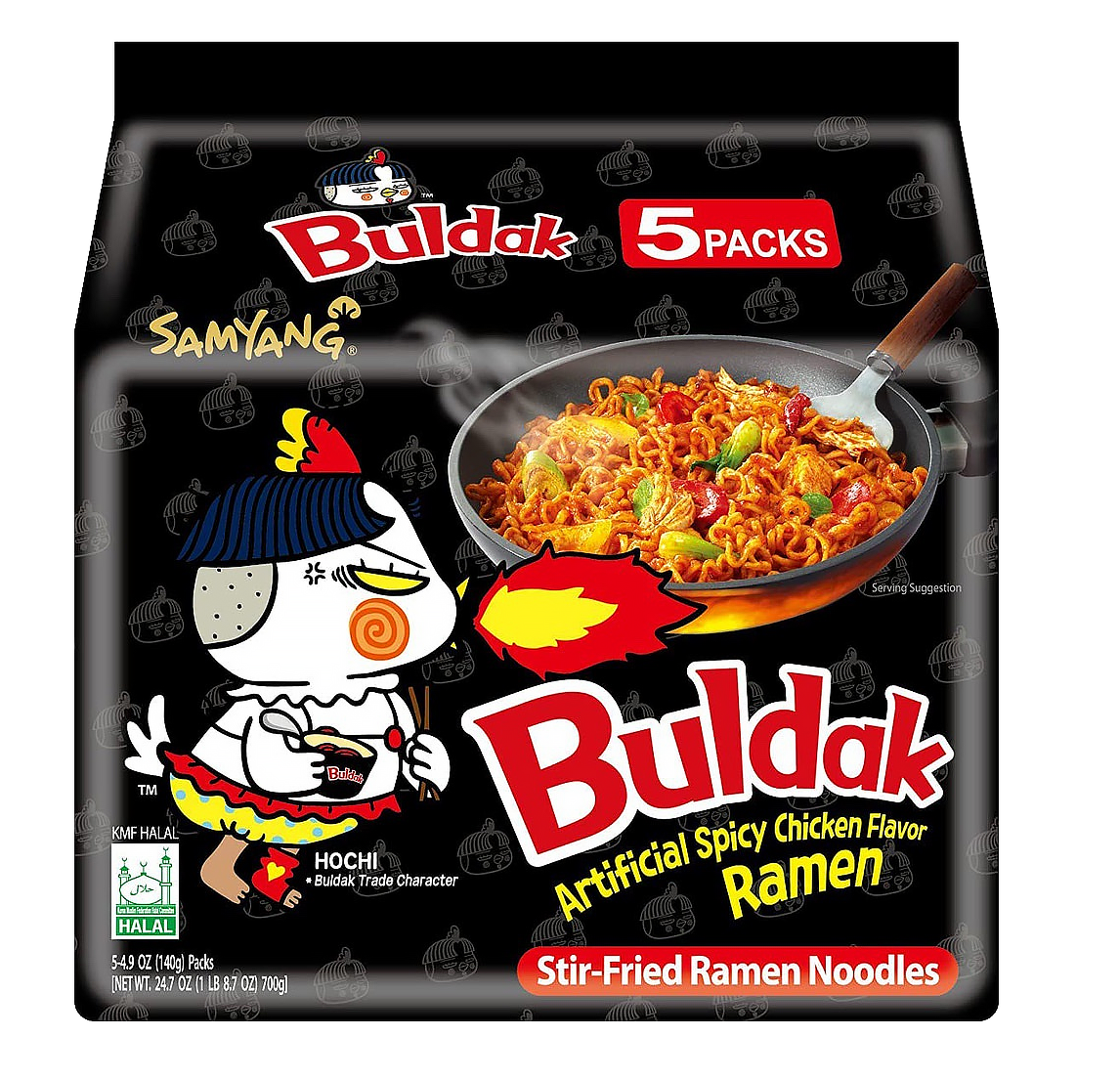
Samyang’s Buldak Hot Chicken Flavor Ramen line is one of the defining products of the global “spicy noodle challenge” era. This page profiles Samyang Foods as a manufacturer, breaks down the Buldak flavor family, and gives practical, test-kitchen notes on heat, texture, and how to cook it well.

Last updated: · Brand data compiled from Samyang Foods corporate sources, product packaging, and independent reviews.

Country: South Korea · Global export Style: Stir-fry ramyeon (brothless) Signature: “Fire noodle” extreme spice Manufacturer: Samyang Foods Co., Ltd.

Brand overview & history

Samyang Foods Co., Ltd. is one of the original Korean ramyeon manufacturers, with roots back to the 1960s. For decades the “Samyang Ramen” line defined everyday Korean instant noodles. In the 2010s, the company reinvented its global presence with Buldak Bokkeum Myun – Hot Chicken Flavor Ramen – a stir-fry style noodle drenched in a thick, intensely spicy sauce.

The original red-pack Buldak quickly found an audience among spice lovers in Korea, but it was the rise of YouTube & social media “fire noodle challenges” that pushed the brand into cult status worldwide. Videos of people attempting to finish a bowl on camera turned Buldak into a recognizable icon well beyond the usual Asian grocery crowd.

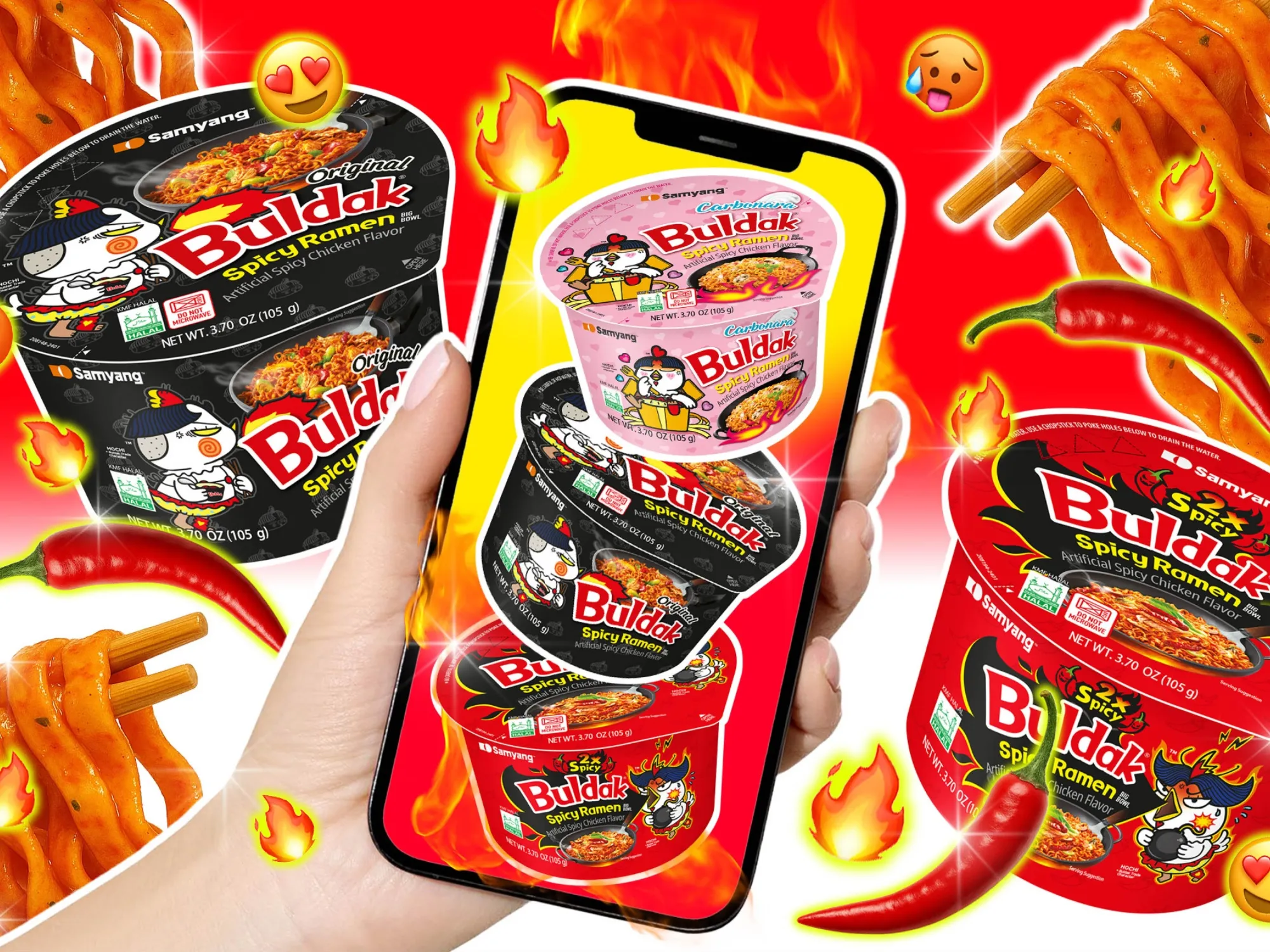
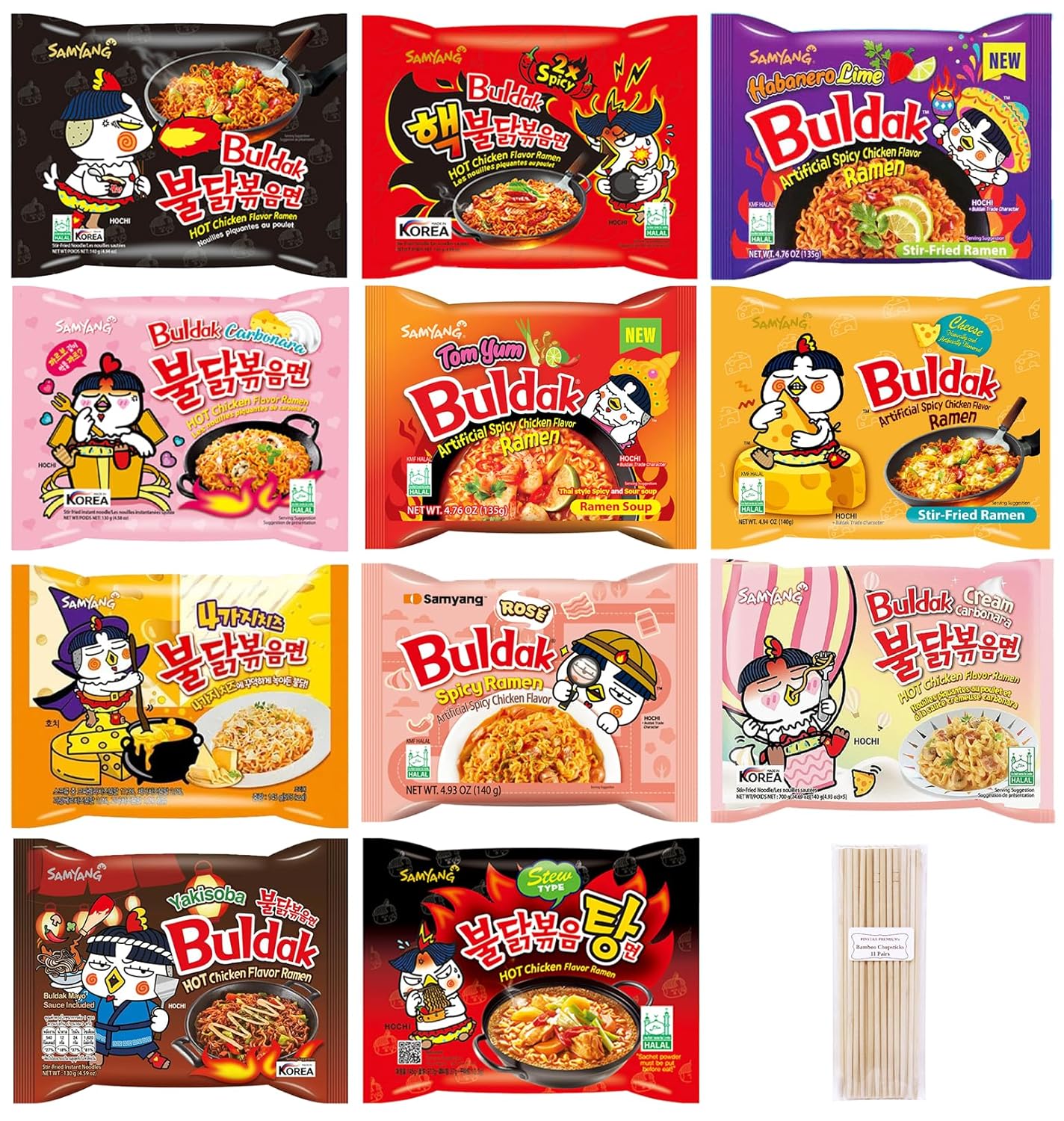
Today, the Buldak family includes multiple heat levels and flavor spins – from Cream Carbonara and Cheese to Curry and Jjajang – plus cups, jumbo “party” packs, and limited collaborations. Many of these are now standard items in Asian supermarkets, online marketplaces, and mainstream retailers.

Core Buldak flavor lineup

The exact assortment varies by country and year, but most markets will see some combination of the following core SKUs:

Flavor Style Relative heat Flavor notes Common formats
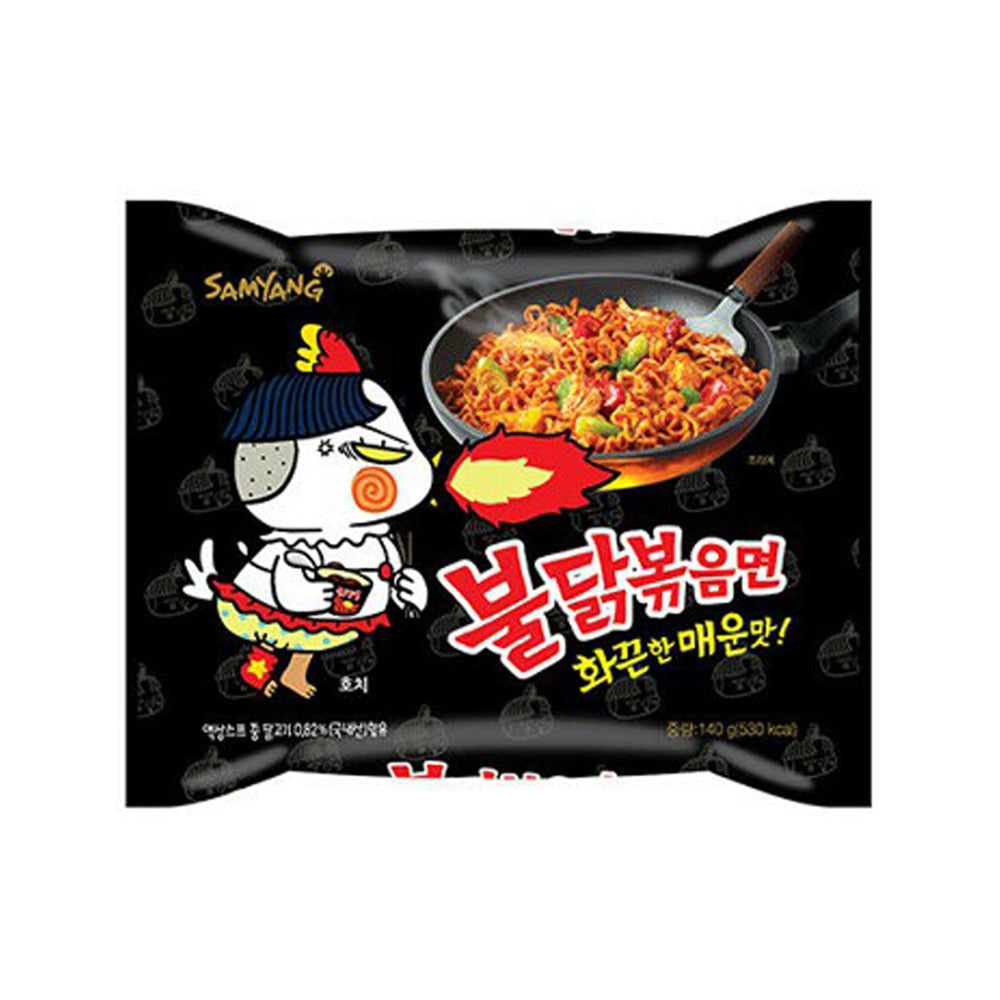
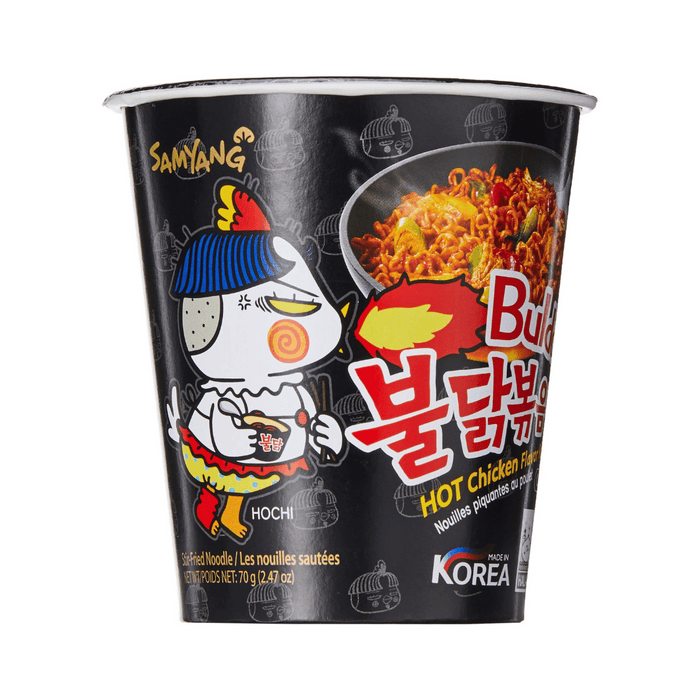
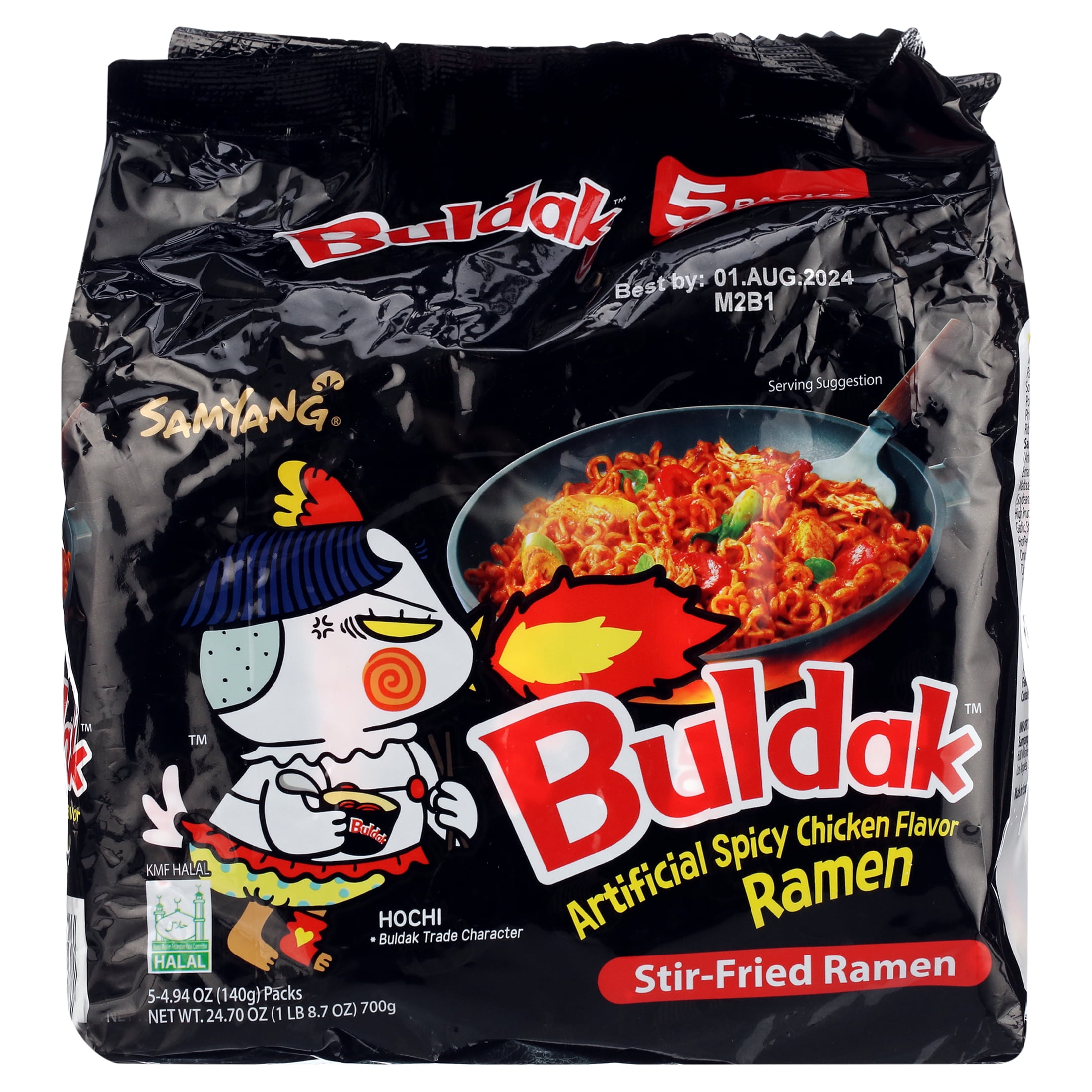
Original Buldak Hot Chicken Stir-fry ramyeon Very hot Dense chili heat, chicken stock base, light sweetness, roasted chili aroma. Pack, cup, multi-pack
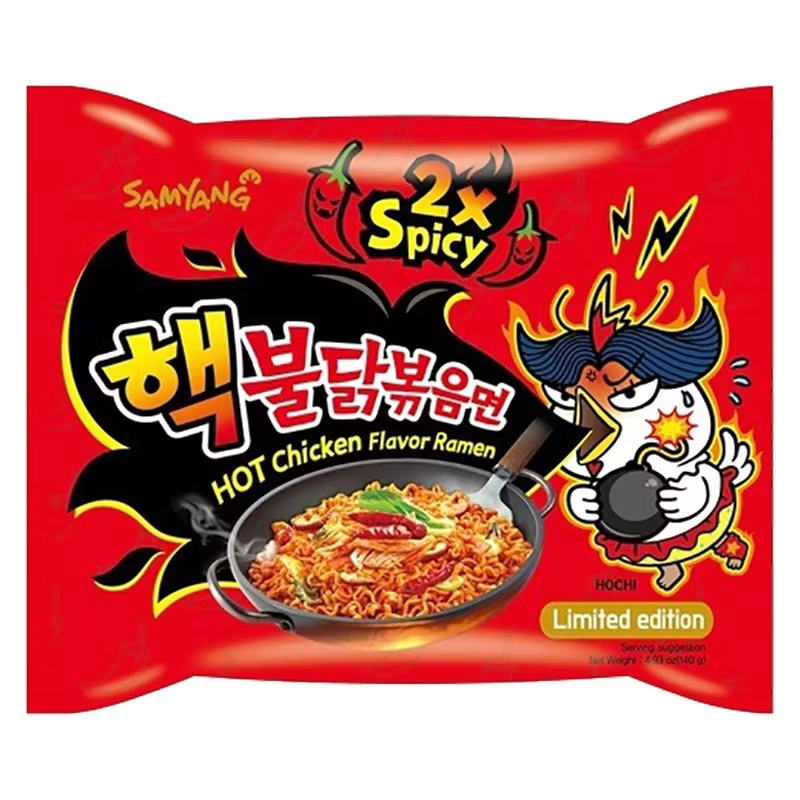
2x Spicy (Extreme) Stir-fry ramyeon Extremely hot Amplified chili extract, slightly deeper roast; more burn than flavor for many eaters. Pack, occasional limited cups
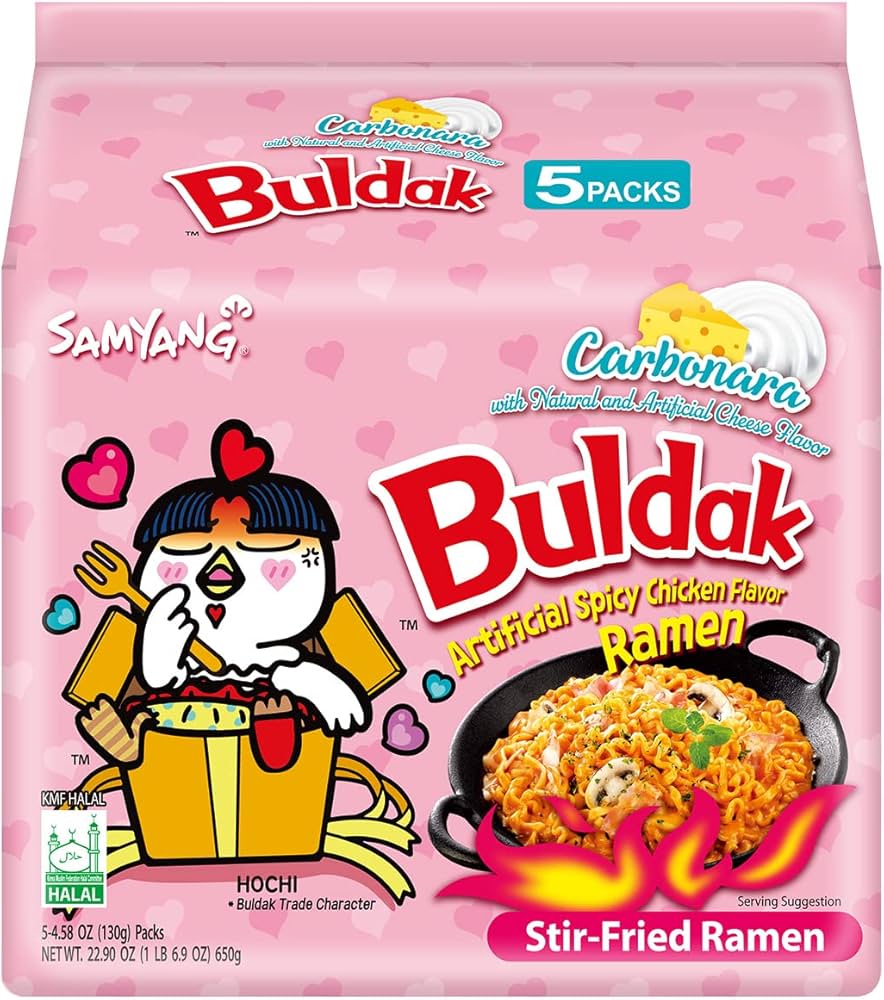
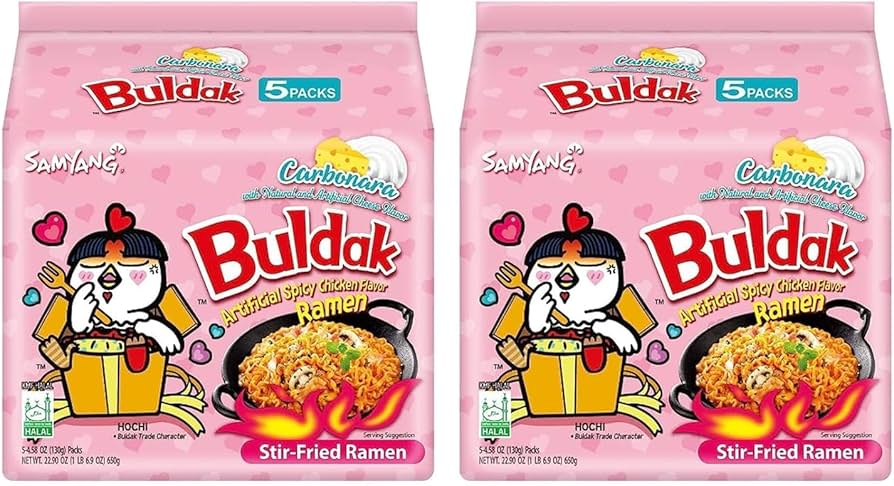
Carbonara / Cream Carbonara Stir-fry with creamy powder Medium–hot Creamy, cheesy, peppery; still quite spicy but softened by dairy-style powder. Pack, cup
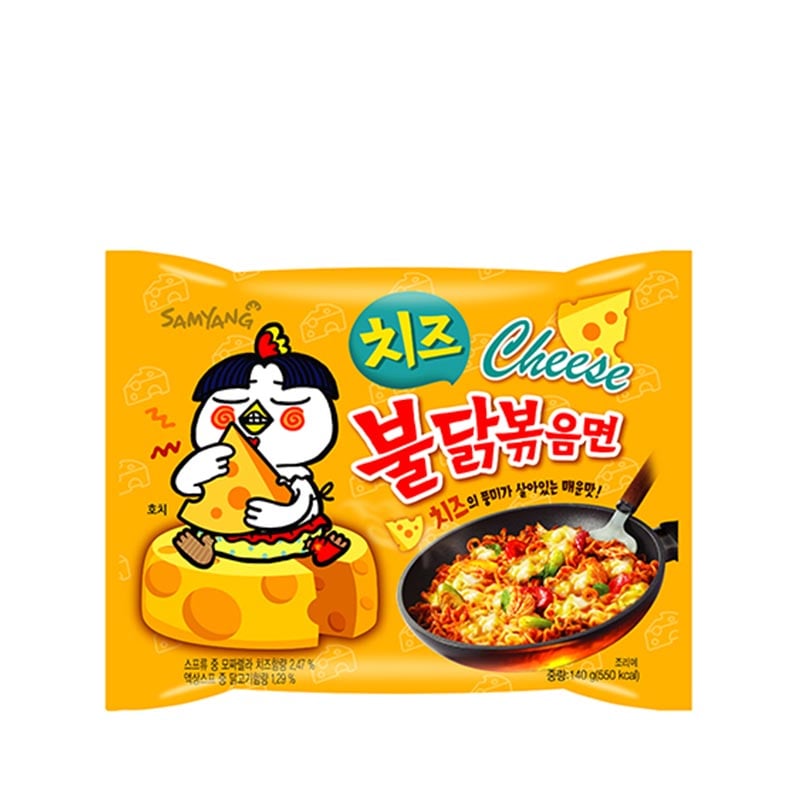
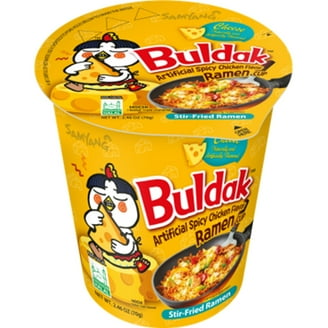
Cheese Stir-fry ramyeon Medium–hot Processed cheese, butter, chili; richer mouthfeel with noticeable saltiness. Pack, cup
Curry Stir-fry ramyeon Hot Japanese-style curry powder, onion, garlic, chili; more aromatic than the original. Pack
Jjajang (Black Bean) Stir-fry ramyeon Hot Chunjang-style black bean with chili and sweetness; heavier, almost saucy gravy. Pack

Heat levels are relative to other Korean ramyeon. If you’re used to milder Japanese or US grocery ramen, even the “medium” entries here may feel very spicy.

Cooking notes & “best practice” for Buldak

Baseline prep (pack version)

  • Boil noodles in plenty of water (400–500 ml) for ~4–5 minutes.
  • Drain most of the water, leaving a couple of spoonfuls (about 2–3 tbsp) in the pot.
  • Add liquid sauce sachet off the heat, then stir-fry on low heat 20–30 seconds until the sauce thickens and coats the noodles.
  • Turn off heat and add any flavor or garnish sachets (cheese powder, seaweed, sesame, etc.).

Leaving a little cooking water is crucial – it helps the sauce form a glossy, clingy coating instead of staying soupy or burning.

Managing the heat

  • Use half the liquid sauce for a still-spicy but more manageable bowl.
  • Add a splash of milk or cream while stir-frying to create your own “carbonara” effect.
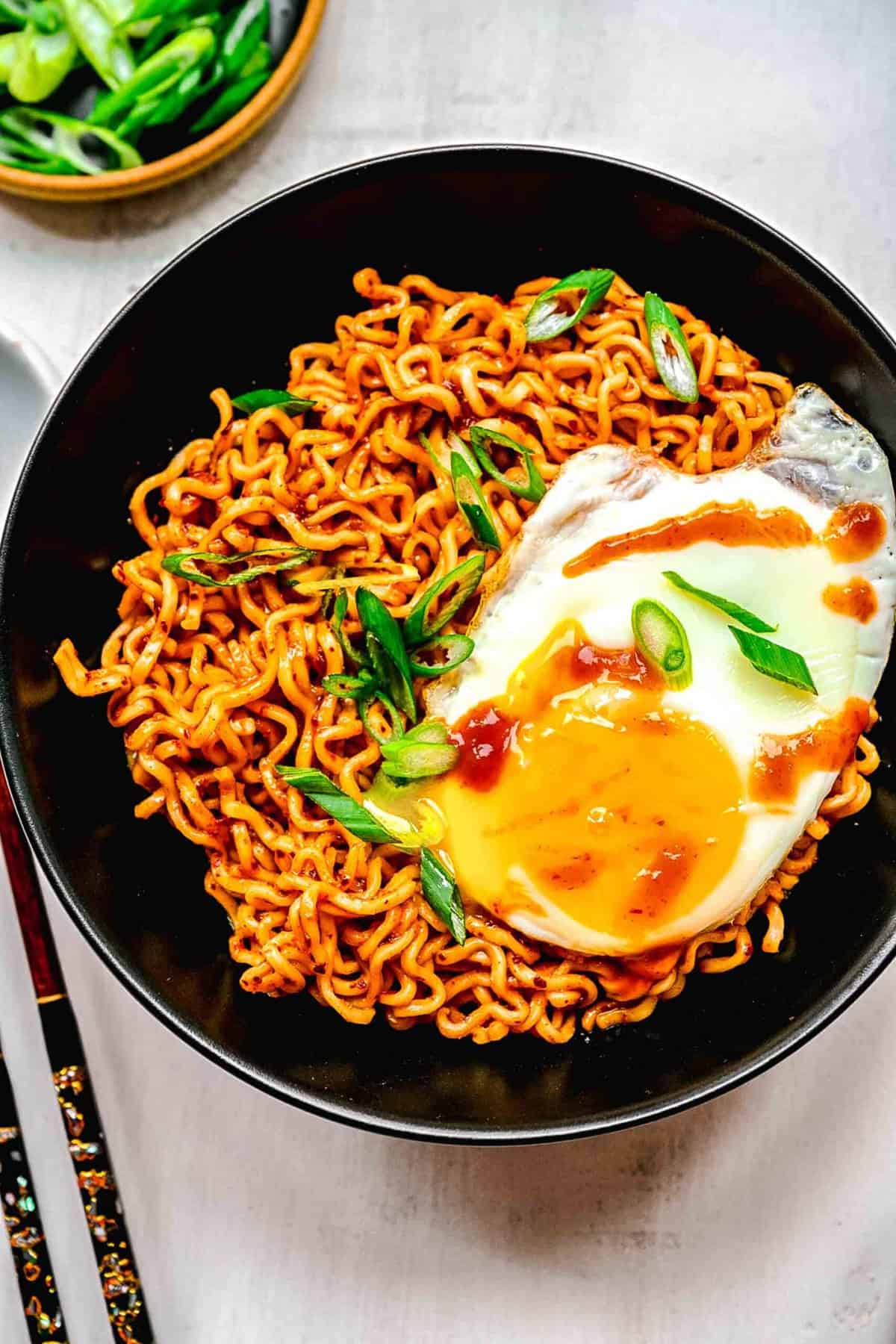
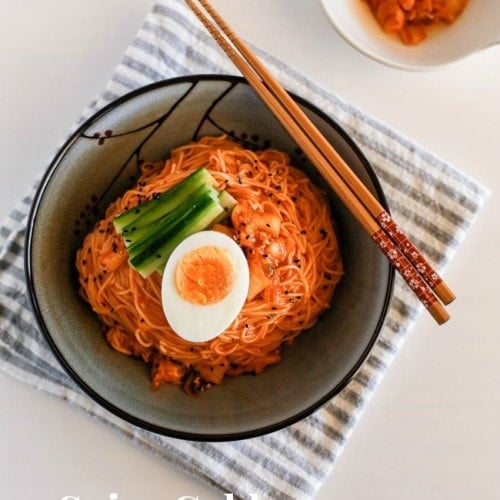
  • Top with a soft-boiled egg, shredded cheese, or mayo to blunt the initial burn.
  • Serve with plain rice or cucumber on the side so people can reset between bites.

Texture & noodle quality

Samyang’s Buldak noodles are relatively thick, chewy ramyeon designed to stand up to a sticky sauce and high heat. They sit somewhere between classic Korean soup noodles and thicker udon-style noodles.

  • Undercook by ~30 seconds for extra bite (“al dente” by Korean standards).
  • Overcooking makes the noodles softer and more forgiving to spice but less springy.

Project Ramen test-kitchen tips

  • Add stir-fried chicken, spam, or tofu for protein and to stretch one pack into a full meal.
  • Toss in sautéed onions, cabbage, or scallions during the final 30–60 seconds of cooking.
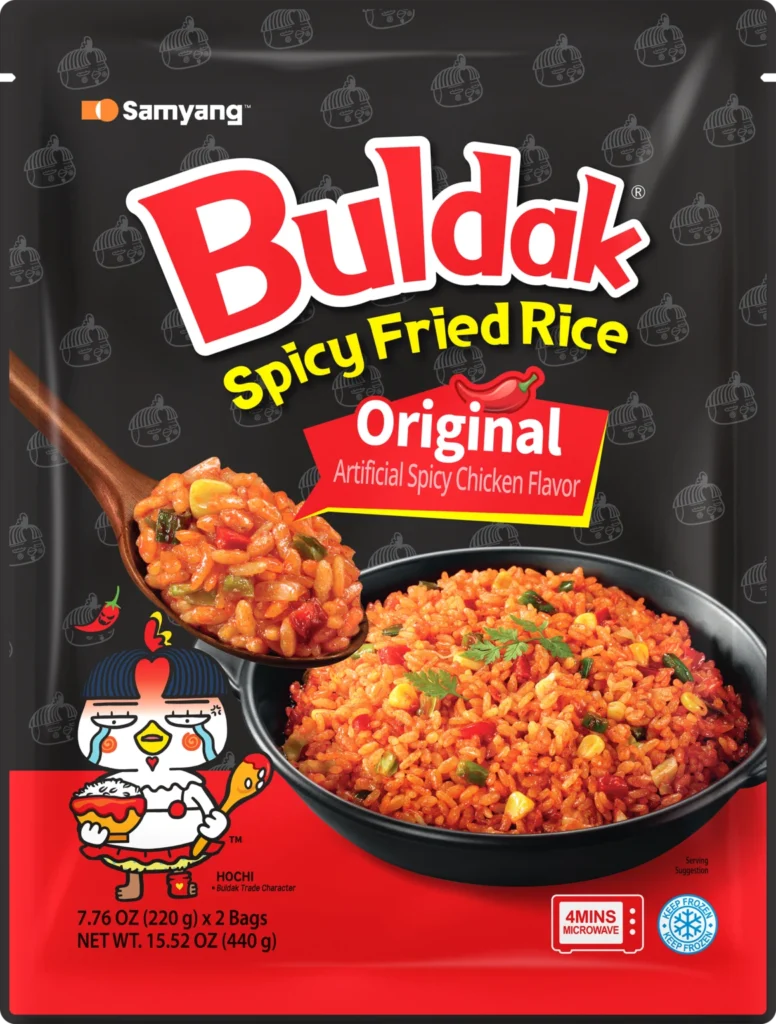
  • Use Buldak sauce as a base for fried rice – cook rice separately, then stir-fry with leftover sauce + a small splash of soy.

How Samyang & Buldak fit into the global ramyeon map

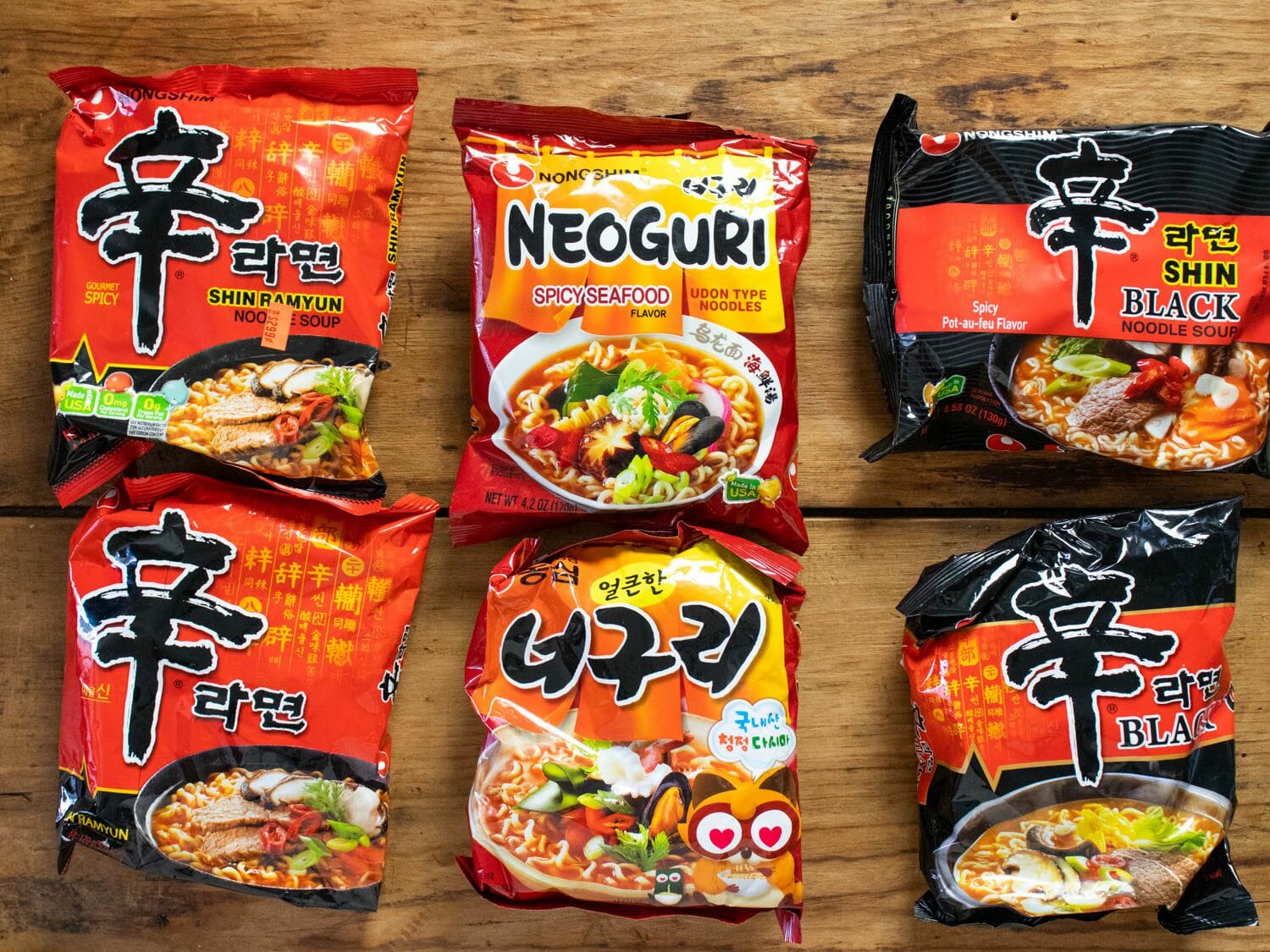
Within the Project Ramen Manufacturer Index, Samyang sits in the Korea region alongside Nongshim, Ottogi, and Paldo. While Samyang still produces classic soup-style ramyeon, the Buldak line is primarily responsible for its recent global recognition outside Korean communities.

  • Core role: Flagship for extremely spicy, sauce-based ramyeon.
  • Use case: Late-night snack, social challenge food, or indulgent comfort dish for spice fans.
  • Benchmark: Often used as a reference point when people describe other noodles as “fire,” “nuclear,” or “Buldak-level” spicy.

For customers exploring the Korean section of our catalog, Buldak functions as the high-heat anchor. We often recommend pairing it with a milder Nongshim or Ottogi soup ramyeon in the same cart so there’s something for everyone at the table.

Pairing ideas & ideal occasions

Great for

  • Spicy food parties or challenge nights.
  • Late-night snacks for people who already like gochujang-level spice.
  • Comfort food when you want a quick, rich, slightly sweet-spicy bowl.
  • Ramen recipe content – visually bold and recognizable on camera.

Pairs well with

  • Plain rice balls or onigiri to cool your palate.
  • Milk, yogurt drinks, or non-dairy milks instead of soda or beer if heat tolerance is lower.
  • Simple Korean banchan like kimchi, pickled radish, or seasoned cucumbers.

Who should (and shouldn’t) buy Buldak

  • Best fit: People who already enjoy spicy foods (Korean tteokbokki, Nashville hot chicken, very spicy salsas, etc.).
  • Not ideal for: Kids, spice-sensitive eaters, or anyone who prefers gentle Japanese-style shoyu/shio ramen.
  • Starter choice: If you’re curious but cautious, we usually suggest Carbonara or Cheese first, then step up to Original or 2x.

Project Ramen does not treat Buldak as a “novelty only” product. It’s absolutely a stunt noodle if you want it to be – but cooked thoughtfully, it’s also a legit, flavorful meal component.

Comparable brands & products

In the broader Project Ramen catalog, you’ll often see Buldak compared or paired with:

  • Nongshim Shin Ramyun – soup-style spicy ramyeon benchmark (less intense but still bold).
  • Paldo Bibim Men – cold, sweet-spicy brothless noodles; a different style of “sauce noodle.”
  • Indomie Mi Goreng Pedas – Indonesian stir-fry noodle with chili; less punishing heat, more sweet-salty balance.

For box builders and curators: pairing one Buldak variant with milder Korean and Southeast Asian noodles gives customers a controlled way to explore regional spice ladders.

Project Ramen transparency note: We treat brand pages like this as living documents. As Samyang releases new Buldak flavors, reformulates existing ones, or enters new markets, this page will be updated so shoppers and researchers can rely on it as a clean, factual reference.

How this page connects to the rest of Project Ramen

This Samyang / Buldak profile connects into:

  • Global Manufacturer & Brand Index: Samyang Foods is mapped to the Korea region with links to its brands and competitor set.
  • Ramen Fundamentals & history pages: As a case study in how social media can propel a niche product into mainstream awareness.
  • Product detail pages: Each individual Buldak SKU (Original, 2x, Carbonara, etc.) will reference this brand page for deeper context.
  • Recipe & content libraries: Project Ramen recipes and user-submitted videos that feature Buldak link back here as the “source of truth” brand hub.

If you’re cataloging or cross-linking internally, treat this URL as the canonical brand reference for Samyang’s Buldak line.


SAMYANG 

https://upload.wikimedia.org/wikipedia/commons/thumb/5/50/Samyang_Foods_Logo.svg/2560px-Samyang_Foods_Logo.svg.png?utm_source=chatgpt.com


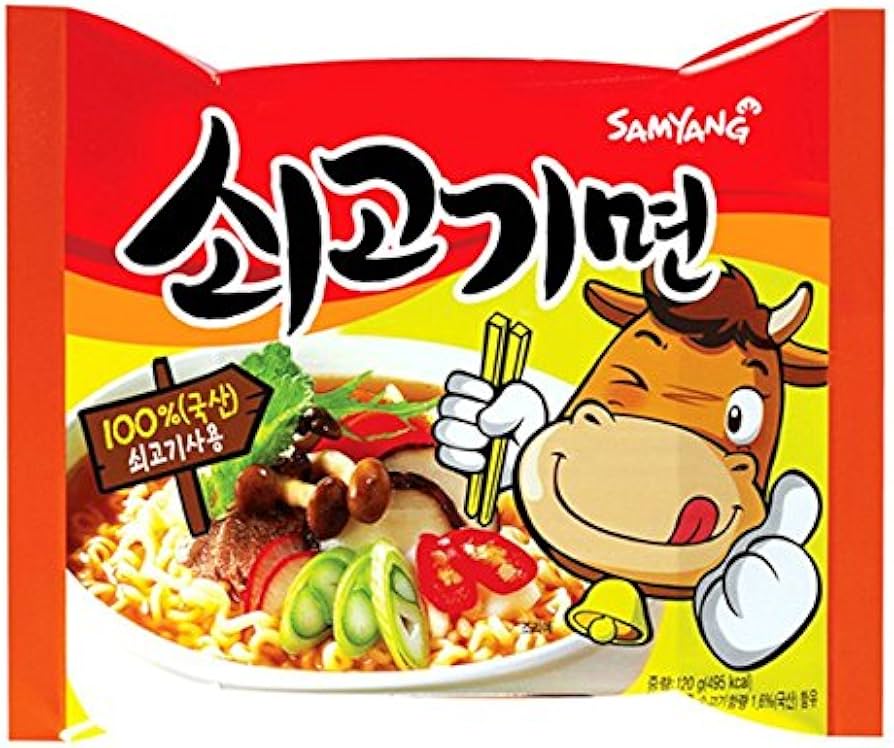
Samyang is one of Korea’s most legendary and influential instant noodle companies, known worldwide for shaping not just Korean food culture but global spice culture as well. The story begins in 1961, when Samyang released the very first instant ramen ever manufactured in South Korea. At a time when the country was rebuilding from war and food scarcity was widespread, instant noodles became a symbol of hope, convenience, and nourishment. Samyang didn’t just enter a market—they created one.

The company’s founder, Jeon Jung Yoon, believed that Koreans needed an affordable, filling, and comforting food that could be prepared quickly. Inspired by Japan’s early instant noodle industry, Samyang developed Korea’s first-ever ramyun, a simple soup noodle with a warming broth, and introduced it to the nation. For many Koreans, this was their first taste of instant ramen—a food that would eventually become a national staple.

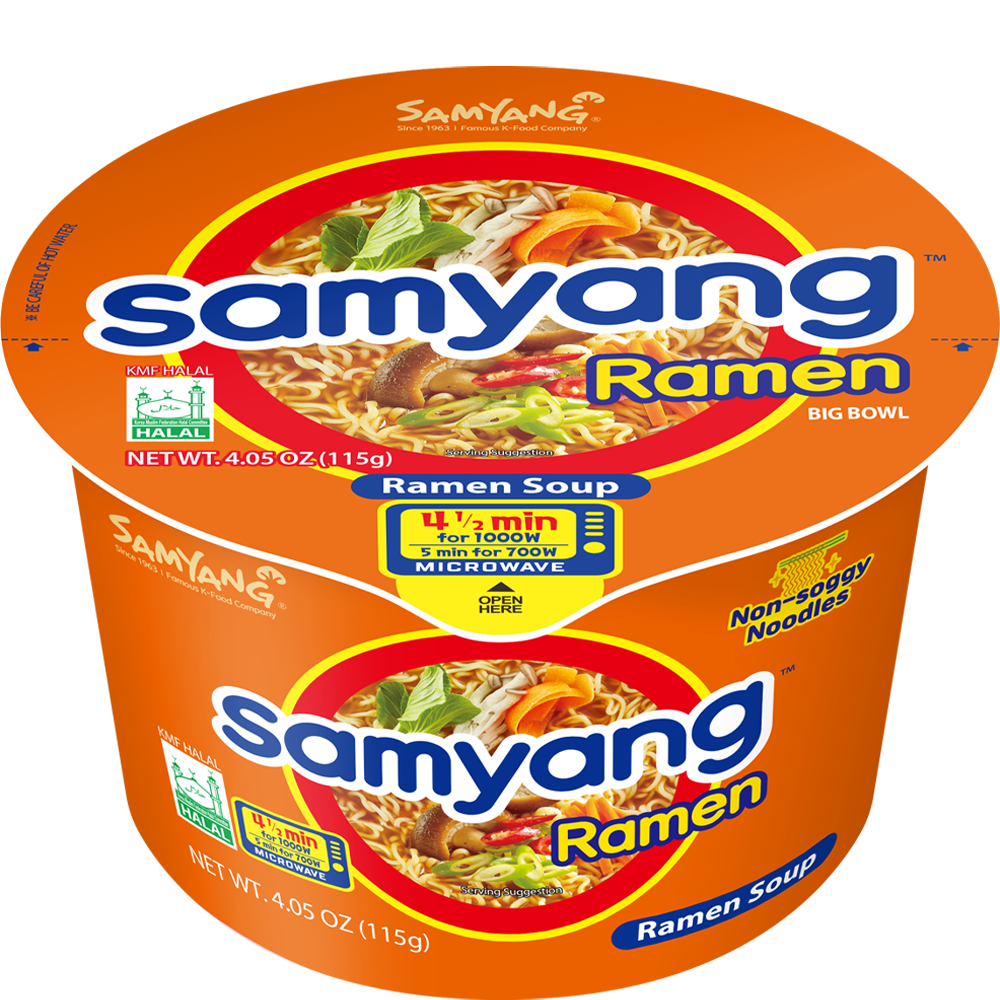
Throughout the 1970s and 1980s, Samyang expanded its product lines, experimenting with new broths and noodle textures. Their products became part of daily life for millions of Korean students, workers, and families. Samyang ramen bowls became the classic image of Korean comfort food, sitting in kitchens, dorms, and convenience stores across the country.

But the company’s global fame would not arrive until much later—and when it did, it would transform Samyang into one of the most viral food brands in modern history.

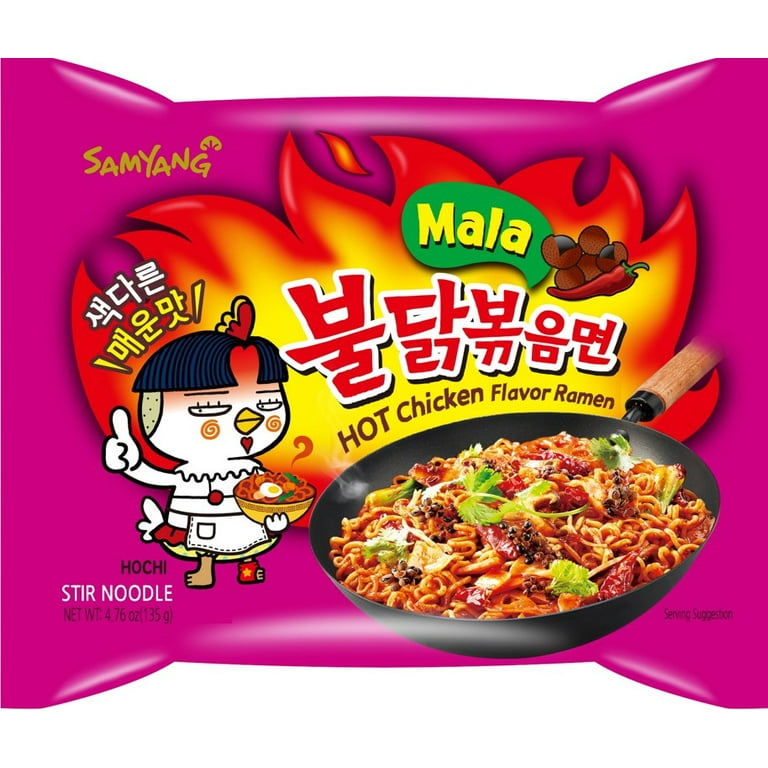
https://m.media-amazon.com/images/I/81GZ1wqglgL._SL1500_.jpg?utm_source=chatgpt.comhttps://m.media-amazon.com/images/I/71Uko-ncB5L._AC_UF894%2C1000_QL80_.jpg?utm_source=chatgpt.comhttps://i5.walmartimages.com/asr/a41c46fc-57b6-42e8-a1b3-259bdd521231.e977911081c873b63f92ba196207f61b.jpeg?odnBg=FFFFFF&odnHeight=768&odnWidth=768&utm_source=chatgpt.com

In 2012, Samyang unveiled a product that would alter the instant noodle landscape forever:

Buldak Hot Chicken Flavor Ramen

A dry stir-fry ramen inspired by buldak, the famously spicy Korean grilled chicken dish known for its intense heat and smoky, rich flavor.

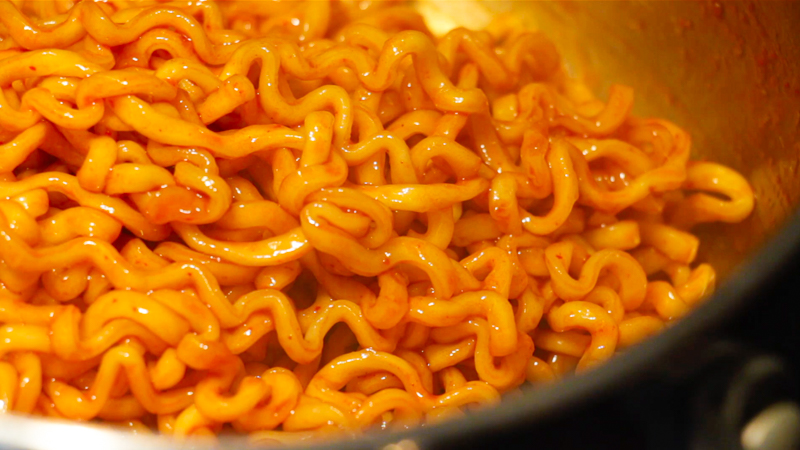
Samyang’s Buldak series was unlike anything the instant food world had experienced. Rather than a mild or standard spicy broth, these noodles were coated in a thick, fiery sauce made from Korean red pepper flakes, soy, garlic, chili oil, and a touch of sweetness. The noodles were thicker than typical instant noodles, designed to hold dense, concentrated flavor. The heat was powerful—almost shocking—but the taste was addictive.

Almost immediately, the internet discovered it.

Around 2014–2017, the “Fire Noodle Challenge” began sweeping across YouTube, TikTok, and Instagram. Millions of creators around the world attempted to finish bowls of Samyang’s ultra-spicy noodles, gasping, sweating, laughing, and pushing themselves to the limit. The product went viral. Samyang’s sales exploded. What began as a Korean stir-fry noodle became a global pop-culture phenomenon.

Recognizing the opportunity, Samyang expanded the Buldak line with new flavors:

Cheese Buldak – creamy and spicy
Carbonara Buldak – Roman-Korean fusion
2X Spicy Buldak – a heat bomb that broke the internet
Quattro Cheese – deep, European-style cheesiness
Curry Buldak – aromatic and bold
Kimchi Buldak – fermented, tangy, classic Korean heat
Jjajang Buldak – black bean sauce meets fire
Creamy Stew Buldak – rich, comforting spice
Buldak Light – milder but flavorful version
Buldak Black Edition – deeper, more gourmet profile

Each new entry added something unique while keeping the unmistakable Buldak intensity.

The world was no longer just eating instant noodles—they were experiencing them.

https://s.abcnews.com/images/International/buldak-ramen-abc-jpo-181204_hpMain_16x9_1600.jpg?utm_source=chatgpt.comhttps://assets.bwbx.io/images/users/iqjWHBFdfxIU/i4kIYJuPj.8Q/v1/-1x-1.webp?utm_source=chatgpt.comhttps://i5.walmartimages.com/seo/Samyang-2x-Spicy-Hot-Chicken-Flavor-Ramen-Hek-Buldak-Bokkeum-Myun-Nuclear-Noodle-Challenge-4-93-OZ-5-Pack_d0c26e26-a319-4ebc-9072-2412577fdcf9.91b46ba13dfd1a10beb1fa6677d1049e.jpeg?utm_source=chatgpt.com

Samyang’s rise wasn’t limited to spicy noodles. Behind the scenes, the company continued to innovate in noodle texture, sauce technology, and global flavor adaptation. They built modern factories, expanded distribution, and became one of Korea’s most internationally recognized brands. While Nongshim dominated with soup-based ramyun, Samyang became the unmatched king of sauce-based, dry stir-fry noodles—a category they essentially created at a global scale.

Today, Samyang exports to more than 80 countries, and Buldak noodles remain some of the most famous instant noodles ever made. Their products appear in mukbangs, cooking videos, recipe hacks, college dorms, and restaurant menus worldwide. The Buldak line in particular has developed into a full flavor universe, with every new release instantly becoming a global event.

Yet for all the viral fame, Samyang remains deeply connected to its roots. It is still the company that introduced instant ramen to Korea, still a brand built on tradition, innovation, and food culture. It represents the past, present, and future of Korean instant noodles—an extraordinary journey from a humble 1961 soup packet to a viral global powerhouse.

Today, Samyang stands as a symbol of creativity, heat, boldness, and the ever-evolving power of food. Whether someone is tasting their very first Buldak noodle or returning to a longtime favorite, the experience is unforgettable—a testament to Samyang’s commitment to pushing boundaries and redefining what ramen can be.

 BULDAK HOT CHICKEN RAMEN (ORIGINAL)

The foundation of the entire Samyang universe.

Below is the full Shopify-ready story, written in the same cinematic, narrative tone as your Nongshim entries.
Images are embedded and should load properly.


🍜 BULDAK HOT CHICKEN RAMEN (ORIGINAL) 

https://fengany.com/cdn/shop/products/Samyanghotchickenramenflavor-140g-45.jpg?v=1754836463&utm_source=chatgpt.comhttps://i5.walmartimages.com/seo/Samyang-Spicy-Hot-Chicken-Flavor-Instant-Ramen-4-94-oz-5-pack_5abf244e-21e5-4bf6-80f5-f8a4d43c6cd2.0bc8271f54b92fe9417f139ff3c36d9b.png?utm_source=chatgpt.com

When Samyang introduced Buldak Hot Chicken Flavor Ramen in 2012, they weren’t just launching a new product—they were creating an entirely new category of instant noodles. Until then, the instant ramen world was dominated by soups, broths, and familiar comfort flavors. Buldak changed everything. It was bold, fiery, saucy, and unapologetically intense. It didn’t whisper spice; it shouted it.

The word “Buldak” translates to “Fire Chicken”, a Korean dish known for extreme heat and smoky, savory flavor. Samyang set out to capture that taste experience and bottle it into a dry stir-fry noodle format. Unlike soup-based ramen, Buldak noodles are drained, then coated in a thick, glossy sauce that blends Korean chili, garlic, sweetness, and savory depth. The sauce hits fast and stays long, creating a heat that food lovers describe as addictive rather than overwhelming.

Samyang engineered special noodles for this product—thicker, chewier, and sturdier than traditional ramen. They needed to be able to hold a concentrated sauce rather than float in broth. When cooked, they carry the perfect level of bounce, making every bite rich and satisfying. These noodles absorb the fiery sauce slowly, giving them a deep red color and a flavor that grows warmer and more complex with each chew.

https://cdn.sanity.io/images/q6x1067h/production/2120a70151fdcecb82d8062c830b2c720d0131ea-1800x1350.webp?utm_source=chatgpt.comhttps://lookcatchu.com/wp-content/uploads/2022/12/fire-nuclear-noodle-spring-rolls-noodlecloseup.jpg?utm_source=chatgpt.comhttps://m.media-amazon.com/images/I/71OUGRl0V3L._AC_UF894%2C1000_QL80_.jpg?utm_source=chatgpt.com

What truly set Buldak apart from any instant noodle before it was its heat level. It wasn’t just spicy by Korean standards—it was globally shocking. The concentrated gochugaru-based sauce delivered a heat curve that built rapidly and lingered with intensity, creating the iconic burn that fans all over the world came to love. But beneath the fire was a flavor that kept people coming back: smoky, savory, garlicky, slightly sweet, and incredibly satisfying.

The world took notice.

By 2014, videos began appearing on YouTube of creators attempting to eat a bowl of Buldak without water. Suddenly, a product that started quietly in Korea became the centerpiece of what would soon be known as the Fire Noodle Challenge. Millions of people around the world filmed themselves sweating, laughing, crying, and powering through the fiery bowl. What began as a niche Korean noodle had become a global food phenomenon.

As the Fire Noodle Challenge spread through TikTok, Instagram, and Facebook, Samyang’s original Buldak flavor became a cultural icon. People weren’t just eating it—they were testing themselves with it. Friends challenged each other. Families competed. Entire YouTube channels built viral content around the heat. What shocked Samyang was not just the popularity, but the loyalty. Fans didn’t just try Buldak—they kept eating it.

https://s.abcnews.com/images/International/buldak-ramen-abc-jpo-181204_hpMain_16x9_1600.jpg?utm_source=chatgpt.comhttps://i.ytimg.com/vi/CaSdea4UykE/maxresdefault.jpg?utm_source=chatgpt.comhttps://i.ytimg.com/vi/A8I64OY4QHc/maxresdefault.jpg?utm_source=chatgpt.com

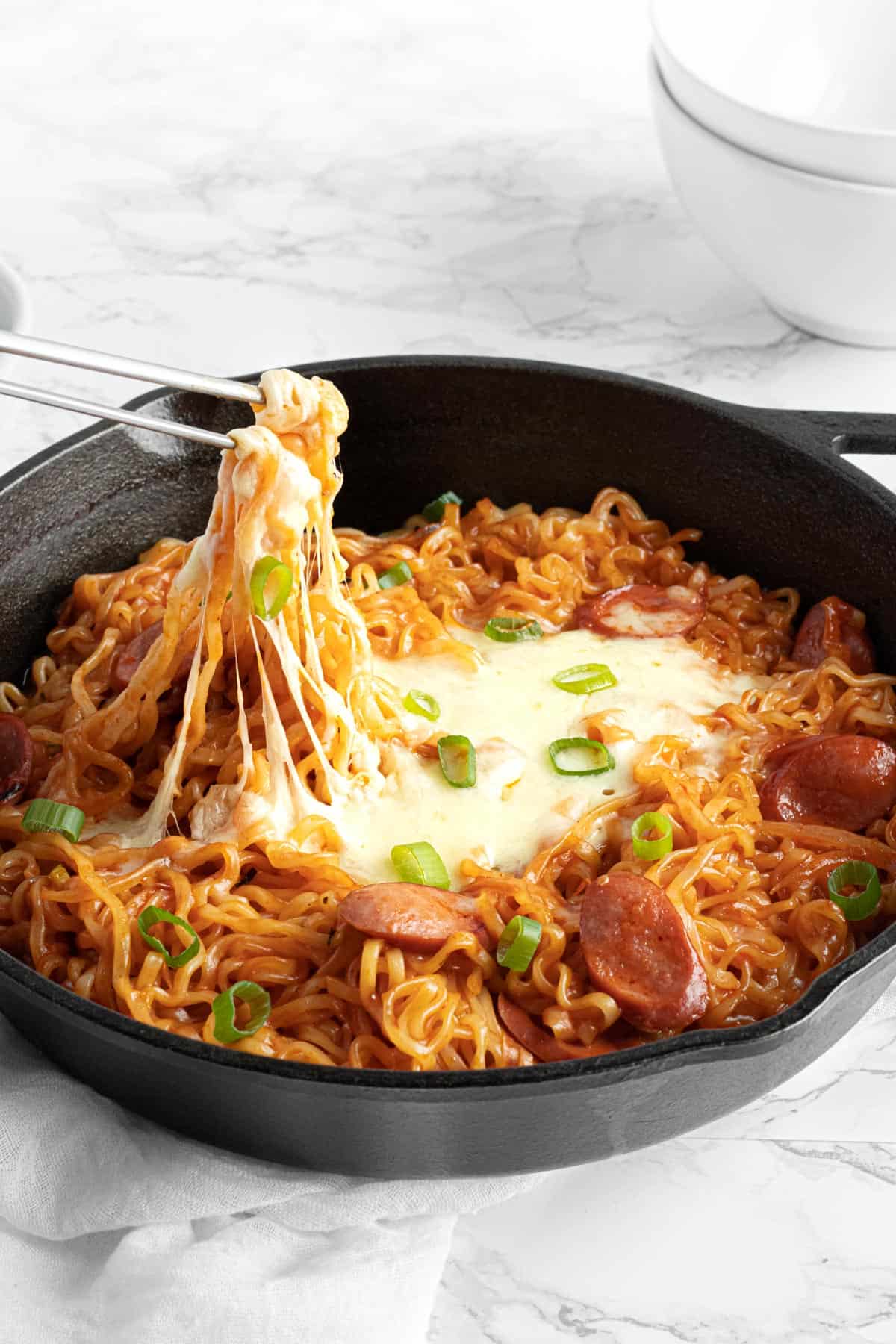
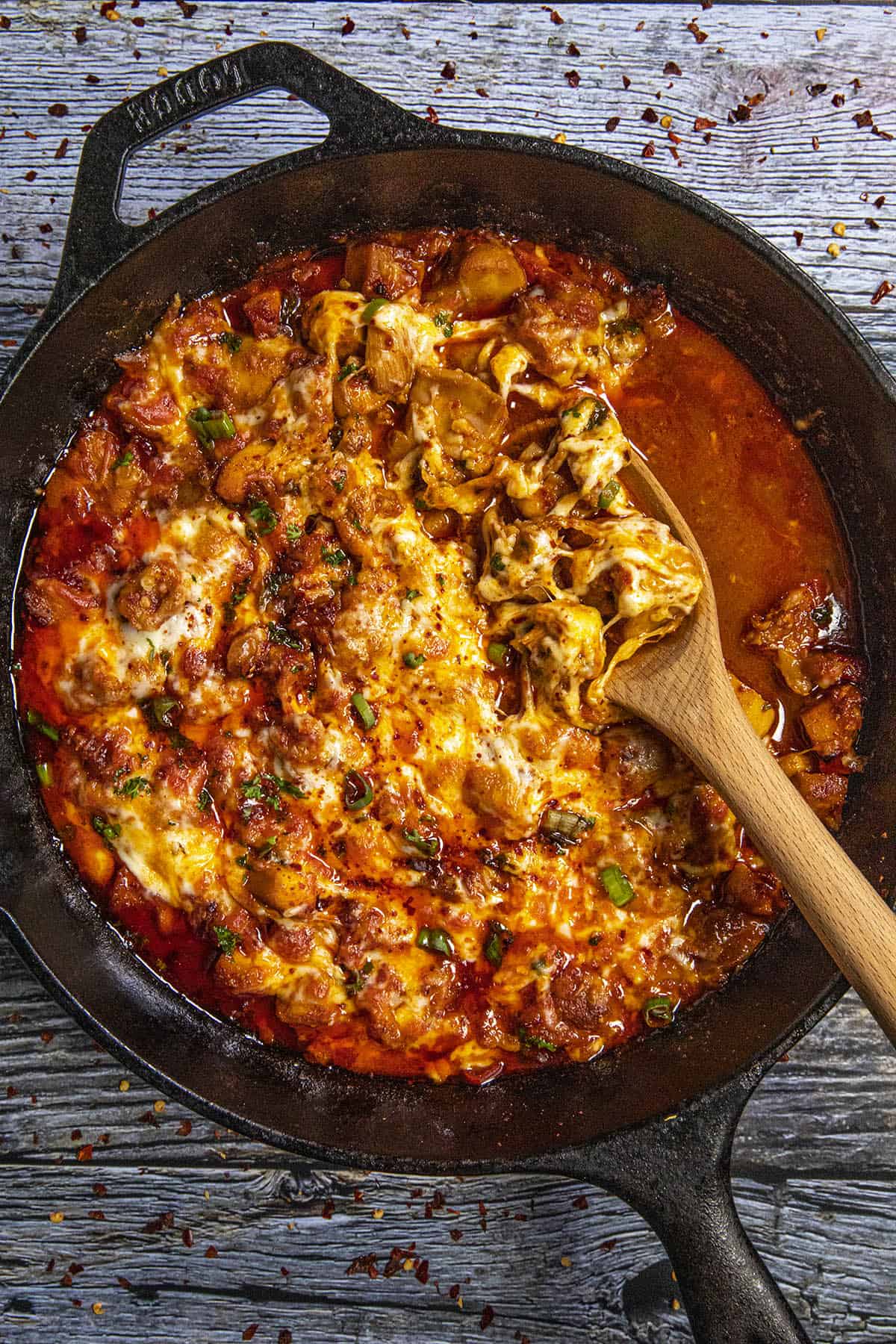
Outside of challenges, the noodle found another life: as a cooking ingredient. Creators began transforming it with cheese, eggs, vegetables, cream, meat, or rice cakes. Buldak became a base for fusion dishes—spicy chicken pasta, fire chicken fried rice, cheesy stir-fried Buldak with mozzarella, and more. Its flavor proved versatile and powerful enough to serve as the core of an entire culinary trend.

Despite its viral fame, the Original Buldak flavor remains pure and simple at its core. It represents the perfect balance of heat and taste—intense, smoky, savory, slightly sweet, and absolutely unforgettable. It’s the bowl that sparked a global movement and the reason the Buldak line would eventually expand into a worldwide phenomenon with more than a dozen flavors.

Today, Buldak Hot Chicken Ramen stands as one of the most famous instant noodles ever made. It is a cultural landmark in the world of ramen—a bowl that changed how people think about spice, about instant noodles, and about Korean cuisine. Whether eaten as a challenge or enjoyed as a meal, it delivers the same fiery, addictive experience that made it a legend.


BULDAK 2X SPICY (HAEK BULDAK / “NUCLEAR FIRE NOODLE”) 

https://cdn.quickbutik.com/images/1840V/products/64de22e74ff6e.jpeg?utm_source=chatgpt.comhttps://cdn.abicart.com/shop/ws95/53595/art95/h0217/192230217-origpic-3eb3ba.jpg?utm_source=chatgpt.com

If the Original Buldak Hot Chicken Ramen introduced the world to Samyang’s signature fire, then 2X Spicy Buldak, also known as Haek Buldak or simply the “Nuclear Fire Noodle,” pushed that fire into legendary territory. Released as a limited-edition product and later brought back due to overwhelming global demand, 2X Spicy took everything iconic about Buldak and doubled its intensity—twice the heat, twice the challenge, and twice the viral impact.

The concept was simple but daring: amplify the spice to a level that bordered on extreme while preserving the addictive flavor that made Buldak famous. Samyang’s sauce developers created a hotter, deeper chili blend featuring double the scoville heat of the original. The sauce is darker and richer, with concentrated chili extract, more garlic, and a smoky undertone that enhances the heat rather than masking it.

The result is a sauce that hits fast and stays long. It delivers an immediate surge of heat, followed by a deep, lingering burn that builds with every bite. Yet beneath the intensity is the unmistakable Buldak character—savory, slightly sweet, and complex. It’s not just spicier; it’s more flavorful, engineered to challenge without sacrificing culinary enjoyment.

https://i.ebayimg.com/images/g/rlkAAOSwPLhkNoni/s-l1200.jpg?utm_source=chatgpt.comhttps://cdn.buldak.roundsquare.io/uploads/2025/04/20250407_043156-scaled.webp?utm_source=chatgpt.com

The noodles remain thick, chewy, and resilient—the perfect vehicle for such concentrated sauce. Their texture helps balance the fiery coating, giving each bite structure and depth. As with the original, the noodles absorb the sauce gradually, turning a vivid, glossy red that signals exactly what the eater is in for.

2X Spicy Buldak became one of the most famous instant noodles ever released, thanks in large part to the second wave of the global Fire Noodle Challenge. Influencers, athletes, competitive eaters, and everyday fans recorded themselves attempting to finish a bowl. Reactions ranged from laughter and shock to tears and triumph. The challenge videos generated billions of views collectively across YouTube, TikTok, Facebook, and Instagram.

What began as a niche spicy ramen became a worldwide social movement. Stores sold out. Countries imported emergency shipments. Fans queued up online to buy boxes. Entire communities formed around trying, reviewing, or daring friends to finish the bowl. The bright red package with the cartoon fire chicken and the “2X” marking became instantly recognizable on shelves across the world.

https://i.ytimg.com/vi/gptF8R-iU0o/maxresdefault.jpg?utm_source=chatgpt.comhttps://media.rnztools.nz/rnz/image/upload/s--FF7F-qVT--/c_scale%2Cf_auto%2Cq_auto%2Cw_1050/v1718268771/4KOMSO3_noodles_png?_a=BACCd2AD&utm_source=chatgpt.com

But the appeal of 2X Spicy goes beyond the challenge culture. Many fans simply love its flavor. The heightened heat amplifies the savory-sweet balance of the original sauce, making it richer and more aromatic. Food enthusiasts often incorporate it into recipes—adding cheese, cream, eggs, chicken, vegetables, or rice cakes to create gourmet-level spicy fusion dishes. The noodles adapt beautifully to these additions, transforming from a challenge item into a versatile culinary base.

Even with its extreme reputation, 2X Spicy Buldak remains one of Samyang’s best-selling products. It represents the spirit of the Buldak brand: bold, fearless, innovative, and unforgettable. It is not simply a spicier version of the original—it is an experience, a global icon, and a defining product in the world of instant noodles.

Today, 2X Spicy Buldak stands as the benchmark for extreme instant ramen heat. Those who finish it earn bragging rights. Those who love it return again and again. And those who fear it still can’t resist giving it a try. It is the bowl that turned spicy noodles into a cultural phenomenon and cemented Samyang’s place in the history of modern food trends.


BULDAK CHEESE

https://www.drakfrukt.se/wp-content/uploads/2020/04/samyang-cheese.jpg?utm_source=chatgpt.comhttps://www.drakfrukt.se/wp-content/uploads/2023/12/samyang-quattro-cheese.jpg?utm_source=chatgpt.com

When Samyang launched Buldak Cheese, they introduced a new dimension to the Fire Noodle universe—one that was not defined by pure heat, but by balance. The idea was bold: take the intensely spicy, smoky character of the original Buldak sauce and pair it with the creamy richness of cheese. What emerged was a cultural phenomenon of its own, beloved not only by spice enthusiasts but also by a wider audience who craved a more approachable version of the iconic fire noodles.

Buldak Cheese draws inspiration from Korea’s rapidly evolving comfort food scene, where spicy dishes are often softened or enriched with melted cheese—especially mozzarella or processed Korean cheese slices known for stretching beautifully over hot dishes. Samyang set out to capture that comforting, creamy quality and fuse it with the unmistakable Buldak flavor profile.

The sauce packet contains the signature fiery blend—chili, soy, garlic, and sweetness—but mellowed with powdered cheese and dairy notes that bring warmth rather than intensity. The cheese seasoning balances the heat, adding roundness and depth to the sauce. It transforms the burn of Buldak into something smoother, richer, and more indulgent.

https://sethlui.com/wp-content/uploads/2021/06/4-Types-of-Cheese-Buldak-Ramen-Featured.jpg?utm_source=chatgpt.comhttps://m.media-amazon.com/images/I/812CNXz1CiL._AC_UF894%2C1000_QL80_.jpg?utm_source=chatgpt.comhttps://christieathome.com/wp-content/uploads/2021/03/Kimchi-Cheese-Ramen-Stir-fry-5-b.jpg?utm_source=chatgpt.com

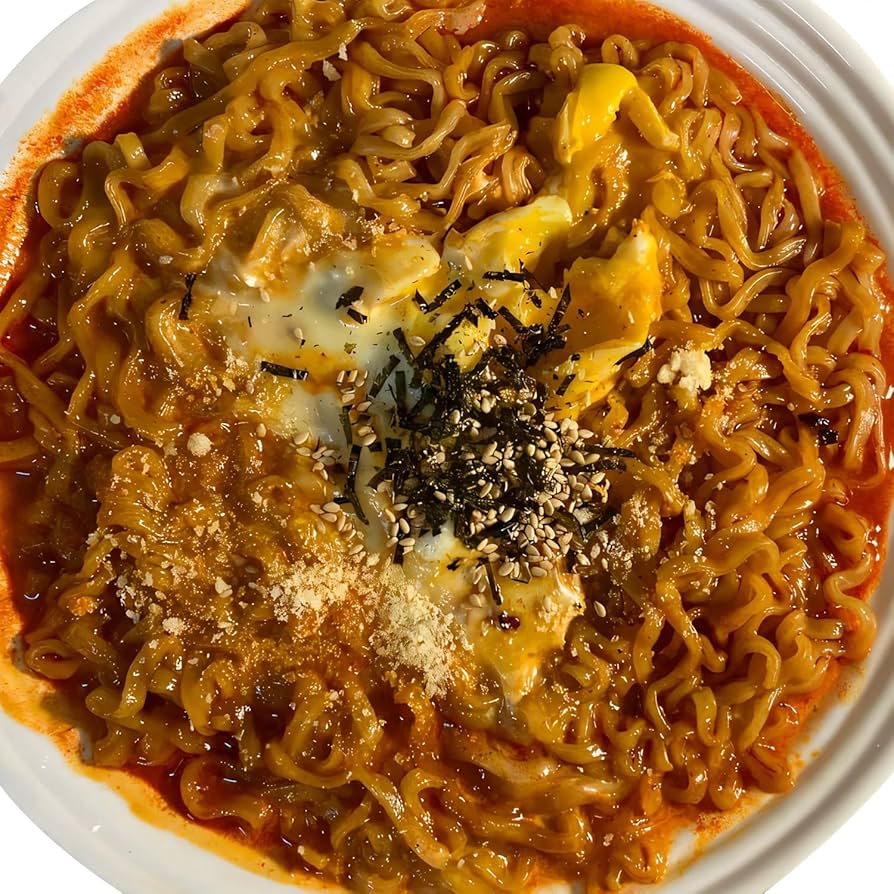
The noodles retain the thick, chewy texture that defines the Buldak series. Their dense structure allows them to hold both the spicy sauce and the creamy cheese powder, creating a glossy, velvety coating with every stir. The result is a mouthful that is simultaneously spicy, savory, and luxuriously creamy—a harmony that quickly found fans worldwide.

Buldak Cheese soon became a YouTube and TikTok favorite, with creators showcasing the stretchy, cheesy results when extra cheese is added. The dish inspired countless variations: cheddar, mozzarella, American cheese slices, parmesan, or cream added to the pan for an even richer, restaurant-style fusion dish. The noodles became a base for viral recipes like cheese fire noodles, creamy fire pasta, and cheesy fire chicken bowls.

Unlike the 2X Spicy or Original variations, Buldak Cheese reached a broader demographic. It appealed to those who loved the Buldak flavor but wanted something less punishing. It resonated with younger eaters, families, and anyone who enjoyed the playful blend of heat and comfort. Samyang had successfully created a gateway flavor—one that brought new fans into the world of Buldak without overwhelming them.

https://www.thatcutedish.com/wp-content/uploads/2021/10/buldak-korean-ramen-extra-cheesy-3-2.jpg?utm_source=chatgpt.comhttps://m.media-amazon.com/images/I/71JWHUCKCJL._AC_UF894%2C1000_QL80_.jpg?utm_source=chatgpt.com

Culturally, Buldak Cheese also aligned perfectly with Korea’s “cheese trend,” where everything from tteokbokki to hot chicken to ramen receives a cheese upgrade. It reflected how Korean cuisine evolves—bold, creative, and unafraid to blend unexpected elements. Samyang’s interpretation of this trend in instant noodle form demonstrated their ability to innovate within global food culture, not just follow it.

Today, Buldak Cheese remains one of Samyang’s most popular and accessible flavors. It stands on its own as a comforting yet exciting bowl of noodles, offering a gentler introduction into the world of fire ramen while still delivering the unforgettable Buldak personality. Creamy, spicy, and surprisingly addictive, it is a testament to Samyang’s ability to expand their universe beyond pure heat and into culinary creativity.


BULDAK CARBONARA

https://i5.walmartimages.com/asr/42ad0636-2cfd-48f5-a789-b05c212db972.8b1634d975b3e2d884ea09b607b8f2f5.jpeg?utm_source=chatgpt.comhttps://m.media-amazon.com/images/I/71N1lyW-7lL._AC_UF350%2C350_QL80_.jpg?utm_source=chatgpt.com

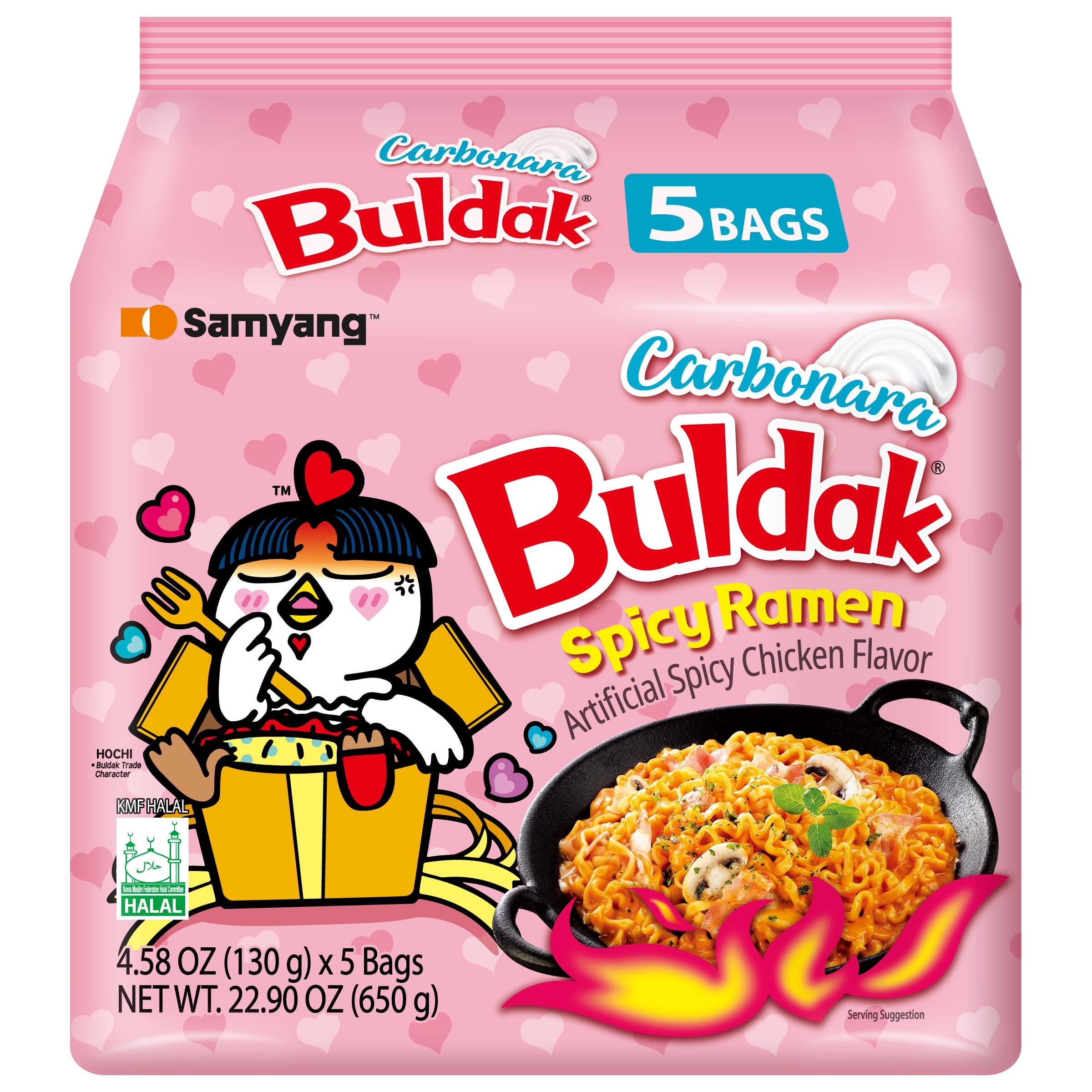
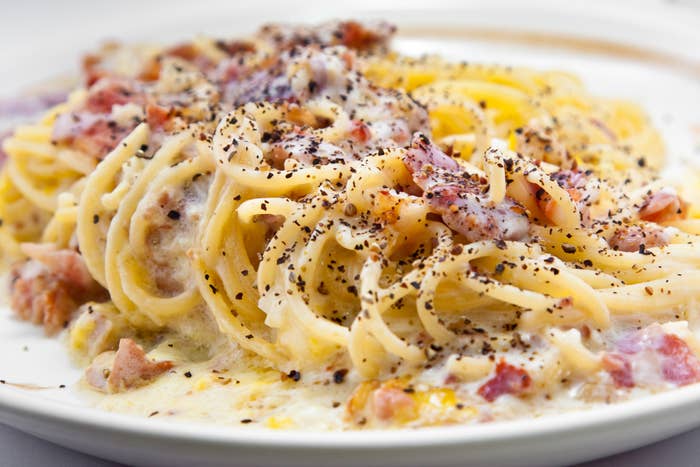
When Samyang introduced Buldak Carbonara, they achieved something few instant noodle companies had ever done before: they created a cross-cultural fusion that felt completely natural. The goal was daring—merge the fiery Korean flavors of Buldak with the creamy, silky richness of Italian carbonara. What emerged was a product that not only became one of Samyang’s most beloved flavors, but also reshaped how the world viewed instant noodles.

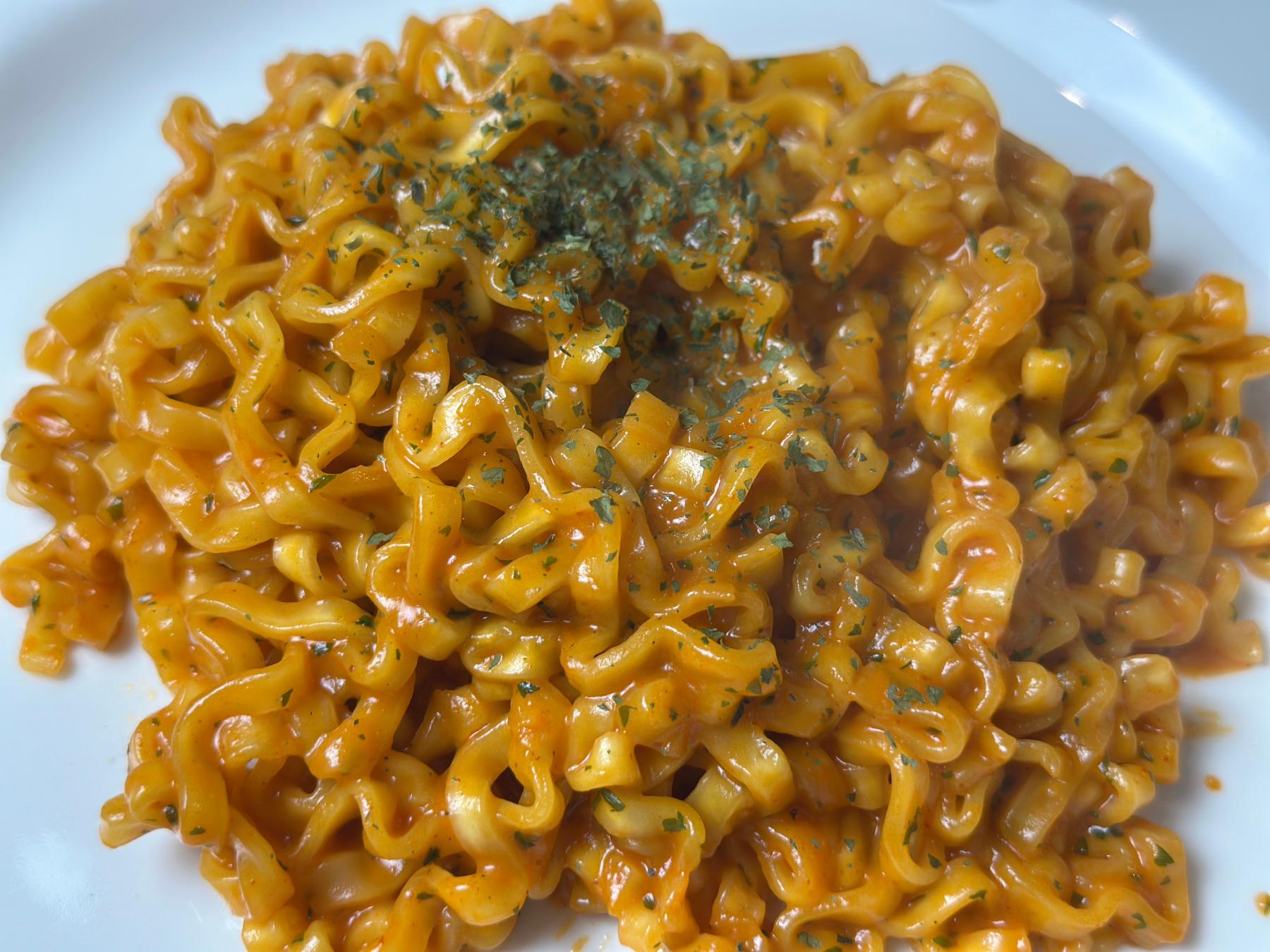
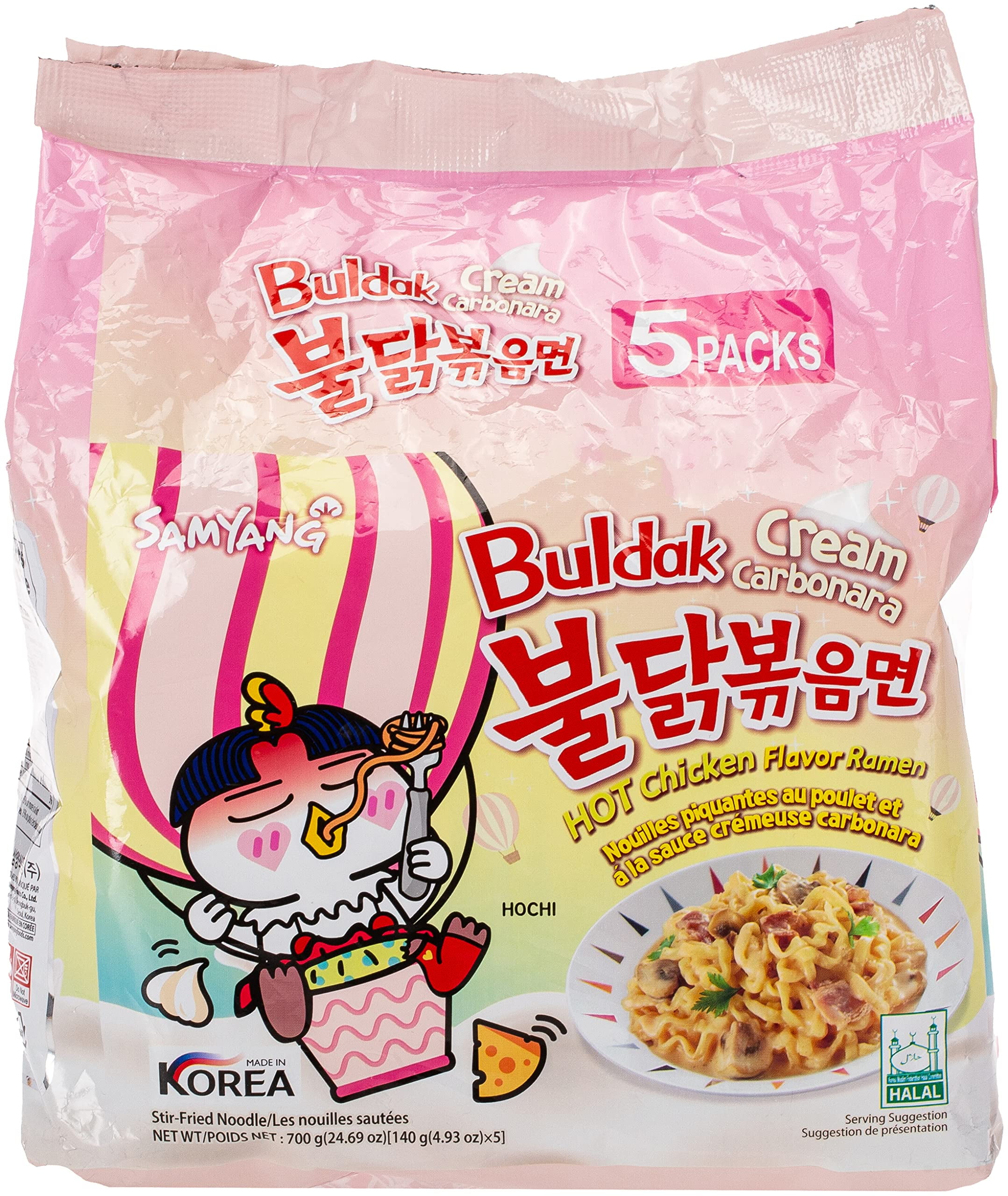
From the moment the pink package appeared on shelves, curiosity took over. Inside, consumers found the familiar thick, chewy Buldak noodles, but with a new twist—a rich, creamy sauce packet infused with dairy, black pepper, garlic, and cheese. The addition of this sauce transformed the fiery character of Buldak into something smoother, more luxurious, and surprisingly elegant.

The sauce begins with the signature Buldak heat—a deep, smoky, chili-forward base—then softens it with buttery cream tones and cheese flavor that mimic the comforting feel of traditional carbonara. Instead of relying solely on dairy, Samyang uses a carefully balanced blend of cream powder, cheese, and black pepper to create a velvety finish. The heat doesn’t disappear; it becomes rounder, richer, and more harmonious.

https://cdn.sanity.io/images/q6x1067h/production/2120a70151fdcecb82d8062c830b2c720d0131ea-1800x1350.webp?utm_source=chatgpt.comhttps://img.buzzfeed.com/buzzfeed-static/static/2024-02/8/20/asset/f6b06538d79c/sub-buzz-753-1707423180-1.jpg?downsize=700%3A%2A&output-format=auto&output-quality=auto&utm_source=chatgpt.comhttps://images.getrecipekit.com/20221006001615-creamy-20spicy-20carbonara-20ramen-20sq.jpg?aspect_ratio=1%3A1&quality=90&utm_source=chatgpt.com

The noodles play a critical role. Samyang’s signature Buldak noodles—thick, chewy, and durable—are designed to absorb sauce rather than broth. As the carbonara sauce clings to each strand, the texture becomes silky and decadent, offering a mouthfeel closer to pasta than traditional ramen. Every bite delivers a layered flavor: spicy, creamy, savory, and lightly peppery.

When Buldak Carbonara launched, the internet responded instantly. Unlike the 2X Spicy or Original flavors—which sparked heat challenges—Carbonara Buldak went viral for its flavor. It became known as the “gateway Buldak,” converting millions of new fans who were intimidated by the full spice of the earlier products. TikTok creators, mukbang stars, and home cooks showcased its versatility:

• adding egg yolks for extra richness
• mixing bacon or pancetta to echo classic carbonara
• melting mozzarella or parmesan on top
• turning it into creamy fire pasta
• pairing it with chicken, shrimp, or vegetables
• using it as a base for fusion dishes

The possibilities were limitless, and Buldak Carbonara became a staple ingredient for countless inventive recipes.

https://carriecarvalho.com/wp-content/uploads/2023/08/Spicy-Carbonara-Noodles-pin1.png?utm_source=chatgpt.com

What makes Buldak Carbonara exceptional is how it bridges cultures without feeling forced. The heat represents Korea’s culinary identity—bold, expressive, unapologetic. The creaminess reflects Italy’s rich pasta tradition. Together, the fusion creates a dish that feels modern, playful, and deeply satisfying. It’s not just spicy ramen and not just creamy pasta—it’s its own category.

Today, Buldak Carbonara stands as one of Samyang’s highest-selling and most universally loved flavors. It continues to attract fans who crave a perfect balance between heat and cream. It’s indulgent without being heavy, spicy without being overwhelming, and comforting without losing the excitement of Buldak’s signature fire.

More than any other flavor, Buldak Carbonara demonstrates Samyang’s ability to innovate—and to transform instant noodles into a canvas for global culinary imagination.


BULDAK QUATTRO CHEESE

https://samyangamerica.com/images/products/buldak-multi-quattro-cheese.png?utm_source=chatgpt.comhttps://i5.walmartimages.com/asr/dcfb5669-6442-4c90-8612-c9da0715b025.e0c2cc48b3f9c141d614dcda9742c2b2.jpeg?odnBg=FFFFFF&odnHeight=768&odnWidth=768&utm_source=chatgpt.com

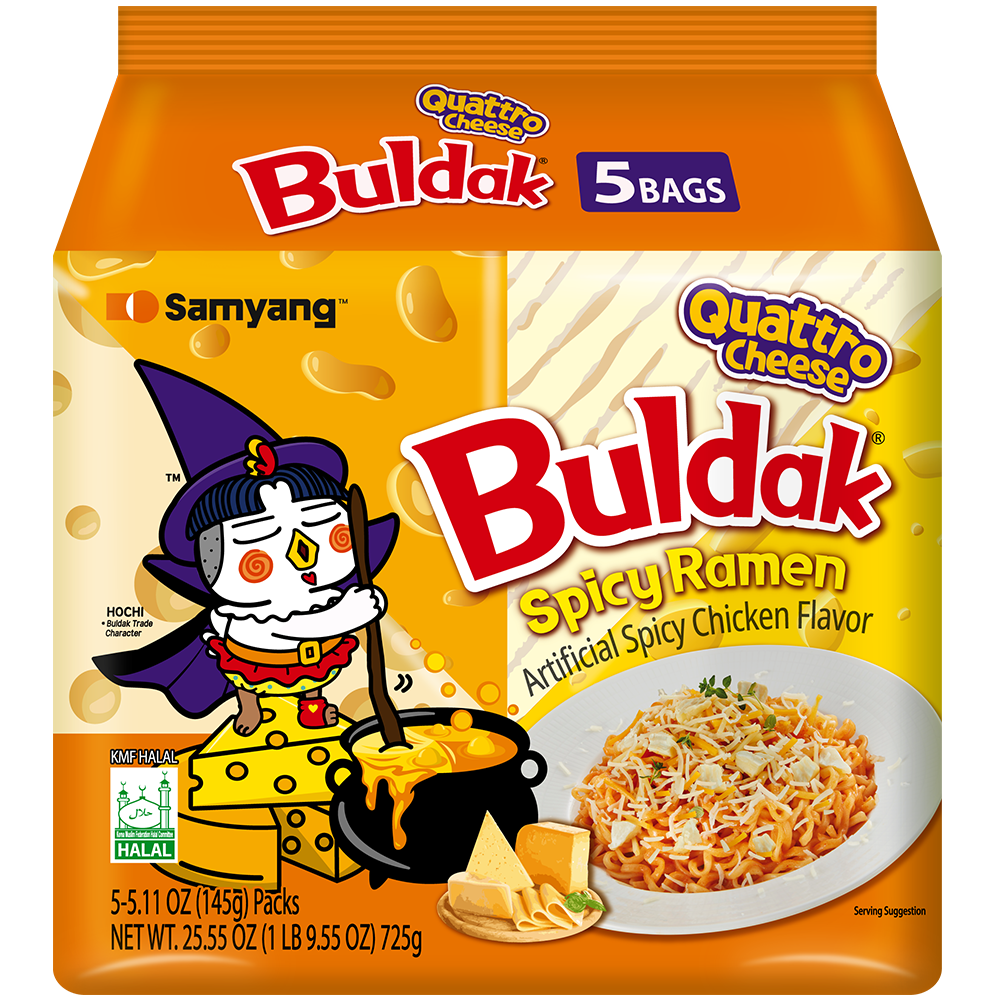
Buldak Quattro Cheese represents one of Samyang’s most indulgent creations—a deep, ultra-creamy evolution of the original fire noodle that blends Korean heat with a four-cheese flavor inspired by European comfort dishes. If Buldak Cheese introduced the world to a spicy-and-creamy hybrid, Quattro Cheese perfected it. This flavor is darker, richer, sharper, and more decadent, offering a gourmet twist on the fiery Buldak foundation.

Samyang crafted Quattro Cheese for fans who loved the original Cheese Buldak but wanted something bolder and more complex. The name “Quattro” refers to its four-cheese blend, commonly incorporating cheddar, mozzarella, gouda, and camembert-style flavors. These cheeses each bring their own character: cheddar adds sharpness, mozzarella gives stretch and creaminess, gouda contributes sweetness and depth, and camembert-style notes add a rich, buttery finish.

The result is a sauce that is as aromatic as it is flavorful—warm, silky, deeply savory, and layered with cheese tones that bloom as the noodles are stirred and coated.

https://d2rluq6rcpndy0.cloudfront.net/img/buldak-noodles.jpeg?utm_source=chatgpt.com

The sauce begins with the signature Buldak heat: smoky, red-pepper-forward, and slightly sweet. But instead of hitting with sharp intensity, the fire gently folds into the cheese blend. The heat becomes smoother, the burn slower and rounder, creating an entirely new taste experience—creamy fire rather than explosive heat. Many fans describe it as “spicy mac and cheese, Buldak-style.”

The noodles themselves remain thick and satisfyingly chewy, designed to hold the dense cheese sauce. As they cook, they absorb some of the dairy richness, creating a texture that is hearty without being heavy. When the cheese powder dissolves into the sauce, it transforms into a glossy, golden coating that clings to every strand.

Quattro Cheese quickly became a global hit, especially among fans who appreciate culinary fusion. TikTok and YouTube creators began showcasing their own variations:

• adding extra mozzarella for a cheese pull
• topping with parmesan or a crispy cheese crust
• combining it with chicken or bacon for smoky depth
• mixing it into creamy pasta dishes
• turning it into cheesy fire fried rice
• layering it under torched cheese for dramatic visuals

Its versatility made it a go-to comfort dish, especially for those who enjoy creamy ramen with personality.

https://i.ytimg.com/vi/fR4YG7GvMPg/hq720.jpg?rs=AOn4CLDoq6N8XSxQpBctE5qTWaHeyOV00A&sqp=-oaymwEhCK4FEIIDSFryq4qpAxMIARUAAAAAGAElAADIQj0AgKJD&utm_source=chatgpt.com

Culturally, Quattro Cheese stands at the intersection of two major food trends: Korea’s obsession with spicy comfort foods and the global rise of cheese-centric dishes. It captures the playful, experimental spirit of modern Korean cooking—bold enough to push boundaries, yet comforting enough to feel familiar to a worldwide audience.

For many fans, Quattro Cheese is the most balanced Buldak flavor: creamy enough to smooth the heat, cheesy enough to feel indulgent, and spicy enough to retain the signature Buldak identity. It offers richness without heaviness, heat without pain, and complexity without requiring additional ingredients.

Today, Buldak Quattro Cheese remains one of Samyang’s most sought-after flavors, celebrated for its depth, its fusion creativity, and its ability to transform a fiery noodle into a luxurious, cheese-forward experience. It stands as another example of Samyang’s mastery in blending Korean spice culture with international flavor profiles, creating a product that feels both innovative and universally delicious.


BULDAK CURRY 


https://m.media-amazon.com/images/I/8126Av2WYUL._AC_UF894%2C1000_QL80_.jpg?utm_source=chatgpt.comhttps://i5.walmartimages.com/seo/Samyang-Buldak-CURRY-Hot-Chicken-Flavor-Ramen-Stir-Fried-with-Wooden-Chopsticks-4-93-Oz-Pack-of-2_66ba2600-55b5-465d-baec-bceecd3a4312.a1ecc9d2606c30008aee4444ab9bb77e.jpeg?utm_source=chatgpt.com

Buldak Curry represents one of Samyang’s most flavorful and aromatic twists on the iconic fire noodle line. Unlike the intense cheese-based or cream-based variations, Curry Buldak focuses on warmth, depth, and complexity, blending Korean heat with the rich spices of South Asian curry. The result is a noodle that feels both familiar and exotic—fiery, fragrant, and layered with flavors that evolve with every bite.

Samyang developed this version in response to global demand for spicy noodles that go beyond heat and explore deeper culinary influences. Curry has long been a beloved comfort food across Asia—India, Japan, Korea, and Southeast Asia each have their own variations. Samyang set out to create a Buldak flavor that honored this tradition while still holding onto the unmistakable identity of the Hot Chicken series.

The sauce base begins with the signature Buldak formula: smoky chili, soy, garlic, and the slight sweetness that balances the fire. But Curry Buldak adds an entirely new dimension through a blend of spices such as turmeric, cumin, coriander, black pepper, fenugreek, and aromatic herbs. These ingredients bring earthy warmth and subtle sweetness, rounding out the spice curve and making it feel fuller and more complex.

https://m.media-amazon.com/images/I/61fMIuL6X2L._UF350%2C350_QL80_.jpg?utm_source=chatgpt.comhttps://damndelicious.net/wp-content/uploads/2021/10/Thai-Coconut-Curry-RamenIMG_0450.jpg?utm_source=chatgpt.com

The noodles are the classic thick Buldak style—chewy, springy, and designed to hold sauce. Their texture offers the perfect structure to carry the curry’s aromatic richness. As the sauce reduces and coats the noodles, the bowl takes on a deep golden-orange color, signaling both heat and flavorful spice.

Unlike the searing impact of Original or 2X Spicy Buldak, the Curry version delivers a slower, warmer heat. It spreads across the palate gradually, with the curry spices softening the sharpness of the chili. This makes it one of the most balanced Buldak flavors—less about shock, more about depth. It appeals to spice lovers who want complexity, and to fans who prefer a more flavorful burn rather than pure intensity.

Online creators quickly adopted Curry Buldak as a favorite base for recipe remixes. Some popular variations include:
• adding sautéed onions for extra sweetness
• mixing in chicken or shrimp to deepen the curry flavors
• combining with coconut milk for a creamy curry fusion
• topping with cilantro, lime, or boiled eggs for a full Southeast Asian-style bowl
• using it as a stir-fry base for fried rice

Its versatility made it a widely respected flavor among ramen enthusiasts, particularly those who enjoy creative fusion dishes.

Culturally, Buldak Curry highlights Samyang’s global mindset. Instead of limiting themselves to Korean flavor traditions, the company embraced international influences and blended them seamlessly into their signature format. The result is a bowl that feels multicultural—recognizable across continents yet distinctly Buldak.

Today, Buldak Curry stands as one of the most aromatic and flavorful entries in the Samyang lineup. It offers a unique balance of fire and fragrance, spice and warmth, depth and comfort. For many fans, it is the most underrated Buldak flavor—a masterpiece that sits quietly beneath the viral giants but delivers one of the most complex taste experiences in the entire series.


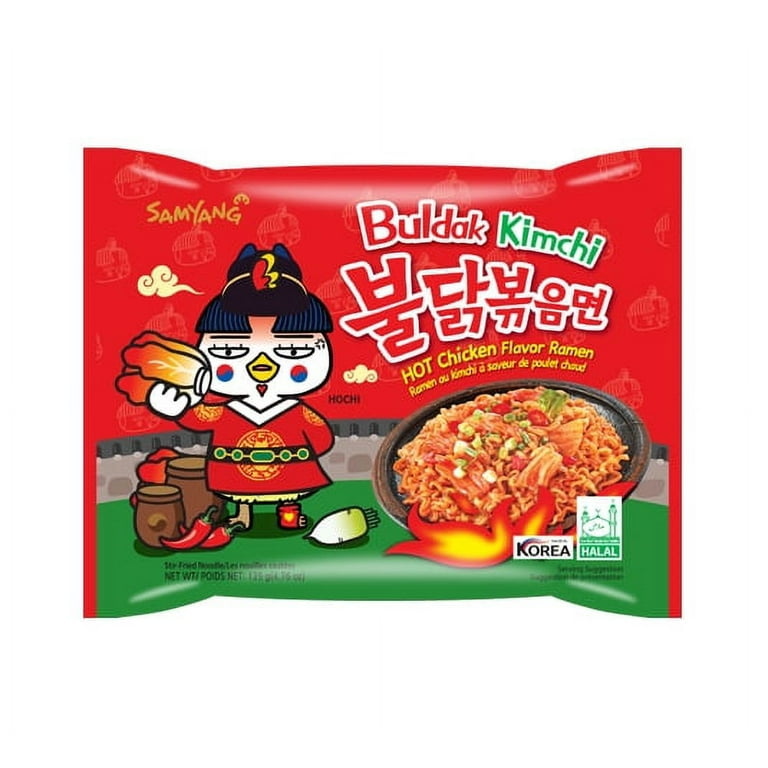
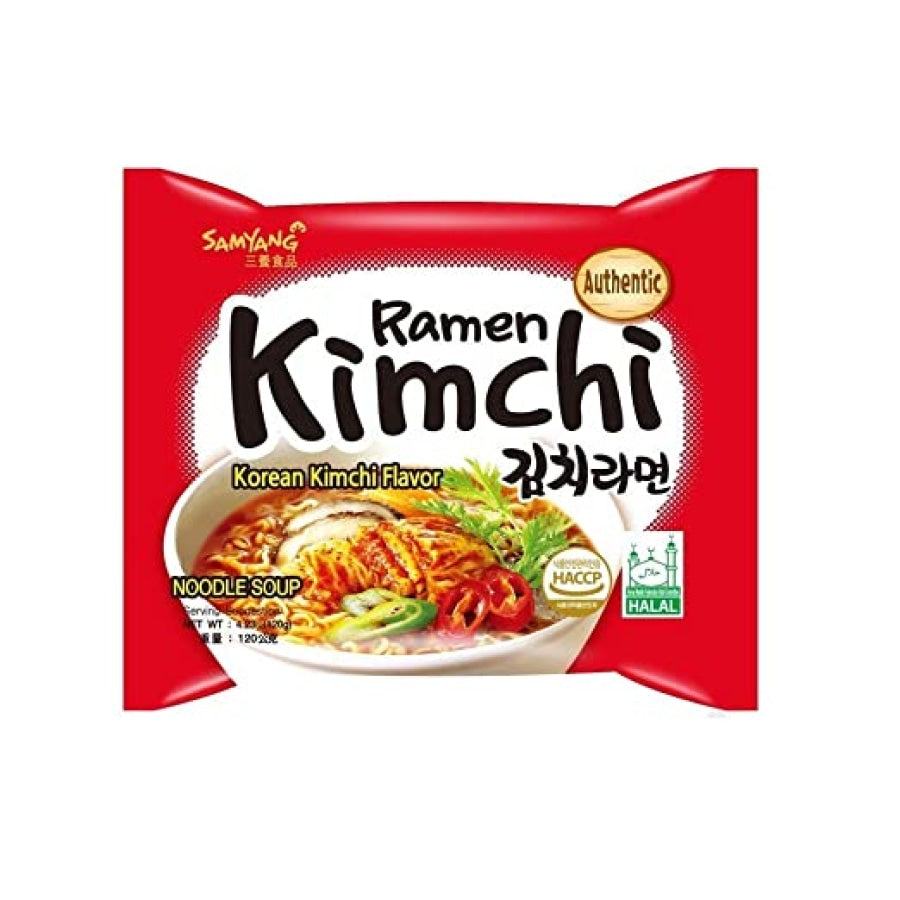
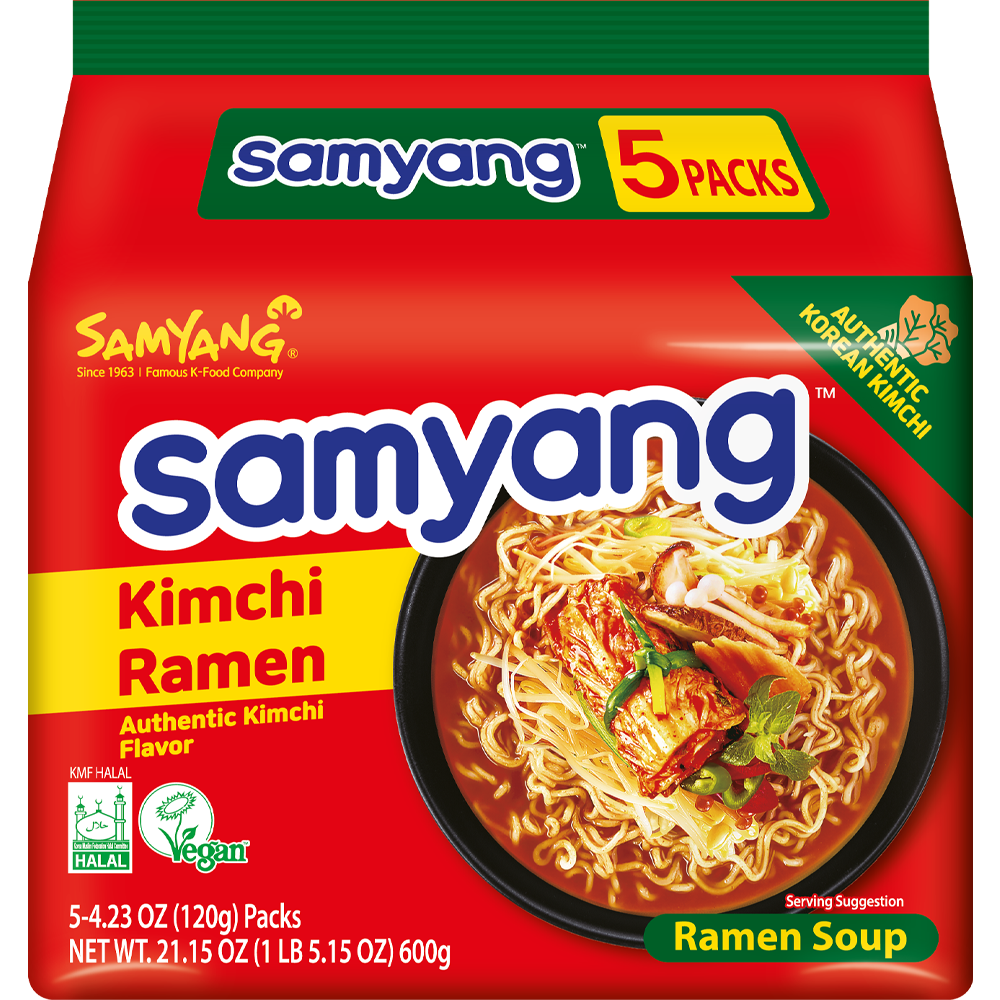
BULDAK KIMCHI 

https://i5.walmartimages.com/seo/SamYang-Buldak-Hot-Chicken-Flavor-Instant-Ramen-Stir-Fried-Noodle-Korean-Kimchi-Flavor-Bag-of-5-Packs-Noodles_f7d9ad45-39a1-42b2-ba2e-f8645d22e1d4.0f4059792de6be475713af721bf681b9.jpeg?odnBg=FFFFFF&odnHeight=768&odnWidth=768&utm_source=chatgpt.comhttps://samyangamerica.com/images/products/buldak-multi-kimchi.png?utm_source=chatgpt.com

Buldak Kimchi is Samyang’s tribute to the most iconic flavor in Korean cuisine. Kimchi—fermented, spicy, tangy, and bold—is more than a side dish in Korea. It is a symbol of identity, history, and home. By combining the unmistakable profile of kimchi with the signature heat of Buldak, Samyang created a noodle that feels deeply Korean in spirit yet globally appealing in character.

The concept behind Buldak Kimchi was simple but ambitious:
blend the smokiness and intensity of Hot Chicken Ramen with the sharp, fermented brightness of real kimchi.
The result is one of the most flavorful and aromatic varieties in the entire Buldak lineup—a noodle that hits with heat, acidity, umami, and deep fermented complexity all at once.

The sauce begins with the classic Buldak base: chili, garlic, soy, sweetness, and the signature smoky undertones. But Buldak Kimchi adds a powerful kimchi seasoning blend made from fermented pepper paste, napa cabbage powder, garlic, ginger, and vinegar notes. This creates a vibrant red sauce that carries both the heat of Buldak and the tangy liveliness of kimchi.

https://thekoreanvegan.com/wp-content/uploads/2024/05/close-up-shot-of-mixed-kimchi-noodles-1024x768.jpg?utm_source=chatgpt.comhttps://thekoreanvegan.com/wp-content/uploads/2024/05/close-up-shot-of-bibim-kimchi-noodles-862x1024.jpg?utm_source=chatgpt.com

The noodles remain Samyang’s signature thick, chewy Buldak texture—ideal for stir-fry-style sauces. Their density allows them to carry both the heavy chili flavor and the lighter, acidic kimchi notes without losing structural integrity. As the sauce cooks down, it clings to the noodles in a glossy coating that visually mirrors freshly stir-fried kimchi.

What sets Buldak Kimchi apart is its flavor journey. The heat arrives first—warm, smoky, and familiar to Buldak lovers. Then the kimchi character emerges: tangy, bright, slightly sour, and deeply savory. The acidity cuts through the richness, creating a balanced and refreshing profile that makes each bite feel lively. It’s a flavor that wakes the senses rather than overwhelming them.

This variety quickly gained popularity among Korean consumers who grew up with kimchi as a staple flavor. International fans were equally intrigued—especially those seeking a more complex, fermented edge to their spicy noodles. Buldak Kimchi became a favorite among food creators who loved its strong personality and its ability to pair with almost anything.

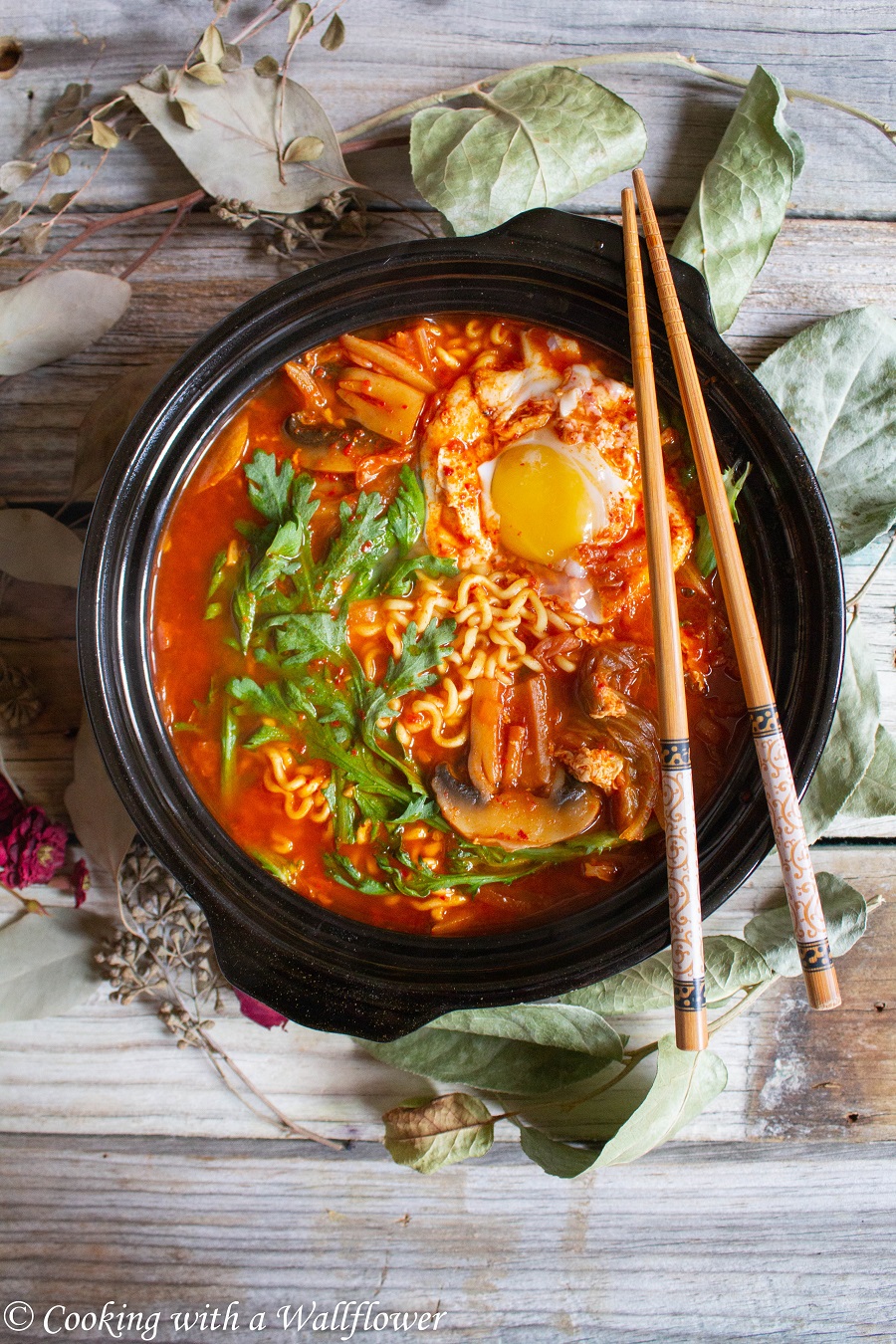
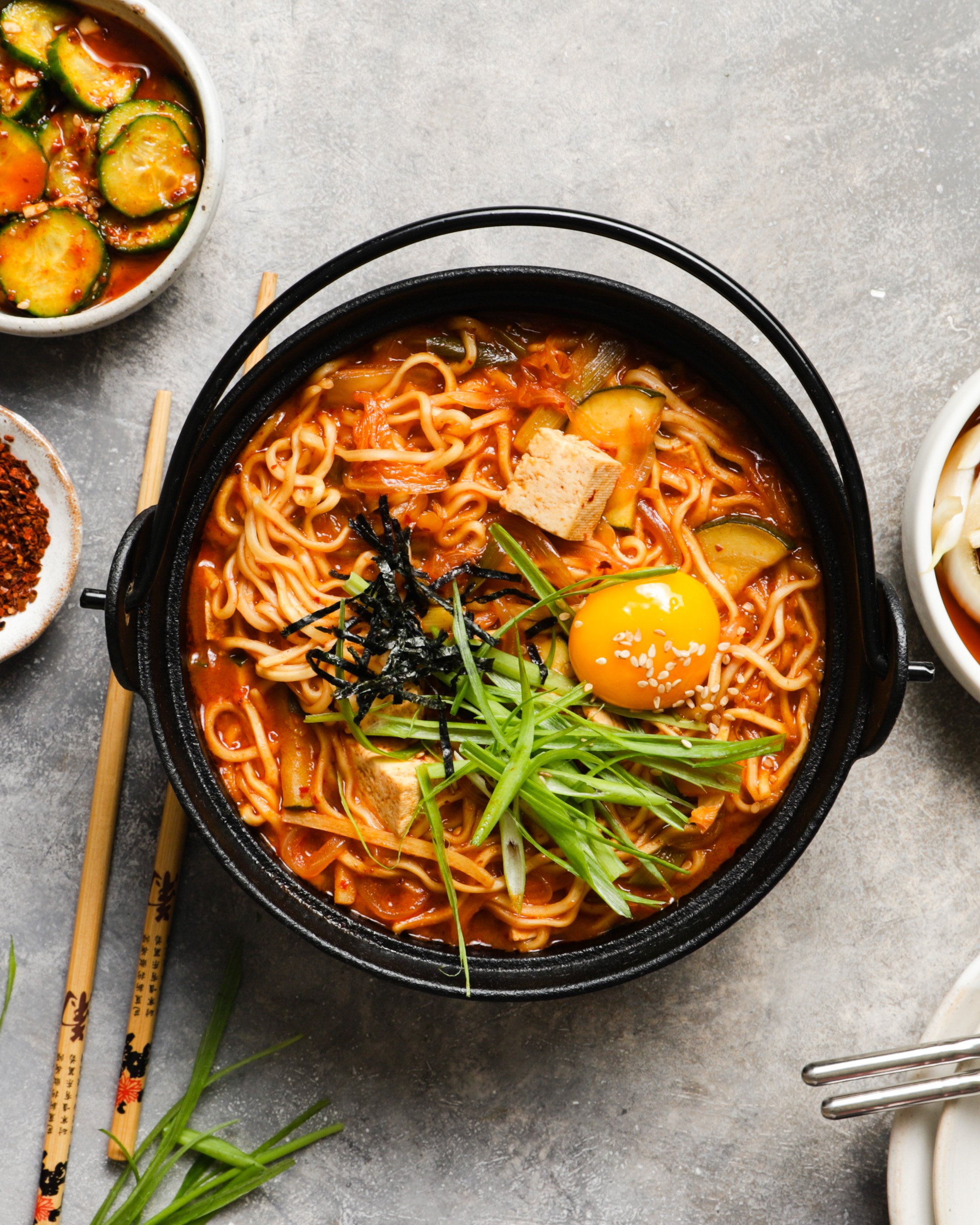
Popular recipe upgrades include:
• adding fresh kimchi for extra crunch
• topping with fried eggs or soft-boiled eggs
• mixing in pork belly or spam for a richer Korean-style dish
• adding scallions, sesame, or seaweed flakes
• pairing with cheese to balance the acidity

https://saucedupfoods.com/wp-content/uploads/2022/08/Screen-Shot-2022-08-08-at-6.54.01-AM.png?utm_source=chatgpt.comhttps://i.ytimg.com/vi/KrHoy_h2Zss/maxresdefault.jpg?utm_source=chatgpt.com

Culturally, Buldak Kimchi is one of the most authentically Korean flavors Samyang has ever released. It takes Korea’s national dish and merges it with one of the country’s signature spicy noodle exports. The combination feels natural, expressive, and bold—just like the cuisine it represents.

Today, Buldak Kimchi remains a beloved flavor for fans who want more dimension in their spicy noodles. It is fiery and tangy, intense yet refreshing, familiar yet adventurous. For many, it tastes like Korea in noodle form—a perfect fusion of tradition and modern fiery flair.


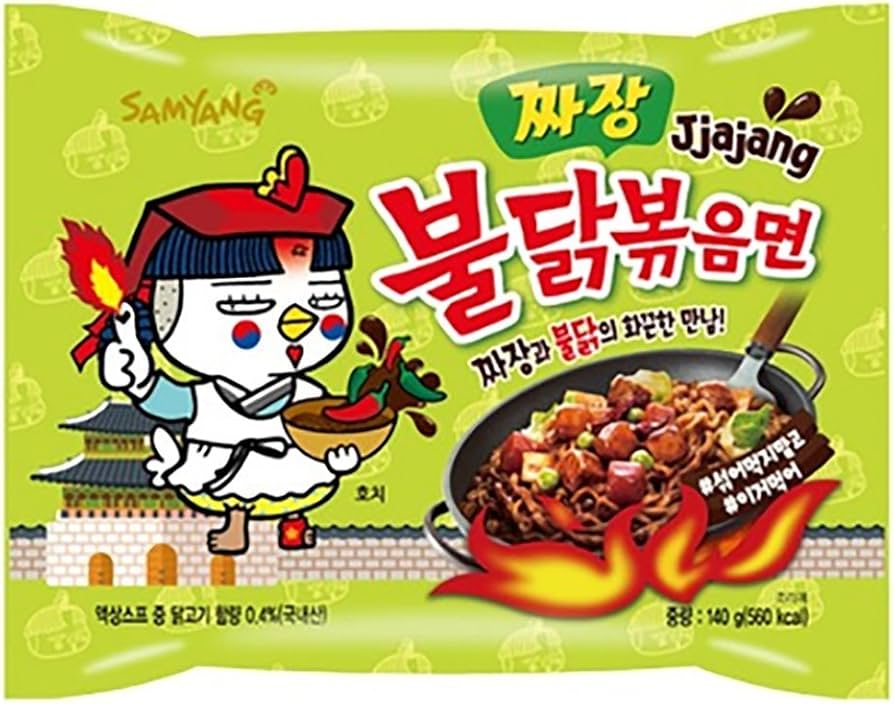
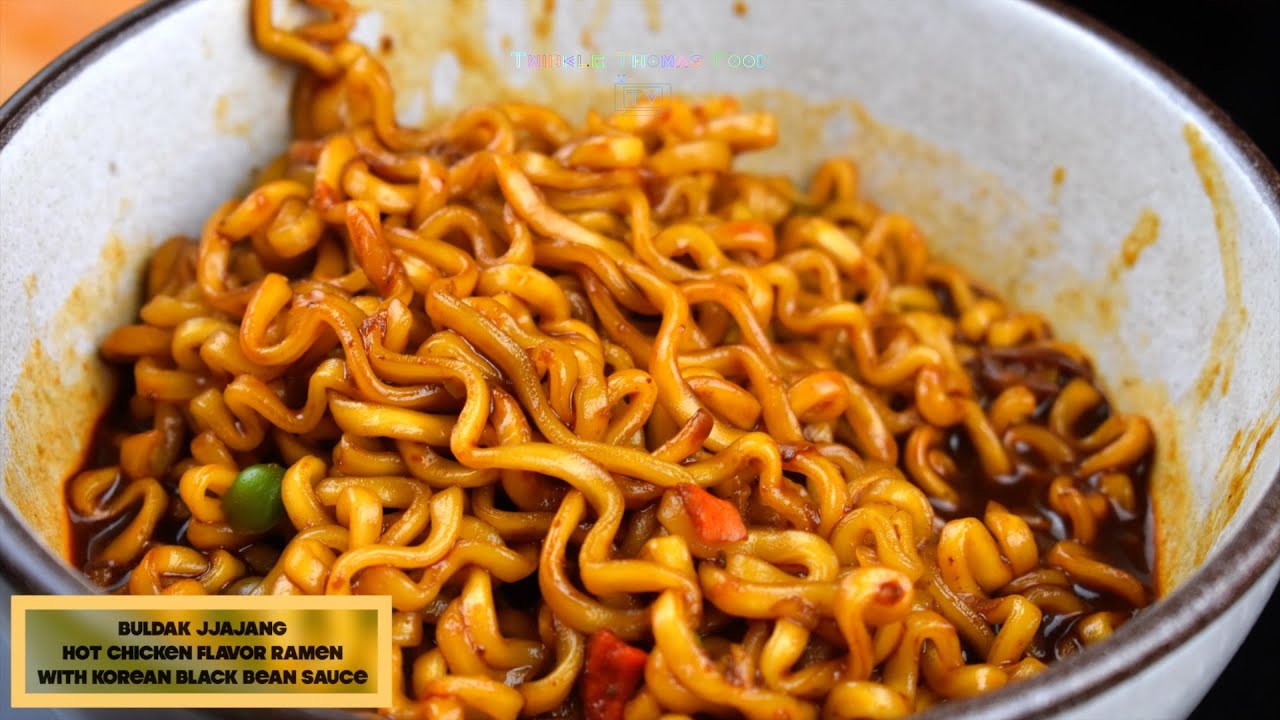
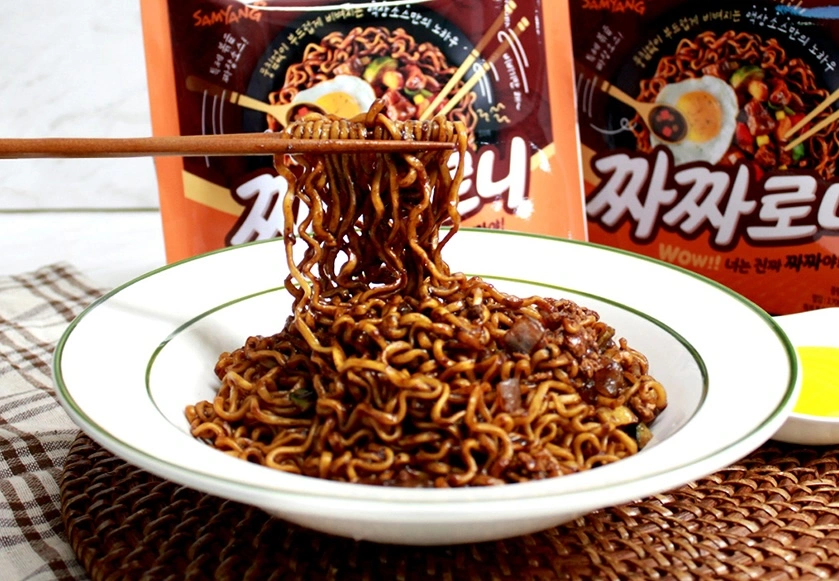
BULDAK JJAJANG (BLACK BEAN HOT CHICKEN RAMEN) 

https://m.media-amazon.com/images/I/71PPjHmSKTL._AC_UF894%2C1000_QL80_.jpg?utm_source=chatgpt.comhttps://i5.walmartimages.com/seo/5-Packs-Samyang-Buldak-Jjajang-Hot-Chicken-Flavor-Ramen-Stir-Fried-Korean-Hot-Noodle-Challenge_d97a06ab-9b6f-4124-8572-1b094db633a6.eec9d452a164bd8acc7711c45e13be13.jpeg?odnBg=FFFFFF&odnHeight=768&odnWidth=768&utm_source=chatgpt.com

Buldak Jjajang is one of Samyang’s most culturally significant variations because it merges two pillars of Korean comfort cuisine:

  1. Buldak, Samyang’s signature spicy, smoky stir-fry noodle

  2. Jjajangmyeon, Korea’s beloved black bean noodle dish with origins tracing back over 120 years

To understand Buldak Jjajang, we must first understand the history of jjajangmyeon itself.

Historical Context: The Birth of Korean Black Bean Noodles

Jjajangmyeon came to Korea in the early 1900s through Chinese immigrant communities, particularly in Incheon’s Chinatown. It began as a Shandong-style zhajiangmian but evolved distinctly within Korea. By the 1930s–1950s, Korean-style jjajang had become thicker, sweeter, richer, and more sauce-heavy.

By the 1970s and 1980s, jjajangmyeon was:

  • A common celebration food for families

  • The national dish of “Black Day” (April 14th), where single people gather to eat black bean noodles

  • One of the most ordered delivery foods in Korea

  • A cultural symbol of Korean-Chinese fusion cuisine

No Korean food carries nostalgia quite like jjajangmyeon. Its flavor profile—brown-black bean paste (chunjang), caramelized onions, pork, and sweet-salty richness—is instantly recognizable to nearly every household.

Samyang’s Innovation: Combining Fire With Tradition

When Samyang developed Buldak Jjajang, their goal was not simply to create another variation. Instead, they wanted to merge the heritage of jjajangmyeon with the modern global fame of Buldak.

The result is a sauce that honors both traditions:

  • Black bean paste (chunjang) adds deep umami and mild bitterness.

  • Caramelized onion notes bring sweetness, characteristic of real jjajangmyeon.

  • Garlic and soy amplify savory depth.

  • Buldak’s signature chili base adds heat—more restrained than 2X, but warm and lingering.

This combination creates a uniquely Korean flavor: earthy, smoky, slightly sweet, richly savory, and gently spicy.

https://upload.wikimedia.org/wikipedia/commons/7/78/Jajangmyeon.jpg?utm_source=chatgpt.comhttps://romamerica.com/cdn/shop/articles/jjajangmyeon_03_1024x.jpg?v=1728382927&utm_source=chatgpt.com

Ingredient Breakdown

Chunjang (춘장) is the key ingredient. It is made from:

  • Fermented soybeans

  • Caramelized sugar

  • Wheat flour

  • A small amount of roasted bean paste

Fermentation gives it:

  • Depth

  • Slight bitterness

  • Complex umami

The caramelization process provides:

  • Dark color

  • Sweetness

  • Glossy texture

Buldak Jjajang captures these characteristics by integrating powdered chunjang and sugared-ferment blends directly into the seasoning packet.

Noodle Technology: Why Buldak Jjajang Uses Thick Cut Noodles

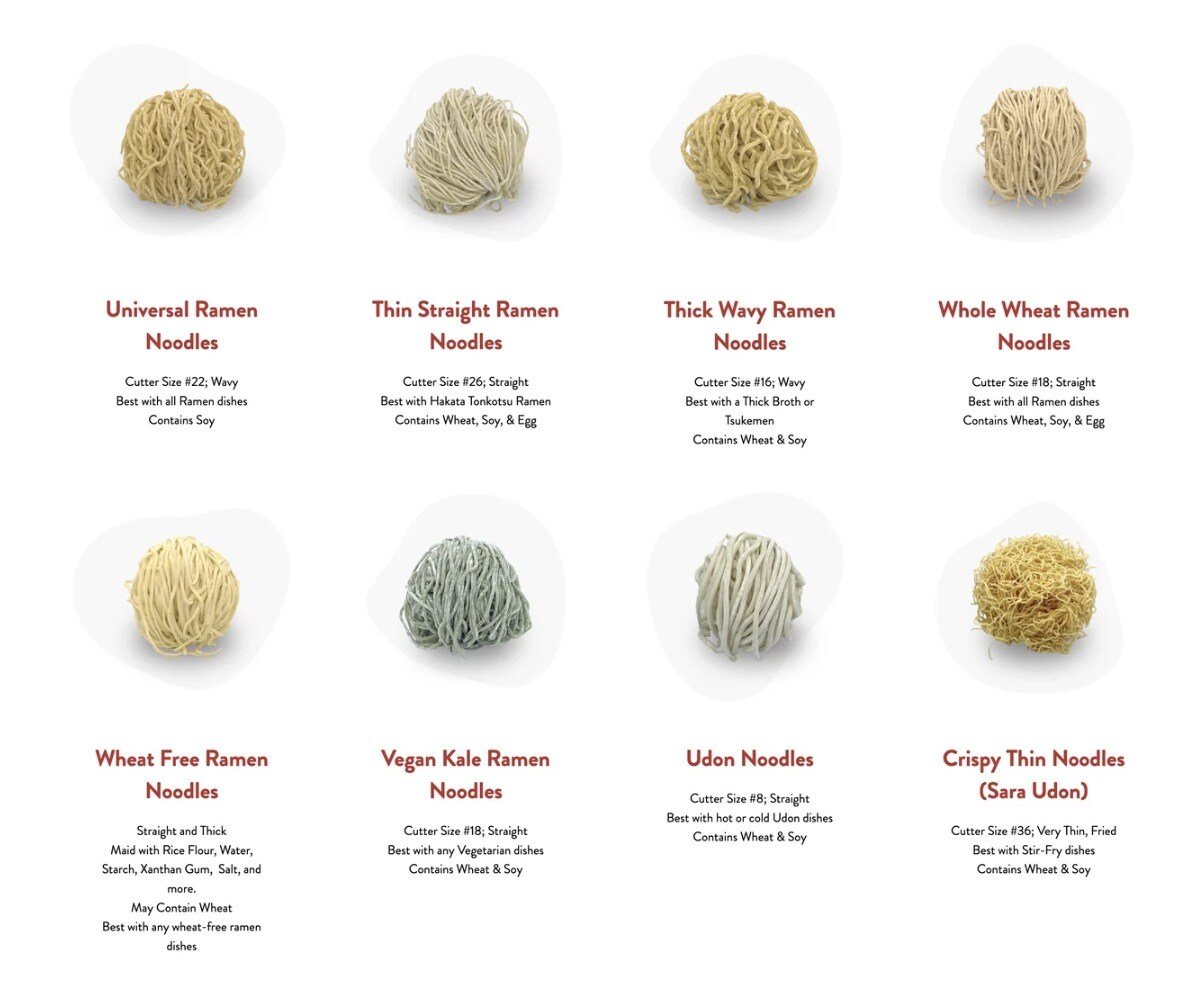
Samyang uses its signature thicker Buldak noodles because jjajangmyeon traditionally uses huge, dense wheat noodles. Historically, these noodles were hand-pulled in Chinese-Korean kitchens. Their chewiness balances the richness of the sauce.

Samyang replicates this texture through:

  • Higher gluten wheat formulation

  • A longer steaming stage during manufacturing

  • A slightly ribbed surface so sauce can cling more effectively

This is why Buldak Jjajang feels closer to an authentic jjajang experience than many competitors.

https://www.yamachanramen.com/hubfs/Screenshot%202024-08-09%20at%204.50.33%20PM.jpg?utm_source=chatgpt.comhttps://photos1.blogger.com/blogger/6198/2762/320/guide_noodles.jpg?utm_source=chatgpt.com

Flavor Journey

  1. First taste: sweet black bean, smoky depth

  2. Mid-palate: garlic, caramelized onion, fermented bean richness

  3. Finish: warming Buldak spice that lingers but doesn’t punish

Unlike the Original or 2X flavors, Buldak Jjajang’s heat curve is designed for broad accessibility. It is one of the most beginner-friendly products in the Buldak line.

Cultural Significance

Buldak Jjajang bridges past and present:

  • Traditional jjajangmyeon (early 1900s)

  • Modern convenience food culture (1970s–2000s)

  • Global Buldak phenomenon (2014–present)

For international customers, this noodle serves as an educational gateway into Korean-black-bean cooking traditions.

How Consumers Worldwide Use It

Because of its rich flavor, creators frequently elevate it with:

  • Ground pork or beef

  • Fried eggs

  • Scallions or cucumbers (traditional jjajang toppings)

  • Pan-fried tofu

  • Chili crisp or gochugaru

  • Stir-fried vegetables

Its versatility makes it ideal for home chefs and culinary explorers.

https://i.ytimg.com/vi/X_FI_BY_xZk/maxresdefault.jpg?utm_source=chatgpt.comhttps://cdn.buldak.roundsquare.io/uploads/2025/09/jjajja_pack_2.webp?utm_source=chatgpt.comhttps://thefoodietakesflight.com/wp-content/uploads/2021/01/vegan-jjajangmyeon-black-bean-noodles-in-bowl.jpg?utm_source=chatgpt.com


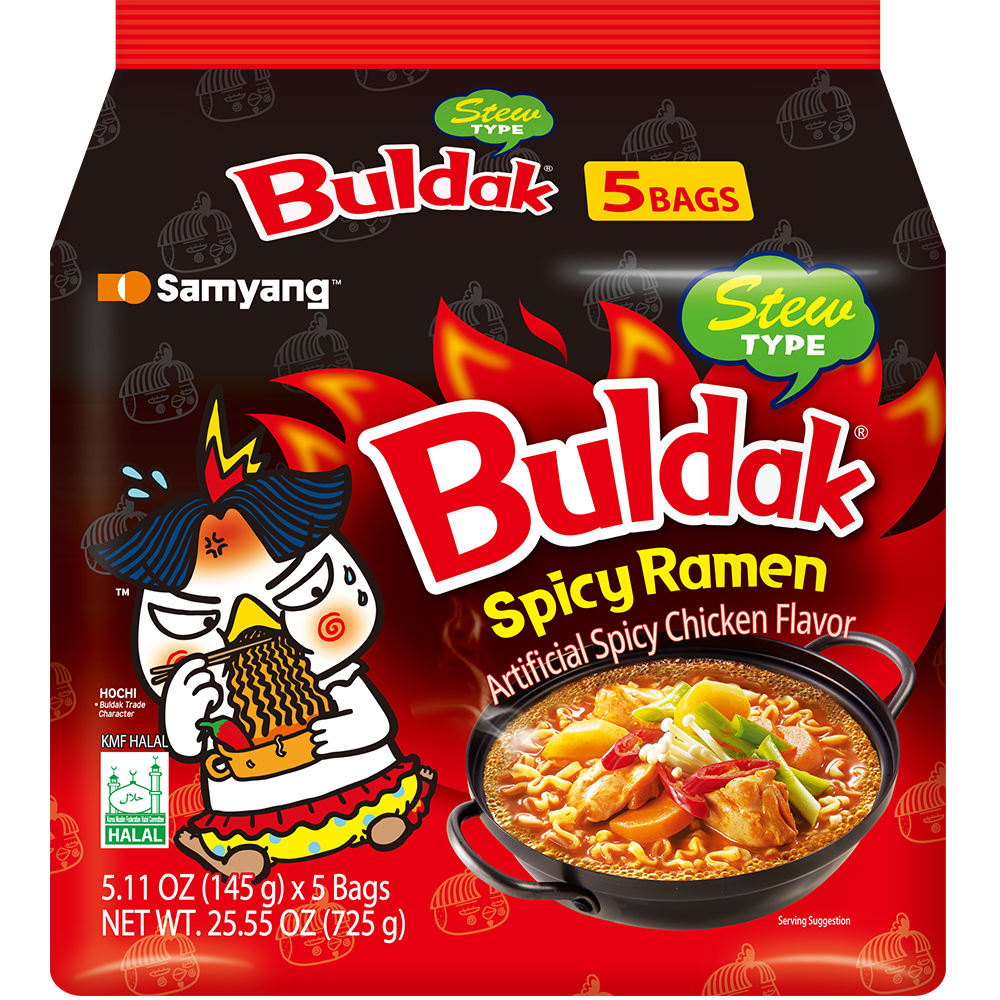
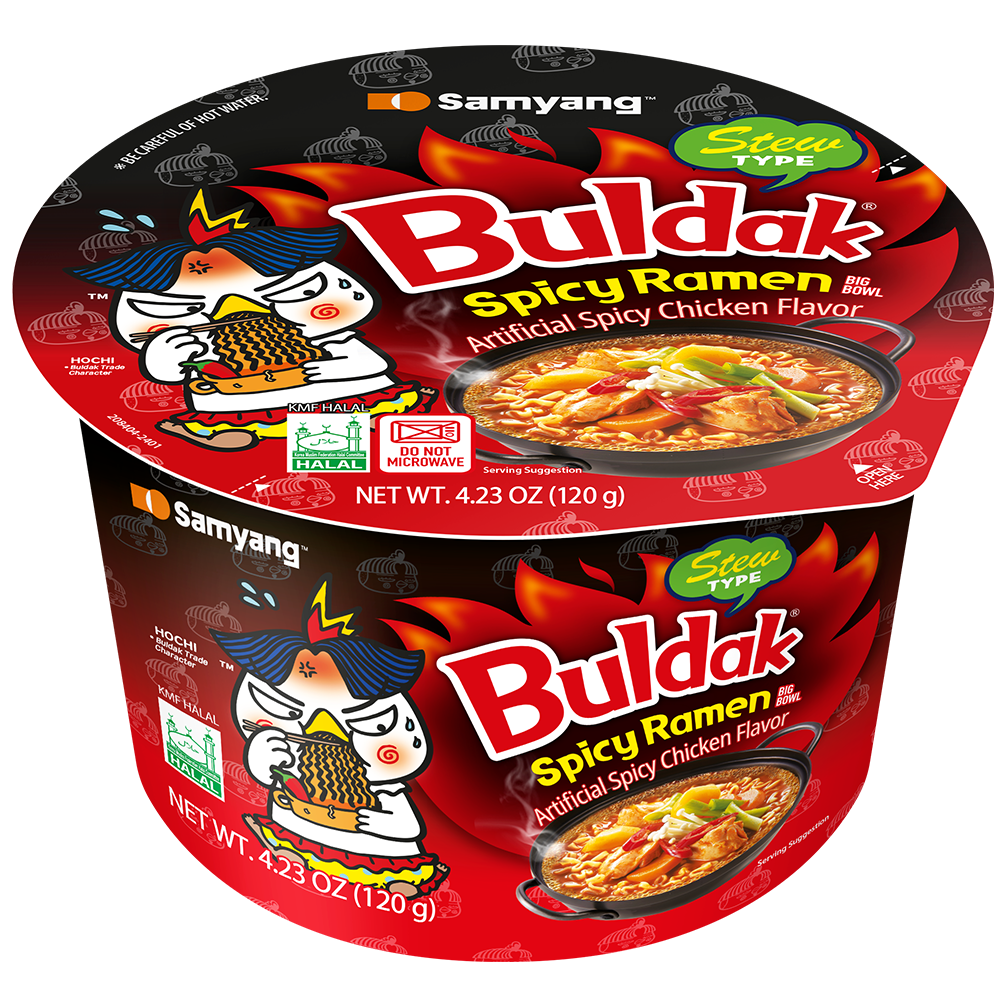
BULDAK STEW TYPE (HOT CHICKEN STEW RAMYUN) 

https://samyangamerica.com/images/products/buldak-multi-stew-type.png?utm_source=chatgpt.comhttps://samyangamerica.com/images/products/buldak-big-bowl-stew-type.png?utm_source=chatgpt.comhttps://i5.walmartimages.com/seo/Samyang-Spicy-Hot-Chicken-Ramen-Noodles-STEW-TYPE-5-Oz-Pack-of-2_42db5900-5b7f-48f9-a79b-5b2a5424e489.9c3fd3318952e63e87ca78602d00e957.jpeg?utm_source=chatgpt.com

Buldak Stew Type represents a fascinating moment in Samyang’s product evolution. While the global success of the Buldak series was built on stir-fry, sauce-coated noodles, Samyang’s culinary roots — and Korean food culture as a whole — are deeply tied to soups and stews, known collectively as guk (국) and jjigae (찌개).

This product is significant because it reconnects the Buldak flavor universe with Korea’s centuries-old love for spicy stews, such as:

  • Dakbokkeumtang (braised spicy chicken)

  • Yukgaejang (spicy beef stew)

  • Kimchi jjigae (fermented kimchi stew)

  • Budae jjigae (army stew)

Samyang reimagined the intense, smoky, chili-heavy Buldak profile as a broth-based meal, allowing consumers to experience the beloved fire flavor in a traditional Korean context.


Historical & Cultural Significance

Before instant noodles existed, Korea’s primary hot meals were soups and stews. By 1963, when Samyang invented Korea’s first instant ramen, Koreans already had a cultural expectation for noodles to be eaten in broth.

So when Buldak went global and became famous as a dry noodle, many Korean fans were surprised — traditionally, spicy flavors belonged in soups, not stir-fried formats.

Buldak Stew Type was Samyang’s answer:
A product that merges modern viral spicy culture with traditional Korean comfort food structures.

It respects the heritage of Korean cooking while still delivering the unmistakable heat of Buldak.


What Makes the Stew Type Different?

Unlike the standard Buldak line, the Stew Type includes:

1. A Broth Powder Packet

This creates a deep, red, spicy soup built on:

  • gochugaru-style chili flavor

  • chicken stock powder

  • garlic

  • onion

  • kelp extract

  • soy seasoning

The broth is designed to mirror Buldak sauce diluted into a stew, rather than a simple spicy ramen soup.

2. Traditional Vegetable Flakes

Commonly including:

  • green onion

  • dried chili

  • cabbage

  • carrot

These ingredients echo Korean home-cooked stews, which often rely on aromatics for depth.

3. A Heat Curve That Is Intense, but Softer than Stir-Fry Buldak

Because the chili is suspended in broth rather than coating the noodle, the burn is:

  • more gradual

  • more breathable

  • more balanced

Many first-time Buldak customers find the Stew Type more approachable.


Ingredient Insight

The stew broth is a blend of capsaicin-based heat and fermented chili notes, which react differently in water than in oil-based stir-fry sauces:

  • Capsaicin disperses more widely, creating overall warmth.

  • Garlic and onion powders soften the sharpness of the chili.

  • Seaweed (kelp) adds umami — a nod to classic Korean soup-making techniques.

This is why Buldak Stew tastes more rounded and broth-forward, even though it retains Buldak’s signature smokiness.


How It’s Enjoyed in Korea vs. Internationally

In Korea:

People commonly add:

  • sliced rice cakes (tteok)

  • tofu cubes

  • spam or sausage

  • egg

  • dumplings (mandu)

  • shredded chicken

The dish becomes a full jjigae-style meal.

Internationally:

Fans use it as a gateway into the Buldak line. Many who cannot tolerate the stir-fry’s intensity start here.

It is also used frequently in home recipes such as:

  • spicy chicken ramen soup bowls

  • fire noodle ramyun hot pot

  • Korean-style “ramyeon and rice” plates


Why This Product Matters in Your Educational Database

To your customers, Buldak Stew Type offers:

  • a crucial understanding of the difference between broth-based and stir-fry ramen

  • insight into how Korean culinary traditions influence modern products

  • a gentler entry point into Samyang’s fire noodle universe

  • one of the best examples of Korean stew adaptation in the instant noodle industry

This allows your platform to teach shoppers how to choose the right Buldak variety depending on desired heat intensity, flavor style, and cooking environment.

https://www.seriouseats.com/thmb/iD62ByO0qeACNjfCV5eZEqkBxhQ%3D/1500x0/filters%3Ano_upscale%28%29%3Amax_bytes%28150000%29%3Astrip_icc%28%29/__opt__aboutcom__coeus__resources__content_migration__serious_eats__seriouseats.com__recipes__images__2014__01__20140120-beef-ramyun-homemade-recipe-15-014423f0ac734abc8c0d826e54857afe.jpg?utm_source=chatgpt.comhttps://www.recipetineats.com/uploads/2023/05/Spicy-Korean-noodle-soup_4.jpg?utm_source=chatgpt.comhttps://i0.wp.com/kennascooks.com/wp-content/uploads/2025/04/IMG_0193-scaled.jpeg?ssl=1&w=1080&utm_source=chatgpt.com


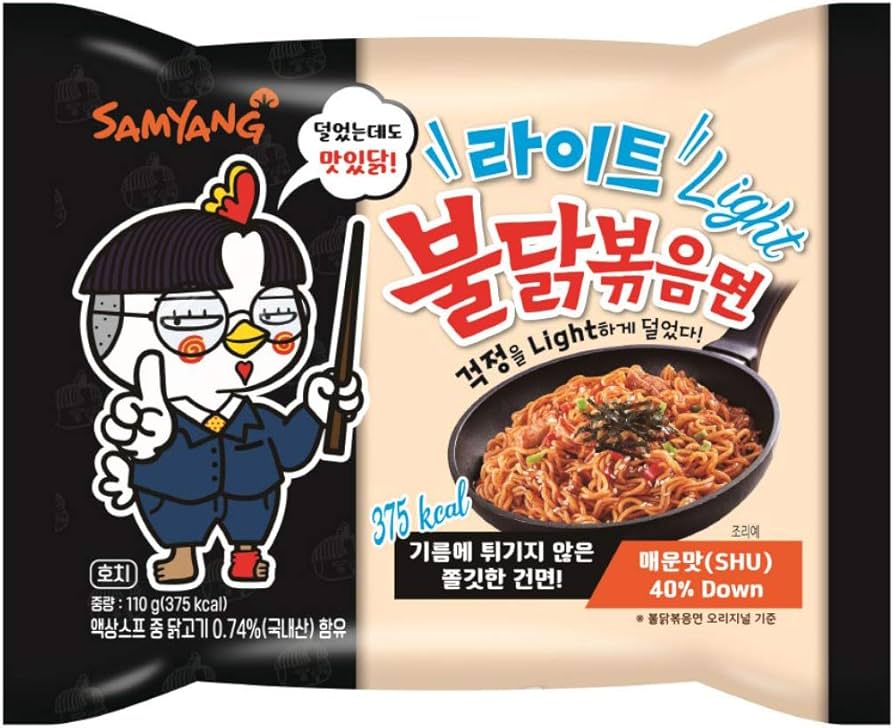
BULDAK LIGHT 

https://m.media-amazon.com/images/I/61utr-CWkJL._AC_UF894%2C1000_QL80_.jpg?utm_source=chatgpt.comhttps://m.media-amazon.com/images/I/71o7azHUtML._AC_UF894%2C1000_QL80_.jpg?utm_source=chatgpt.com

Buldak Light represents one of the most strategic evolutions in Samyang’s product history. As the Buldak series exploded globally, drawing millions of fans with its intense heat and rich sauce profile, Samyang noticed an emerging demand:
Consumers wanted the Buldak flavor experience, but in a lighter, less spicy, and lower-calorie format.

By the late 2010s, global food trends were shifting toward “better-for-you” convenience meals, especially among younger generations and health-conscious consumers. Korea itself was experiencing a strong market shift toward lighter, reduced-sodium, low-oil instant noodles. Samyang responded to this demand with Buldak Light, engineered for people who loved the idea of Buldak but found the heat or calories too intense.


Historical Context: Why Buldak Light Was Developed

Instant noodles have been a staple in Korea since Samyang invented them in 1963. But by the 2010s, consumer concerns about:

  • high calorie counts

  • high sodium levels

  • excessive oil

  • overly spicy products

were becoming widespread across Asia, especially among people in their 20s–40s.

Samyang saw an opportunity to broaden the Buldak audience by creating a product that was:

  • less spicy

  • lower in calories

  • lower in fat

  • lower in sodium

  • easier to digest

  • lighter in sauce while retaining signature flavor

Buldak Light launched as a health-conscious alternative to the high-intensity original.


Ingredient & Manufacturing Insight

1. Reduced-Calorie Noodle Technology

The noodles in Buldak Light differ from the standard Buldak line in key ways:

  • They use more wheat fiber and less oil, reducing calorie density.

  • The frying process (used in most instant noodles) is adjusted to reduce surface oil.

  • The noodles contain dextrin, which improves texture while lowering calories.

  • They are slightly thinner, allowing for quicker cooking and easier digestion.

Result:
A noodle that feels lighter on the palate and stomach, while maintaining the satisfying chew Samyang is known for.


2. Modified Buldak Sauce for Lower Heat + Lower Sodium

The sauce uses:

  • reduced capsaicin concentration

  • more balanced sweetness

  • additional vegetable-based flavors

  • reduced soy sauce sodium

  • a lighter oil base

This results in:

  • approximately 40–50% lower heat level

  • noticeably cleaner finish

  • reduced lingering burn

The flavor is still unmistakably Buldak—smoky, garlicky, slightly sweet—but no longer dominated by aggressive heat.


3. Educational Health Metrics (Typical Ranges)

While exact values vary by region, Buldak Light generally offers:

  • ~15–25% fewer calories compared to Original Buldak

  • Lower total fat content

  • Reduced sodium

  • Lower spice intensity, making it accessible to more consumers

These elements make Buldak Light particularly popular among people who enjoy the flavor of Buldak but want a less intense meal for regular consumption.


Flavor Profile: A Softer Version of the Classic

Buldak Light maintains:

  • the smokiness

  • the garlic aroma

  • the slight sweetness

  • the umami-rich base

But heat is intentionally dialed back, allowing the deeper flavors of the Buldak sauce to emerge.

This makes the product:

  • ideal for beginners

  • ideal for customers with lower spice tolerance

  • perfect for people who enjoy Buldak but not the extreme heat

  • a great everyday ramen choice


Cultural Significance: Shifting Korean Eating Habits

Buldak Light reflects modern Korean food trends:

  • Growing interest in yamasik (light, clean-eating meals)

  • Rising concern over sodium intake among young adults

  • An increase in “everyday ramen” products

  • The rise of “fitness ramen culture” where instant noodles are made lighter

It represents how instant noodle companies adapt to lifestyle-based consumer behavior rather than just chasing novelty.


How Consumers Use Buldak Light

This product appears frequently in wellness-focused Korean recipe blogs and TikTok content, often paired with:

  • steamed vegetables

  • boiled eggs

  • tofu

  • mushrooms

  • lean chicken breast

  • low-fat cheese

  • konjac noodles (for ultra-low-calorie versions)

Many use Buldak Light as a “diet-friendly ramen,” especially in Korea’s rapidly growing fitness community.

https://zimmysnook.ca/wp-content/uploads/2022/01/Healthy-Ramen-Bowls-scaled.jpg?utm_source=chatgpt.comhttps://www.simplehealthykitchen.com/wp-content/uploads/2016/01/healthy-chicken-ramen-bowl-fg.jpg?utm_source=chatgpt.comhttps://www.thatcutedish.com/wp-content/uploads/2021/06/buldak-noodles-bibim-guksu-featuredpost.jpg?utm_source=chatgpt.com


BULDAK BLACK EDITION (BULDAK “POTION PACK”) 

https://megakfood.com/cdn/shop/products/8801073140578_1.jpg?v=1654592521&utm_source=chatgpt.comhttps://aefoodstore.com/cdn/shop/files/11111_851dfe0c-a105-444c-b624-46b9b7a520bc.png?v=1699709407&utm_source=chatgpt.com

Buldak Black Edition, sometimes referred to as the “Potion Pack” Buldak, was created to offer a more elevated version of the classic Buldak experience. Instead of simply increasing heat or changing the sauce flavor, Samyang designed Black Edition to feel richer, deeper, and more complete—a bowl that added body and dimension to the familiar fire noodle flavor.

The key difference is the inclusion of an extra seasoning packet, often called the “broth base” or “potion pack.” This addition brings a savory depth to the sauce that standard Buldak varieties don’t include. It adds notes reminiscent of long-simmered Korean stock—garlic, onion, pepper, and subtle herbal tones—creating a fuller-tasting dish with greater complexity.

Where the original Buldak focuses on sauce-driven heat, Black Edition leans into layered flavor, making the spice feel rounder and more robust.


Origins and Purpose

As Buldak became a global sensation, Samyang looked for ways to expand the brand beyond novelty-level heat. They wanted a version that appealed to people who loved the fire noodles but wished they had:

  • more savory depth

  • more umami

  • more traditional Korean stew-style flavor

  • a richer base beneath the chili heat

Black Edition was the answer.

It reintroduced the idea of stock-based seasoning into the Buldak line, bridging the gap between classic Korean ramyun profiles and the modern stir-fry style.


How the Additional Packet Changes the Flavor

The extra seasoning contains elements inspired by Korean soup stocks:

  • concentrated chicken extract

  • onion and garlic powders

  • pepper and aromatic roots

  • fermented soy elements

  • a touch of kelp-derived umami

When combined with the signature Buldak sauce, it creates a fuller, deeper flavor experience:

  • less sharp heat

  • more rounded spice

  • a broth-like richness even without liquid

  • a savory backbone beneath the burn

This version is often described as “the gourmet Buldak” because the flavors feel more developed and multidimensional.

https://freshcentralgrocery.com/cdn/shop/files/Samyang_Buldak_Hot_Chicken_Flavor_Ramen_Black_Pack_of_5_700_GM.png?v=1738861366&utm_source=chatgpt.comhttps://aefoodstore.com/cdn/shop/files/11111_d77f391d-9785-40df-8b72-29ae54e97689_1445x.png?v=1699709407&utm_source=chatgpt.com


Noodle and Texture Characteristics

Black Edition uses the same thick, chewy noodles typical of the Buldak line, but the extra seasoning gives the final dish a slightly different texture.

Once cooked and mixed:

  • the sauce becomes glossier

  • the noodles feel heavier and more satisfying

  • the “potion pack” powder binds with the chili oil for a denser coating

The result is a mouthfeel that resembles traditional Korean stir-fried dishes more than simple instant ramen.


Cultural and Culinary Significance

Black Edition reflects a broader movement within Korea toward premium instant noodle experiences. As younger consumers sought higher-quality flavors and more “restaurant-like” instant meals, brands responded with richer formulas and expanded seasoning components.

This product fits squarely into that trend. It offers a more mature version of the Buldak flavor—something less about shock value and more about richness and satisfaction.

It also appeals strongly to international fans who enjoy the fire noodle concept but want a version with more culinary nuance.


How People Use Buldak Black in Cooking

Black Edition is a favorite among home cooks who use Buldak noodles as a base for fusion dishes. Popular additions include:

  • sautéed mushrooms

  • scallions and garlic

  • shredded chicken or pork belly

  • soft-boiled eggs

  • spinach or bok choy

  • toasted seaweed flakes

Because the flavor is deeper and more umami-forward, it pairs well with proteins and vegetables.

https://www.tablefortwoblog.com/wp-content/uploads/2023/02/buldak-ramen-recipe-photo-tablefortwoblog-8-scaled.jpg?utm_source=chatgpt.comhttps://www.chilipeppermadness.com/wp-content/uploads/2022/12/Buldak-Recipe6.jpg?utm_source=chatgpt.comhttps://www.allrecipes.com/thmb/4QFUt6-BN5Bz7KFbKYwDCcFhjOE%3D/1500x0/filters%3Ano_upscale%28%29%3Amax_bytes%28150000%29%3Astrip_icc%28%29/139184-cheesy-ramen-noodles-4x3-0618-8d35bb9ffe384a5b8408240cad9cd434.jpg?utm_source=chatgpt.com


BULDAK CREAMY PASTA (CREAMY BULDAK / “ROSE-STYLE” BULDAK) 

https://i5.walmartimages.com/seo/Buldak-Cream-Carbonara-Spicy-Chicken-Ramen_2e394796-4841-4104-b10c-c51a3017c781.9af58c6f964b81653d18a875fa8e74cb.jpeg?utm_source=chatgpt.comhttps://samyangamerica.com/images/products/buldak-multi-cream-carbonara.png?utm_source=chatgpt.com

Buldak Creamy Pasta is Samyang’s answer to a rapidly growing culinary trend in Korea: the fusion of spicy Korean flavors with European-style cream sauces. This trend, often referred to as “Korean Rose Pasta,” blends chili heat with dairy-rich cream, creating a dish that is bold yet smooth, intense yet comforting. Samyang recognized this cultural movement early and adapted it into the instant noodle format with remarkable precision.

The goal behind Buldak Creamy Pasta was to soften the iconic heat of Buldak while enhancing its depth with a velvety cream-forward sauce. Rather than leaning on cheese, as in Cheese Buldak or Quattro Cheese, this version focuses on a silky, creamy texture reminiscent of classic Italian cream pastas tempered with Korean spice.

The flavor draws inspiration from three sources:

  1. Traditional cream pastas of Italy—rich, soft, buttery, and luxurious

  2. Korean rose sauces, which combine gochujang or chili with cream

  3. Samyang’s signature Buldak heat, balanced but unmistakable

This combination produces a noodle that feels both globally inspired and uniquely Korean.


Origins: The Rise of Rose Pasta in Korea

By the late 2010s, “rose pasta” (로제 파스타)—a blend of tomato, chili pepper, and cream—became one of Korea’s most popular Western fusion dishes. It appeared in cafés, fast-casual restaurants, and street food stalls. Korean diners gravitated toward it because:

  • it offered spice without overwhelming heat

  • it paired well with cheese, rice cakes, and noodles

  • it felt indulgent yet familiar

Samyang saw an opportunity to bring this flavor profile into the instant noodle world, with Buldak’s signature kick anchoring the blend.

Buldak Creamy Pasta emerged as a smooth, luscious version of Buldak intended for eaters who enjoy spice but prefer a creamier, gentler finish.


How the Sauce Is Built

The sauce begins with the foundational Buldak elements:

  • smoky chili

  • soy

  • garlic

  • gentle sweetness

But instead of intensifying the heat, Samyang incorporates:

  • cream powder

  • butter notes

  • a hint of tomato for acidity and color

  • black pepper and aromatic herbs

  • a softer chili heat designed to warm rather than shock

This creates a sauce that coats the noodles in a glossy, creamy layer with a spice level significantly lower than the Original or 2X Spicy versions.

https://cdn.shopify.com/s/files/1/0556/0968/8232/files/BLOG-Creamy_Buldak_Carbonara-6.jpg?v=1701237464&utm_source=chatgpt.comhttps://d2rluq6rcpndy0.cloudfront.net/img/buldak-noodles.jpeg?utm_source=chatgpt.com


Texture and Noodle Structure

Buldak’s signature thick noodles work especially well here because:

  • their chew balances the richness of the cream

  • they hold onto sauce exceptionally well

  • they mimic the “al dente” effect of pasta more closely than thinner noodles

Once mixed, the dish resembles a Korean-Italian fusion pasta more than a traditional ramen, which is part of its appeal.


How Consumers Prepare It

Around the world, Buldak Creamy Pasta has become one of the most “upgrade-friendly” Buldak flavors. Common additions include:

  • milk or heavy cream for an even silkier sauce

  • parmesan or mozzarella

  • sautéed mushrooms

  • chicken breast or shrimp

  • rice cakes (tteok), a common Korean addition

  • scallions or parsley for brightness

  • egg yolk stirred in at the end for a richer finish

These additions echo both Korean rose pasta traditions and Western cream pasta techniques.

https://d2rluq6rcpndy0.cloudfront.net/img/buldak-noodles.jpeg?utm_source=chatgpt.comhttps://cdn.shopify.com/s/files/1/0556/0968/8232/files/BLOG-Creamy_Buldak_Carbonara-6.jpg?v=1701237464&utm_source=chatgpt.comhttps://i.ytimg.com/vi/yORIwOS6P8I/sddefault.jpg?utm_source=chatgpt.com

Why This Flavor Resonates Globally

As Buldak gained fame internationally, a large segment of consumers wanted the flavor experience without the intense heat of the Original or 2X varieties. Creamy Buldak meets that need:

  • milder spice

  • smoother finish

  • more approachable flavor for beginners

  • familiar pasta-like profile

  • richer mouthfeel

It serves as an entry point for those new to the Buldak brand and a favorite for those who enjoy Korean-Western fusion dishes.


Cultural Significance

Creamy Buldak reflects a broader movement in Korean cuisine:

  • bold fusion

  • reinterpretation of Western dishes

  • experimentation with dairy in traditionally spicy meals

  • rising café culture that emphasizes comfort and playfulness

It also shows how Samyang’s product development adapts to cultural changes rather than relying solely on heat-driven novelty.


BULDAK TOMATO PASTA (TOMATO BULDAK / “FIRE PASTA”) 

https://i5.walmartimages.com/asr/2a9889dc-5fdb-4228-9262-25782be46ece.73e9c5f28f692c10a206550deb43e600.png?odnBg=FFFFFF&odnHeight=768&odnWidth=768&utm_source=chatgpt.comhttps://munchaddict.com/cdn/shop/files/SamyangBuldakTomatoRamen_5Packs_Korea_750x.jpg?v=1736474885&utm_source=chatgpt.com

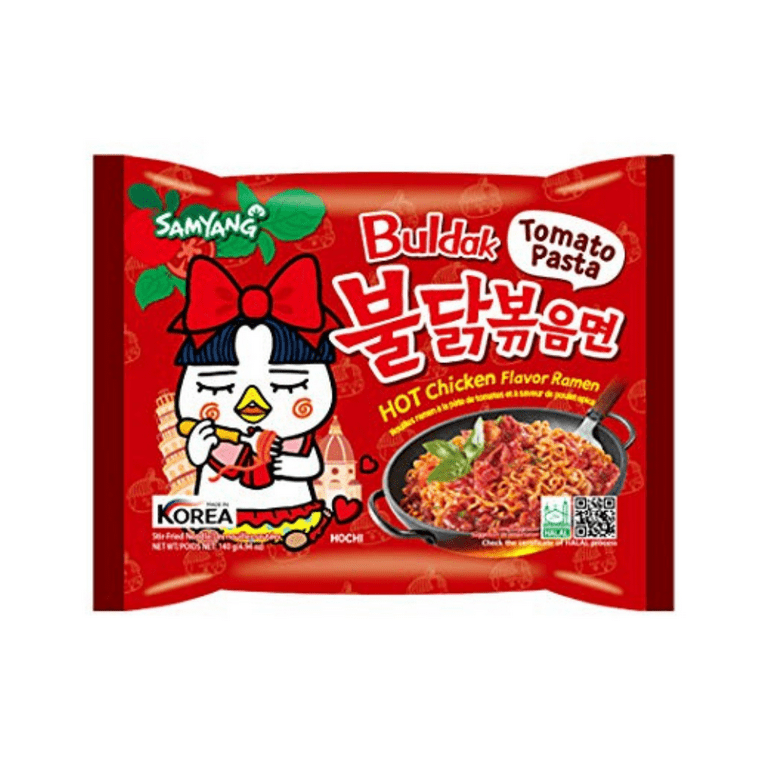
Buldak Tomato Pasta represents one of Samyang’s most adventurous and globally oriented flavor developments. While many Buldak variations lean toward cream, cheese, or traditional Korean flavors, this version boldly enters Western pasta territory. By pairing Buldak’s signature chili heat with the bright acidity and sweetness of tomato, Samyang created a hybrid dish that feels both familiar and exciting—a Korean-Italian fusion that reimagines what instant noodles can be.

This product emerged during a period when Western-style tomato pastas were becoming increasingly popular in Korean cafés, especially among younger diners. Dishes like spicy tomato spaghetti, chili-tomato fusion pastas, and “K-pasta” (Korean-style pasta) found a strong following. The combination of sweetness, tanginess, and chili heat reflected a broader trend in Korea’s food culture toward blending European and Korean flavors.

Buldak Tomato Pasta is Samyang’s instant-noodle interpretation of that movement.


Origins: Korea’s Love Affair With Fusion Pasta

Italian-inspired pasta dishes have been part of Korean dining since the 1980s, but their evolution accelerated dramatically in the 2000s–2010s. Korea developed an entirely new style of pasta—richer, sweeter, spicier, and often creamier than traditional Italian versions. This uniquely Korean adaptation created a natural foundation for Samyang’s tomato-based Buldak flavor.

By the time Buldak Tomato Pasta was introduced, Korean consumers were already accustomed to:

  • spicy tomato pasta

  • pasta with gochujang-based sauces

  • rose pasta (cream + tomato + chili)

  • sweet-and-spicy fusion dishes

Samyang recognized this cultural shift and translated it into a noodle format that would appeal both domestically and internationally.


How the Sauce Is Crafted

Instead of leaning solely on heat, the Tomato Buldak sauce weaves together multiple flavor layers:

  • Bright tomato for acidity

  • Concentrated tomato paste for sweetness and depth

  • Garlic and onion for aromatics

  • Herbs inspired by Italian seasoning—basil and oregano notes

  • A milder Buldak chili profile to maintain warmth without overpowering the tomato

  • A subtle smoky undertone, connecting it back to the Buldak identity

The result is a sauce that tastes like a spicy tomato pasta married with the signature Buldak character.

https://i5.walmartimages.com/asr/2a9889dc-5fdb-4228-9262-25782be46ece.73e9c5f28f692c10a206550deb43e600.png?odnBg=FFFFFF&odnHeight=768&odnWidth=768&utm_source=chatgpt.comhttps://i5.walmartimages.com/asr/16c0a3b2-350a-4776-9218-a9789f8ed9a3.37831df744fc14f061efdf1b098dadd2.png?odnBg=FFFFFF&odnHeight=768&odnWidth=768&utm_source=chatgpt.comhttps://munchaddict.com/cdn/shop/files/SamyangBuldakTomatoRamen_5Packs_Korea_750x.jpg?v=1736474885&utm_source=chatgpt.com

Flavor Profile

The flavor journey is distinct from all other Buldak offerings:

  • First taste: bright tomato acidity followed by natural sweetness

  • Mid-palate: garlic, onion, and pasta-like herb notes

  • Finish: gentle Buldak heat and smokiness

It is less spicy than the original, more balanced, and closer to a tomato pasta dish with a Korean twist.


Noodle Characteristics

Tomato Pasta Buldak uses the classic thick Buldak noodles, which:

  • mimic the texture of al dente pasta

  • provide a chewy contrast to the smooth tomato sauce

  • absorb acidity and spice evenly

  • create a richer mouthfeel than traditional ramen noodles

When fully coated, the noodles take on a vivid red color similar to a Korean-style spicy pasta.


Culinary Uses and Popular Additions

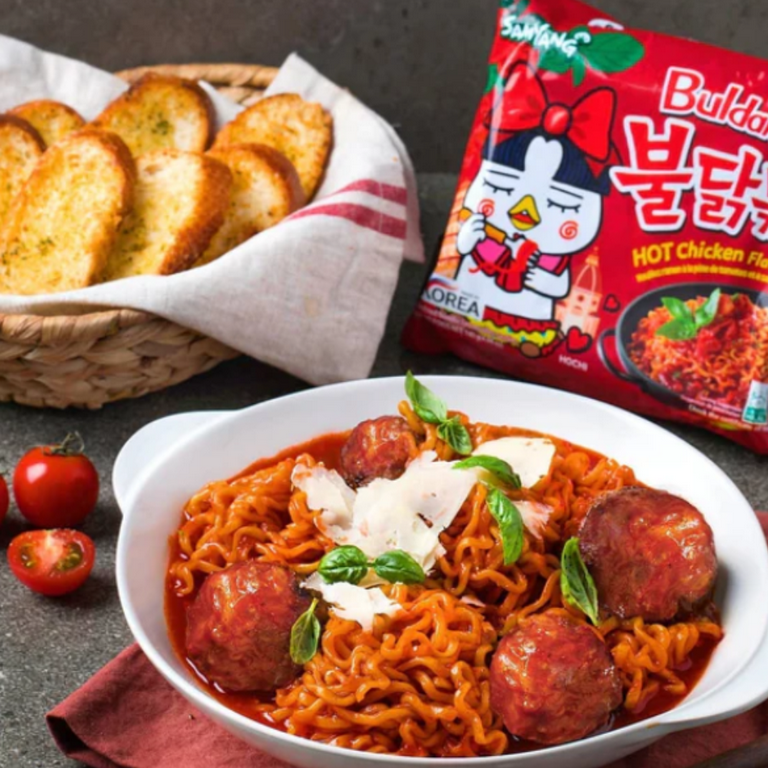
This flavor is especially popular among food creators for its versatility. Common upgrades include:

  • mozzarella or parmesan cheese

  • sautéed onions and mushrooms

  • fresh basil or parsley

  • butter for richness

  • shrimp or chicken

  • a splash of cream to convert it into tomato-rose pasta

  • roasted vegetables like tomatoes or peppers

Many users turn it into a full pasta dish rather than treating it like instant noodles.

https://d2rluq6rcpndy0.cloudfront.net/img/buldak-homemade.jpeg?utm_source=chatgpt.comhttps://www.theramenrater.com/wp-content/uploads/2020/07/2020_7_16_3658_007.jpg?utm_source=chatgpt.com


Why This Product Stands Out

Buldak Tomato Pasta is noteworthy because:

  • It represents one of Samyang’s strongest steps into Western culinary fusion.

  • It appeals to those who want flavor complexity rather than pure heat.

  • It showcases Korea’s evolving relationship with Italian food traditions.

  • It expands the Buldak universe in a direction that is less about intensity and more about creativity.

For many customers, it is one of the most approachable and versatile Buldak flavors.


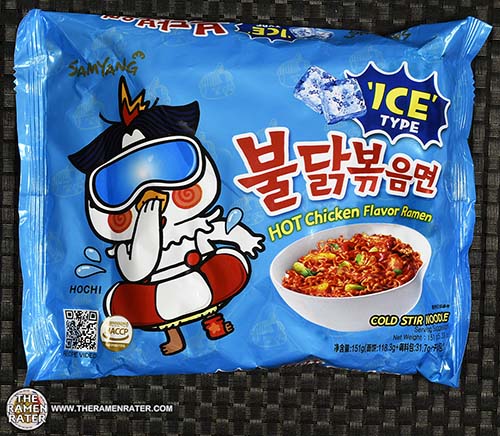
BULDAK ICE (COLD BULDAK / “SUMMER FIRE NOODLE”) 

https://www.theramenrater.com/wp-content/uploads/2017/03/2017_3_4_2426_001.jpg?utm_source=chatgpt.comhttps://i0.wp.com/www.theramenrater.com/wp-content/uploads/2017/03/2017_3_4_2426_010.jpg?resize=300%2C124&ssl=1&utm_source=chatgpt.comhttps://www.thatcutedish.com/wp-content/uploads/2021/06/buldak-noodles-bibim-guksu-featuredpost.jpg?utm_source=chatgpt.com

Buldak Ice is one of the most unusual and limited-edition flavors Samyang has ever released—a cold, refreshing version of the normally blistering-hot Buldak series. This product reflects a uniquely Korean culinary tradition: summer cold noodles, also known as naengmyeon, bibim naengmyeon, and other chilled noodle dishes designed to cool the body during Korea’s humid summers.

Buldak Ice is the first and only Buldak variation created specifically to be eaten cold, not hot. This makes it historically significant within the instant noodle world, as very few mainstream spicy noodle brands have attempted a cold-style product built around intense heat.


Origins: Korea’s Long Tradition of Cold Noodles

Cold noodles have been part of Korean cuisine for centuries. Long before instant ramen existed, Koreans enjoyed chilled noodles made from buckwheat, sweet potato starch, or wheat, among them:

  • Mul Naengmyeon — buckwheat noodles in icy broth

  • Bibim Naengmyeon — spicy cold noodles with chili paste

  • Kongguksu — cold soybean noodle soup

  • Jjolmyeon — chewy cold noodles served with spicy-sweet sauce

These dishes became synonymous with summer. The idea was simple: cooling foods balance the heat of Korea’s climate.

This cultural backdrop explains why Samyang took the bold step of creating a cold version of the hottest noodles in the world.


How Buldak Ice Works

Unlike traditional Buldak, which is cooked and eaten hot, Buldak Ice is designed to be:

  1. Cooked normally

  2. Rinsed thoroughly under cold water

  3. Served chilled with ice or very cold sauce

This method drastically changes the flavor and heat curve. When capsaicin is served cold, it behaves differently:

  • The spice feels sharper, cleaner, and more instantly noticeable

  • The burn doesn’t linger as long

  • The cold temperature prevents heat fatigue

  • The noodles remain extra chewy

The result is a dish that is refreshing and spicy—an unlikely but exciting combination.


https://www.cookerru.com/wp-content/uploads/2022/05/bibim-guksu-recipe-preview.jpg?utm_source=chatgpt.comhttps://stellanspice.com/wp-content/uploads/2022/07/IMG_5772-2.jpg?utm_source=chatgpt.com

The Sauce: A Rare Sweet–Heat Hybrid

Buldak Ice uses a modified sauce formula. Instead of the heavy, oily style of traditional Buldak, the Ice version has:

  • a lighter chili profile

  • increased acidity

  • sweetness reminiscent of Korean bibim-style sauces

  • a more refreshing finish

  • reduced oil content

  • higher fruit and vinegar notes

The sauce is meant to be bright, tangy, and clean, echoing the flavors of Korean cold dishes while still carrying the unmistakable Buldak fire.


Noodle Technology: Built for Chewiness

The noodles in Buldak Ice are engineered with a higher elasticity similar to jjolmyeon, one of Korea’s chewiest cold noodle types. When rinsed with ice water:

  • gluten tightens, increasing snap and chew

  • starch firms up, improving sauce cling

  • the noodles gain a refreshing bounce not found in hot ramen

This makes the texture a major part of the experience.


Consumer Reaction and Cultural Impact

Because of its rarity and seasonal distribution, Buldak Ice became something of a cult item. Many international fans have never seen it in stores, and collectors often refer to it as a “white whale” among Samyang releases.

Korean consumers responded with curiosity and excitement, as cold spicy noodles are a beloved summer treat. Internationally, food creators showcased the novelty of combining:

  • cold noodles

  • fire-level spice

  • ice cubes inside the serving bowl

This created viral content, especially on TikTok and YouTube, where users compared it to bibim naengmyeon “with a punch.”

https://s.abcnews.com/images/International/buldak-ramen-abc-jpo-181204_hpMain_16x9_1600.jpg?utm_source=chatgpt.comhttps://i.ytimg.com/vi/GfWm74oCSfY/hq720.jpg?rs=AOn4CLB7KZP3biqCYHx6LhR_LVQDvmlX_w&sqp=-oaymwEhCK4FEIIDSFryq4qpAxMIARUAAAAAGAElAADIQj0AgKJD&utm_source=chatgpt.comhttps://i.ytimg.com/vi/0UwKnl9s5Wg/sddefault.jpg?utm_source=chatgpt.com

Why Buldak Ice Is Important

This product highlights several key points about Samyang’s innovation:

  • They don’t simply create new flavors; they explore new temperature formats.

  • They take inspiration directly from deep-rooted Korean food traditions.

  • They understand seasonal eating patterns in Korean culture.

  • They’re willing to break rules in the instant noodle space.

Buldak Ice is proof that Samyang views their noodles not just as convenience food, but as a canvas for culinary experimentation.


SAMYANG CLASSIC RAMEN (THE ORIGINAL 1963 RAMYUN) 

https://i.ytimg.com/vi/RjVdeve7BzA/maxresdefault.jpg?utm_source=chatgpt.comhttps://www.chosun.com/resizer/v2/KHHSKQYNL5NTTNG35NSOIMPEDQ.JPG?auth=7579f09ca9fc6a5ec06862ac6749b5b6357fd0819bef9e0656916f4097c15f96&height=1264&smart=true&width=1264&utm_source=chatgpt.comhttps://aashop.ee/cdn/shop/products/samyang-classic-ramen-120g_3b1b5aea-5e03-47db-bdab-ed125d2ed003.jpg?v=1749212037&utm_source=chatgpt.com

Samyang Classic Ramen, released in 1963, is the product that started an entire industry in South Korea. It is the very first Korean instant noodle—an innovation that changed the country's food culture, economic development, and everyday eating habits forever. Every bowl of Korean ramyun that exists today can be traced back to this moment.

To understand Samyang Classic, we have to look at Korea in the early 1960s. The country was recovering from the Korean War, facing widespread food shortages, high unemployment, and limited access to affordable protein. Instant noodles, already beginning to grow in Japan, offered a solution:
a shelf-stable, inexpensive, filling meal that required nothing but boiling water.

Samyang recognized this need and decided to create Korea’s first native instant noodle product.


A Landmark in Korean Food History

Before Samyang Classic Ramen, Korea had no domestic instant noodle industry. Samyang Foods’ founder, Jeon Jung Yoon, traveled to Japan to study production methods and purchased early noodle-making equipment. Returning to Korea, he adapted the formula to better suit Korean tastes—bolder spice, richer broth, stronger garlic, and a more assertive flavor profile compared to Japanese noodles.

On September 15, 1963, Samyang officially released Korea’s first instant ramyun. It sold out almost immediately.

The product did more than feed people—it helped stabilize a nation struggling with food scarcity. It offered:

  • an affordable source of calories

  • long shelf life

  • convenience unmatched by any other food at the time

  • a comforting flavor profile that quickly became familiar to Korean households

Instant noodles rapidly spread through markets, small stores, military bases, and school cafeterias.


What the Original Formula Was Like

Samyang’s Classic Ramen was built around a simple yet bold broth:

  • chili pepper

  • garlic

  • onion

  • soy seasoning

  • dried vegetables

Compared to Japanese ramen—which was milder and more umami-forward—Samyang’s formula introduced a distinctly Korean spiciness, a profile that would later define the entire ramyun category.

The noodles were:

  • fried for preservation

  • slightly thicker than Japanese noodles

  • designed to stay firm in spicy broth

This texture became the standard for Korean ramyun moving forward.

https://cdn.ubitto.com/content/uploads/2021/06/nongshim.jpg?utm_source=chatgpt.comhttps://big.com.my/wp-content/uploads/2019/04/c82b9b060b9e6f272973b0f0564ff612.jpg?utm_source=chatgpt.comhttps://flexible.img.hani.co.kr/flexible/normal/520/345/imgdb/resize/2010/1102/128859353631_20101102.webp?utm_source=chatgpt.com

Cultural Impact: How Samyang Classic Changed Korea

Within a decade, instant noodles went from novelty to necessity:

  • They became the most consumed convenience food in the country.

  • Students used them as late-night fuel.

  • Workers leaned on them for affordable meals.

  • Families began stocking multiple bags in the home pantry.

  • South Korea became one of the highest per-capita consumers of instant noodles in the world (a distinction it still holds today).

By introducing this product, Samyang unintentionally shaped Korea’s national food identity. Today, ramyun is not just food—it’s culture, nostalgia, and comfort.


Modern Samyang Classic Ramen

Today’s version of Samyang Classic honors the original while using updated manufacturing technology. It retains the signature spicy broth but incorporates:

  • improved noodle elasticity

  • more consistent frying techniques

  • modern dehydration methods

  • refined spices for cleaner flavor

The design remains intentionally simple: a pure, old-school Korean ramyun anchored in the flavor DNA of the original 1963 release.

https://samyangamerica.com/images/products/samyang-big-bowl-original.png?utm_source=chatgpt.comhttps://megakfood.com/cdn/shop/products/51878153_1.jpg?v=1646888139&utm_source=chatgpt.com


Why This Product Matters

For your customers, Samyang Classic Ramen represents:

  • the birth of Korean instant noodles

  • the foundation of all modern ramyun culture

  • the origin point for brands like Nongshim, Ottogi, Paldo, and even later Samyang creations

  • an authentic taste of 1960s-era Korean comfort food

It is the cornerstone product that allows shoppers to understand how Korea went from importing ramen technology to becoming a global powerhouse in the instant noodle world.


SAMYANG BEEF RAMEN 

https://www.eastsideasianmarket.com/cdn/shop/products/samyang-beef-ramen-919116_1200x1600.jpg?v=1586917190&utm_source=chatgpt.comhttps://m.media-amazon.com/images/I/51G3WUfVqYL._AC_UF894%2C1000_QL80_.jpg?utm_source=chatgpt.comhttps://i0.wp.com/www.theramenrater.com/wp-content/uploads/2011/01/2011_1_19_rrv_001.jpg?fit=500%2C411&ssl=1&utm_source=chatgpt.com

Samyang Beef Ramen represents an important chapter in the evolution of Korean instant noodles. After the success of the original 1963 Samyang Ramen, which introduced Korea to spicy broth-based noodles, Samyang began expanding into bouillon-style flavors that emphasized savory depth rather than heat. Beef ramyun became one of the earliest and most important variations, helping shape what Korean consumers expect from a classic, comforting bowl of noodle soup.

This flavor reflects Korea’s long cultural relationship with beef. Although historically scarce and considered a luxury ingredient, beef dishes carried strong cultural symbolism. Meals like gukbap (beef soup with rice), yukgaejang (spicy shredded beef stew), and seolleongtang (milky bone broth) were central to traditional Korean cooking. Samyang’s Beef Ramen translated these familiar, comforting ideas into an accessible, everyday instant noodle.


Origins and Historical Significance

During the 1970s and 1980s, Korea’s instant noodle market expanded rapidly. The earliest ramyuns were overwhelmingly spicy, reflecting early Korean taste preferences. But as instant noodles became part of daily life, consumers began wanting more variety—something more comforting, milder, and suitable for children or anyone sensitive to heat.

Beef Ramen was one of Samyang’s answers to this shift. It created a bridge between:

  • the intense spice of early Korean ramyun

  • the savory warmth of Korean home-style soups

It became a staple flavor, particularly for families, students, and workers seeking a satisfying, reliable bowl that wasn’t overwhelmingly spicy.


What Defines Samyang’s Beef Broth

The broth is modeled after traditional Korean beef soups, emphasizing depth and warmth rather than heat. The seasoning typically includes:

  • dehydrated beef stock

  • soy sauce powder

  • garlic and onion

  • black pepper

  • radish or cabbage powder for sweetness

  • anchovy or kelp notes for Korean umami

  • dried vegetable flakes such as scallion, carrot, and mushroom

The result is a broth that feels full-bodied and aromatic, with a balance of savory, sweet, and lightly peppery flavors. It is intentionally gentle, clean, and familiar.

https://www.chilipeppermadness.com/wp-content/uploads/2023/10/Yukgaejang-Recipe-Spicy-Korean-Beef-Stew1.jpg?utm_source=chatgpt.comhttps://eggcellent.recipes/wp-content/uploads/2024/04/Korean-Spicy-Beef-Soup-Yukgaejang-Recipe-768x768.png?utm_source=chatgpt.comhttps://www.koreanbapsang.com/wp-content/uploads/2013/02/DSC5952-5-e1569820474516.jpg?utm_source=chatgpt.com

Noodle Style and Texture

Samyang uses a classic, slightly wavy noodle for its Beef Ramen—different from the thicker, denser noodles used in the Buldak series. These noodles are:

  • lighter in texture

  • designed to absorb broth more readily

  • quick to soften but still springy

  • ideal for soup-based ramyun

This noodle style reflects how Korean consumers enjoyed ramyun in the 1970s–1990s, before the modern shift toward ultra-thick, sauce-coated noodles.


Cultural Role of Beef Ramyun in Korea

For many Koreans, beef-flavored ramyun became the “comfort food” choice:

  • Parents served it to children who couldn’t handle spicy ramyun.

  • College students relied on it as a gentle meal during exam periods.

  • Families cooked it with extra vegetables or egg for a nourishing soup.

  • It became a common base for budget-friendly home cooking.

Beef ramyun is still used today as a foundation for countless “ramyun hacks”:

  • adding sliced beef or brisket

  • cracking in an egg

  • adding tofu or mushrooms

  • mixing in kimchi for acidity

  • cooking with rice cakes for extra chew

Its versatility and mildness make it one of the most adaptable flavors in Samyang’s portfolio.

https://allwaysdelicious.com/wp-content/uploads/2024/01/korean-ramen-3.jpg?utm_source=chatgpt.comhttps://images.getrecipekit.com/20220508212119-spicy-20steak-20and-20egg-20ramen-20bowl-20feat.jpg?aspect_ratio=4%3A3&quality=90&utm_source=chatgpt.comhttps://www.seriouseats.com/thmb/iD62ByO0qeACNjfCV5eZEqkBxhQ%3D/1500x0/filters%3Ano_upscale%28%29%3Amax_bytes%28150000%29%3Astrip_icc%28%29/__opt__aboutcom__coeus__resources__content_migration__serious_eats__seriouseats.com__recipes__images__2014__01__20140120-beef-ramyun-homemade-recipe-15-014423f0ac734abc8c0d826e54857afe.jpg?utm_source=chatgpt.com

How It Differs from Nongshim’s Beef Flavors

Your educational database can highlight subtle differences customers may appreciate:

  • Samyang Beef Ramen tends to be slightly sweeter and lighter.

  • Nongshim’s beef products often lean more toward deep, hearty, rustic flavors.

This allows customers to understand not just the flavor, but the personality of the brand.


SAMYANG SEAFOOD RAMEN 

https://images.freshop.ncrcloud.com/08801073101432/0b53652fa41ab681a59caf4ccba911bb_large.png?utm_source=chatgpt.comhttps://d2j6dbq0eux0bg.cloudfront.net/images/28679550/1965527480.jpg?utm_source=chatgpt.com

Samyang Seafood Ramen reflects a core element of Korean cuisine: the deep, everyday presence of the ocean. Korea is a peninsula surrounded on three sides by water, and seafood has shaped its culinary identity for centuries—from the earliest fishing communities to modern markets filled with anchovies, kelp, squid, clams, and crab. When Samyang expanded its flavor lineup beyond the original spicy ramyun, a seafood-based broth was a natural evolution.

Seafood ramyun became one of Samyang’s earliest non-spicy, broth-focused flavors, bridging the gap between traditional Korean coastal soups and the growing world of instant noodles.


Historical Context: Why Seafood Flavors Are Essential in Korean Ramyun

Seafood broths play a foundational role in Korean cooking. Long before ramyun existed, Korean soups and stews often relied on:

  • myeolchi (dried anchovies)

  • dashima (kelp / kombu)

  • clams and mussels

  • shrimp and crab

  • dried pollock (bugeo)

  • fermented seafood pastes

These ingredients provided umami and depth at a time when meat was scarce or expensive.

When instant noodle companies like Samyang began innovating in the 1970s and 1980s, they naturally incorporated these seafood traditions into their flavor offerings. Consumers expected ramyun to reflect the same comforting, ocean-forward flavors they grew up with.

Samyang’s Seafood Ramen became one of the earliest examples of this movement.


What Defines Samyang’s Seafood Broth

The broth base is inspired by classic Korean seafood soups. Typical flavor components include:

  • dried anchovy extract for salty umami

  • kelp (dashima) for depth and mineral notes

  • shrimp or crab powder for sweetness

  • garlic and onion for aromatic warmth

  • mild chili for background heat (not overwhelming)

  • a subtle pepper finish

The broth is clean, savory, and distinctly Korean—lighter than Japanese seafood ramen but more flavorful than many Western-style seafood soups.

Vegetable flakes often include:

  • dried seaweed (gim or miyeok)

  • scallions

  • carrot

  • cabbage

These additions amplify the coastal character of the dish.

https://nourishedkitchen.com/wp-content/uploads/2014/05/koreanseafoodvegstew-1.jpg?utm_source=chatgpt.comhttps://mykoreankitchen.com/wp-content/uploads/2016/04/2.-Jjampong.jpg?utm_source=chatgpt.comhttps://futuredish.com/wp-content/uploads/2019/10/Jeju-Seafood-Ramen.jpg?utm_source=chatgpt.com

Noodle Style

Samyang uses a traditional wavy ramyun noodle for this product. These noodles:

  • are slightly thinner than Buldak noodles

  • absorb broth quickly

  • soften to a tender, silky texture

  • complement the lighter seafood flavor

The wavy structure helps the noodles catch flecks of seaweed and chili, making each bite flavorful.


Cultural Importance of Seafood Ramen in Korea

Seafood-flavored ramyun gained popularity because:

  • coastal regions favored seafood over beef or pork

  • seafood-based broths feel lighter on the stomach

  • many Korean families prepare seafood soups for wellness and comfort

  • students and workers often prefer savory, broth-driven meals

  • it pairs well with add-ins like egg, tofu, or fresh seafood

Seafood ramen became a common home-cooking base for:

  • adding frozen seafood mixes

  • cracking in an egg

  • stirring in vegetables

  • mixing with fresh squid or shrimp for a fuller meal

It became a flexible, family-friendly flavor that moved beyond the purely spicy offerings the category was known for.

https://cdn.immieats.com/fdb970a5-791d-4003-8777-86626c7577c6/?utm_source=chatgpt.comhttps://i0.wp.com/seonkyounglongest.com/wp-content/uploads/2016/12/IMG_9806-copy-.jpg?resize=620%2C1104&utm_source=chatgpt.com


How It Differs from Other Korean Seafood Ramens

Compared to other brands:

  • Samyang’s seafood broth tends to be clearer and cleaner.

  • Nongshim often emphasizes stronger chili heat and deeper broths.

  • Ottogi leans toward lighter, sweeter seafood profiles.

Samyang’s version sits right in the middle—balanced, savory, and approachable for a wide audience.


SAMYANG KIMCHI RAMEN

https://www.freshaisle.com/cdn/shop/products/samyang-ramen-instant-noodles-kimchi-flavor-120-gm-332.jpg?v=1739194457&utm_source=chatgpt.comhttps://samyangamerica.com/images/products/samyang-multi-kimchi.png?utm_source=chatgpt.comhttps://i5.walmartimages.com/asr/8068c31e-0be3-498e-8ffe-23c5525230c4_1.5fa90bb3dd49ab78b0f0cab2ae88107c.jpeg?utm_source=chatgpt.com

Samyang Kimchi Ramen is built around the most essential flavor in Korean cuisine: kimchi, the national dish of Korea and one of the oldest continuously practiced fermentation traditions in the world. If Samyang’s Classic Ramen represents the birth of Korean instant noodles, Kimchi Ramen represents the heart of Korean food identity.

Kimchi is not just an ingredient; it is a cultural symbol with a history stretching back over 1,500 years. Incorporating it into instant ramen was a natural and inevitable step in the evolution of Korean ramyun.


Why Kimchi Matters in Korean Food Culture

To understand this product, it’s important to understand how deeply kimchi is woven into Korean daily life:

  • Every Korean household makes or buys kimchi year-round.

  • There are over 200 recognized varieties of kimchi.

  • It is served with nearly every meal.

  • Families historically gathered for kimjang, the winter kimchi-making season designated by UNESCO as Intangible Cultural Heritage.

  • Kimchi reflects Korea’s agricultural heritage, climate, and preservation traditions.

Because of this, a kimchi-flavored ramyun is not simply a flavor variation — it is an extension of Korea’s cultural identity.


Origins of Kimchi Ramen in Korea

By the late 1970s, Korean instant noodle companies recognized that spicy ramyun alone was not enough to satisfy consumers’ evolving palates. People wanted noodles that reflected the flavors they ate every day at home.

Kimchi soup (kimchi guk) and kimchi stew (kimchi jjigae) were already household staples. Samyang saw an opportunity to translate these flavors into an instant format.

Kimchi Ramen quickly became one of Samyang’s most popular products, especially among students and workers seeking a familiar, comforting bowl that mirrored home cooking.


What Defines the Flavor of Samyang Kimchi Ramen

Samyang’s Kimchi Ramen aims to recreate the flavor profile of well-aged kimchi, which is more fermented, acidic, and aromatic. The broth is composed of:

  • fermented kimchi powder

  • chili pepper flakes

  • garlic

  • onion

  • ginger

  • soy seasoning

  • kelp and anchovy for umami

  • dried vegetable flakes

The vegetable flakes typically include:

  • dried kimchi pieces

  • green onion

  • cabbage

  • carrot

When cooked, the soup develops the signature bright, tangy, spicy aroma associated with real kimchi dishes.


Flavor Profile

A good Kimchi Ramen balances four key taste elements:

  1. Fermented acidity — from kimchi and vinegar notes

  2. Chili heat — clean and bright, not overpowering

  3. Garlic-forward depth — reflecting traditional kimchi seasoning

  4. Umami — from anchovy or kelp

  5. Light sweetness — to balance the acidity

The broth tastes remarkably close to homemade kimchi soup, which gives it strong nostalgic appeal in Korea.


Noodle Style

Samyang uses a classic ramyun noodle here:

  • slightly wavy

  • medium thickness

  • designed to absorb the tangy, spicy broth

  • tender, springy texture

This style mimics traditional ramyun eaten with kimchi on the side — now consolidated into one bowl.


How Koreans Eat Kimchi Ramen at Home

Kimchi Ramen is one of the most customizable instant noodles in Korea. Common additions include:

  • extra kimchi (fresh or stir-fried)

  • sliced tofu

  • pork belly

  • canned tuna

  • green onion

  • bean sprouts

  • an egg cracked directly into the simmering broth

Some households even use Kimchi Ramen as the base for a quick kimchi jjigae, adding meat and vegetables for a fuller stew.

https://cookingwithawallflower.com/wp-content/uploads/2021/03/Korean-Style-Kimchi-Ramen-5.jpg?utm_source=chatgpt.comhttps://thewoksoflife.com/wp-content/uploads/2017/01/kimchi-ramen-9.jpg?utm_source=chatgpt.comhttps://lindseyeatsla.com/wp-content/uploads/2019/09/Lindseyeatsla_Kimchi_Stew-8.jpg?utm_source=chatgpt.com

How It Differs from Other Brands’ Kimchi Ramens

  • Samyang’s version tends to be more tangy and bright.

  • Nongshim Kimchi Ramen is typically spicier and more robust.

  • Ottogi Kimchi Ramen has a sweeter, milder broth.

Your educational database can help customers navigate these distinctions based on their flavor preferences.


SAMYANG UDON (KOREAN-STYLE UDON NOODLES)

https://img06.weeecdn.com/item/image/741/902/3CDECE072B1EDA10.jpeg?utm_source=chatgpt.comhttps://premiumco.com.au/cdn/shop/files/samyang-pojangmacha-udon-120g.png?v=1684216977&utm_source=chatgpt.comhttps://i5.walmartimages.com/seo/Nongshim-Pre-Cooked-Udon-Savory-Soy-Premium-Noodle-Soup-Bowl-9-73oz-x-6-Count-Shelf-Stable_cfd21aab-9b56-4dba-bebb-37bd1346b960.99b9e76839f288e8a4006af437538aca.jpeg?utm_source=chatgpt.com

Samyang Udon draws from one of the most important cross-cultural exchanges in East Asian food history. Although udon originated in Japan, it has been part of Korean cuisine for nearly a century. Over time, Korea developed its own interpretation—softer, slightly sweeter, often spicier, and rooted in the country’s unique broth traditions. Samyang Udon captures that Korean reinterpretation rather than simply copying a Japanese style.

This product sits outside Samyang’s famous Buldak line, offering a gentler, broth-forward experience. It reflects a period in Korean instant noodle development when companies began exploring non-spicy, non-ramyun noodle formats to appeal to a wider audience, including families, children, and consumers who preferred clean, savory soups over chili-driven bowls.


Origins: How Udon Became Part of Korean Cuisine

Udon was introduced to Korea during the early 20th century, but the Korean version soon diverged from its Japanese counterpart. While Japanese udon emphasizes subtle dashi flavors, Korean udon evolved to include:

  • heartier broth

  • stronger soy presence

  • sweeter undertones

  • more pronounced seafood notes

  • softer, chewier noodles

By the 1980s–1990s, udon became a staple in Korean snack bars, street food stalls, school cafeterias, and convenience stores. “Udon cups” became especially iconic — warm, soothing meals popular among students and office workers.

Samyang’s Udon reflects this Korean-style adaptation, not the original Japanese version.


The Broth: Korean Interpretation of Udon Soup

Samyang’s Udon broth is built on Korean-style dashi, which differs from Japanese dashi in key ways. Common broth components include:

  • anchovy stock powder

  • kelp (dashima) extract

  • soy sauce powder

  • onion and radish flavors

  • subtle sweetness

  • umami from seafood

This creates a broth that is:

  • clean

  • savory

  • lightly sweet

  • full of depth

  • comforting without heaviness

It lacks the aggressive chili heat of ramyun and instead emphasizes clarity and warmth.

https://i0.wp.com/seonkyounglongest.com/wp-content/uploads/2022/01/web4.jpg?fit=1448%2C2106&ssl=1&utm_source=chatgpt.comhttps://chrisseenplace.com/wp-content/uploads/2021/04/kimchi-udon-bowl-flat.jpg?utm_source=chatgpt.comhttps://mykoreankitchen.com/wp-content/uploads/2015/05/0.-How-to-Make-Korean-Style-Dashi.jpg?utm_source=chatgpt.com

Noodle Characteristics: Thick, Silky, and Chewy

Samyang Udon uses thick wheat noodles designed to mimic the texture of fresh udon:

  • wide, smooth surface

  • soft exterior with a chewy center

  • designed to hold broth within their folds

  • more elastic than traditional ramyun noodles

Korean udon noodles tend to be slightly softer than Japanese udon, which fits Korean broth style and everyday eating habits.


Cultural Role of Udon in Korea

In Korea, udon is associated with:

  • comfort food

  • simple meals during busy workdays

  • quick snacks at convenience stores

  • family-friendly flavors

  • winter warmers

Unlike spicy ramyun, udon appeals to nearly every age group. Many Koreans grow up eating udon cups at school or after extracurricular activities. It is also common in KR convenience stores as a light alternative to spicy noodles.


Popular Add-Ins and Home Cooking Traditions

Samyang Udon is often upgraded at home with:

  • sliced fish cakes (eomuk)

  • green onion

  • mushrooms

  • tempura (twigim) pieces

  • eggs

  • fresh seaweed

  • tofu

These additions mirror what Koreans traditionally add to udon purchased at snack stalls.

Some even turn it into a fusion dish by adding:

  • chili oil

  • buldak sauce

  • Korean chili flakes (gochugaru)

  • soy-marinated eggs

But at its core, Samyang Udon is meant to be gentle and restorative.

https://chrisseenplace.com/wp-content/uploads/2021/04/kimchi-udon-bowl-flat.jpg?utm_source=chatgpt.comhttps://www.beyondkimchee.com/wp-content/uploads/2024/01/kimchi-udon-noodle-soup-thumbnail.jpg?utm_source=chatgpt.comhttps://www.justonecookbook.com/wp-content/uploads/2024/03/Kake-Udon-7533-IV.jpg?utm_source=chatgpt.com

How It Differs From Japanese Udon

Your customers often want to understand the difference between Korean and Japanese udon. Here’s a clear distinction:

Japanese Udon:

  • subtle, clean dashi

  • kombu + bonito base

  • emphasis on purity of flavor

Korean Udon:

  • anchovy-dominant broth

  • stronger soy notes

  • slightly sweeter

  • more aromatic

  • softer noodles

Samyang’s Udon is unmistakably the Korean interpretation.


SAMYANG SNACK NOODLES (CRUNCH RAMEN SNACKS)

https://m.media-amazon.com/images/I/71OUGRl0V3L._AC_UF894%2C1000_QL80_.jpg?utm_source=chatgpt.comhttps://i5.walmartimages.com/asr/febfa88f-c7ae-4e88-9fe2-71696a0daa20.5249bab1a515e7166eaa66f0a302ac5b.jpeg?odnBg=FFFFFF&odnHeight=768&odnWidth=768&utm_source=chatgpt.com

Samyang Snack Noodles occupy a special place in Korean pop culture. While Samyang is internationally known for the fiery Buldak series, many Koreans remember the brand first as the company that made “ramen snacks”—instant noodles designed to be eaten right out of the package, without cooking, seasoned for crunching rather than simmering.

These snacks became a childhood rite of passage for students across the 1980s, 1990s, and early 2000s. They were inexpensive, portable, and fun—part snack food, part cultural tradition.


Origins: How Ramen Became a Snack in Korea

Although instant noodles were originally intended to be boiled in water, Korean children quickly discovered an alternative:

crush the noodles → shake with seasoning → eat like chips.

Manufacturers noticed this trend and formalized it by creating products designed specifically to be eaten dry. Samyang became one of the pioneers of this category.

Snack noodles were marketed differently from regular ramyun:

  • smaller packages

  • lighter seasoning

  • sweeter or barbecue-like flavors

  • a crunchier noodle fry for better texture

  • no broth or soup powder (often replaced by a sauce packet or seasoning pouch)

Soon, ramen snacks were everywhere—school canteens, corner stores, lunchboxes, and after-school hangouts.


Why Snack Noodles Became a Korean Cultural Icon

Several reasons explain their explosive popularity:

1. Affordability

Snack noodles were one of the cheapest snacks a student could buy—often just a few hundred won.

2. Convenience

No hot water or cooking needed. Just crush, season, and shake.

3. Social Ritual

Students shared bags, traded flavors, and argued over the “right” way to crush the noodles (large chunks vs. tiny bits).

4. Familiar Flavor

Even though cooked ramyun is spicy and savory, snack noodles were usually sweeter, creating a contrast that appealed to children.

5. Marketing and Mascots

Brands used fun characters, cartoons, and bright packaging that became instantly recognizable to school-age kids.

Samyang’s versions were especially popular because they often mirrored the flavors of their cooked noodles—transforming beloved tastes into crunchy, snackable formats.

https://i.ytimg.com/vi/O3bEtOdvZ7E/maxresdefault.jpg?utm_source=chatgpt.comhttps://m.media-amazon.com/images/I/81FOaPWYIJL._AC_UF894%2C1000_QL80_.jpg?utm_source=chatgpt.comhttps://m.media-amazon.com/images/I/810qmq1KSfL._AC_UF894%2C1000_QL80_.jpg?utm_source=chatgpt.com

Flavor Profiles of Samyang Snack Noodles

Samyang has released many variations over the years, but the most common snack noodle flavors include:

  • Original savory

  • Sweet and spicy

  • Barbecue

  • Corn soup flavor

  • Butter or cheese variations

  • Honey butter (a uniquely Korean flavor trend)

These flavors differ from cooked ramen seasonings because they are meant to be palatable without heat or broth.

Snack noodle seasoning typically includes:

  • sugar

  • onion and garlic powder

  • mild chili powder

  • soy-based notes

  • dried vegetable flakes (occasionally)

  • corn flavoring

  • MSG for umami

The result is light, crisp, flavorful, and addictive.


The Noodles: Engineered for Crunch

Unlike ramyun noodles, which are designed to soften in boiling water, snack noodle blocks are:

  • fried at a slightly higher temperature

  • made thinner for an extra crispy bite

  • seasoned differently to match a dry texture

  • porous, helping them absorb seasoning more evenly

They are intentionally crafted to be eaten uncooked.


How Koreans Traditionally Eat Snack Noodles

The classic method is universally known in Korea:

  1. Do not open the long side of the package.

  2. Crush the noodles with the palm of your hand.

  3. Tear open the corner.

  4. Pour in seasoning.

  5. Close the bag by pinching or folding.
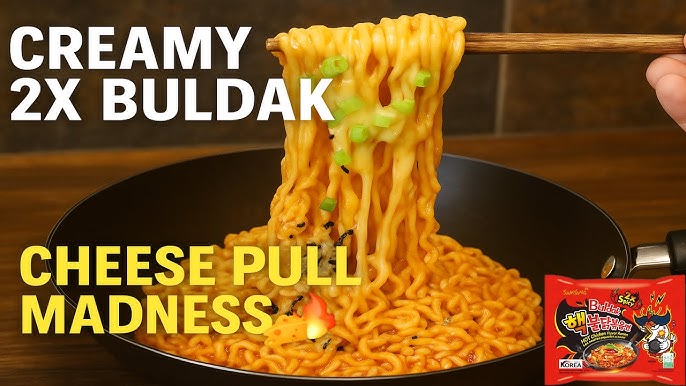
  6. Shake vigorously.

  7. Eat like chips.

This ritual is nearly identical across every region of Korea and has been passed down through generations of students.

https://m.media-amazon.com/images/I/810qmq1KSfL._AC_UF894%2C1000_QL80_.jpg?utm_source=chatgpt.comhttps://m.media-amazon.com/images/I/91hlLvciYsL._AC_UF350%2C350_QL80_.jpg?utm_source=chatgpt.comhttps://chefchrischo.com/wp-content/uploads/2022/05/vlcsnap-2022-05-29-02h52m10s400.png?utm_source=chatgpt.com

Cultural Moments and Modern Popularity

Snack noodles became so iconic that:

  • They are referenced in Korean dramas and films.

  • Many adults still buy them for nostalgia.

  • Convenience stores often place them near the register.

  • Korean emigrants frequently pack them abroad as “taste of home” snacks.

Today, they appear in mukbang content, retro-themed snack boxes, school lunch nostalgia kits, and K-food subscription crates.

Samyang’s versions often reflect the company’s broader flavor identity—bold, savory, and satisfying even in dry form.


SAMYANG — LIMITED EDITION & SEASONAL RELEASES (MASTER CATEGORY)


https://images-na.ssl-images-amazon.com/images/I/71MgMHQ82HL._AC_UL600_SR600%2C600_.jpg?utm_source=chatgpt.comhttps://i5.walmartimages.com/seo/Samyang-Top-Two-Spicy-Chicken-Hot-Ramen-Noodle-Buldak-Variety-10-Pack-5-Each-Hek-Nuclear-Original_7f481687-783e-4731-8f4e-1fa8e750f344.309cc4012e66cc91ca1ac42b2d99d9b2.jpeg?utm_source=chatgpt.com

Limited-edition and seasonal releases are incredibly important to document because Samyang is one of the most experimental ramen manufacturers in the world. Many of these products were sold for short periods of time, in specific regions, or disappeared after test-market launches.

This category preserves their existence in a clear, structured, historical format.


BULDAK MALA (麻辣火鸡面 / SICHUAN PEPPERCORN BULDAK)

https://i5.walmartimages.com/asr/06e9a53d-2420-401e-8f21-b59a19ffb4e9.1fe9cf4cd3bc3c0da99670f4e8532dcd.jpeg?odnBg=FFFFFF&odnHeight=768&odnWidth=768&utm_source=chatgpt.comhttps://poppin-candy.com/cdn/shop/files/image-Photoroom-2025-05-19T115034.227.png?v=1747651849&width=1512&utm_source=chatgpt.com

Buldak Mala is one of the most distinct and culturally rich limited-edition flavors Samyang has ever produced. Unlike most of the Buldak line—which roots itself in Korean spice culture—this version draws heavily from Chinese Sichuan cuisine, specifically the iconic flavor combination known as málà (麻辣).

Mala is a fusion of two sensations:

  • “má” (麻) — the numbing, tingling effect of Sichuan peppercorn

  • “là” (辣) — the burning heat of chili peppers

Samyang’s decision to merge this Chinese culinary tradition with Korea’s fire noodle identity resulted in a product that is both bold and historically significant.


Origins: Why Samyang Developed a Mala Version

By the mid-2010s, mala flavors began sweeping across Asia. Hot pot chains, snack manufacturers, and noodle brands in China and Southeast Asia embraced the fiery, numbing trend. Korean food culture, increasingly influenced by regional Asian flavors, welcomed mala into street food, stir-fries, and noodles.

Samyang recognized two important market forces:

  1. China had become one of the largest consumer bases for Buldak Fire Noodles.

  2. Mala-flavored snacks were exploding in popularity across Asia.

Creating a Buldak Mala flavor allowed Samyang to:

  • appeal directly to Chinese taste preferences

  • ride a major culinary trend

  • expand the Buldak product line into new sensory territory

  • explore the combination of numbing + heat—something entirely new for the brand

The product first launched in China and Southeast Asia before limited release in Korea.


What Makes Mala Different from Korean Spice

Korean spiciness is primarily chili-based—warm, smoky, and flavorful.

Chinese Sichuan spice, however, is dual-layered:

1. Sichuan Peppercorn (Zanthoxylum)

Adds:

  • a prickling sensation

  • numbness on the tongue

  • citrus-like aroma

2. Chili Oil & Chili Paste

Adds:

  • deep red heat

  • smoky undertones

  • lingering warmth

The resulting experience is both hot and numbing, creating a sensory effect that spreads rather than spikes.

Samyang’s Buldak Mala captures this dual effect, making it unlike any other Fire Noodle.

https://omnivorescookbook.com/wp-content/uploads/2022/01/220120_Mala-Dry-Pot-Mala-Xiang-Guo_7.jpg?utm_source=chatgpt.comhttps://www.emborg.com/app/uploads/2024/12/Creamy-Mala-Hotpot_Cooking-_1200x1200.jpg?utm_source=chatgpt.comhttps://i0.wp.com/unfussyepicure.com/wp-content/uploads/2015/04/mala-oil.jpg?fit=1200%2C900&utm_source=chatgpt.com

How Samyang Built the Flavor

The sauce incorporates:

  • Sichuan peppercorn extract

  • chili oil

  • garlic

  • fermented pepper pastes

  • soy seasoning

  • Buldak’s signature smoky heat

The resulting profile is:

  • aromatic

  • citrusy

  • numbing

  • fiery

  • slightly sweet

  • stir-fry rich

The mala component does NOT replace Buldak heat—it enhances it with a numbing sensation, making the burn feel more expansive.


Noodle Characteristics

Like most Buldak products, Mala uses Samyang’s signature thick noodles:

  • chewy

  • dense

  • designed for sauce absorption

  • ideal for stir-fry format

The thicker noodles help balance the complex mala sauce, which is more oily and aromatic than standard Buldak flavors.


Cultural Significance: Korea Meets Sichuan

Buldak Mala represents a rare fusion of two of Asia’s spiciest culinary traditions.

Sichuan Cuisine (China)

  • numb + spicy

  • heavy chili oils

  • aromatics like star anise, clove, and cassia

Korean Cuisine

  • chili-based heat

  • garlic-heavy spice

  • fermented seasoning

Combining both traditions created a flavor that feels modern yet deeply rooted in regional heritage.

This product illustrates Asia’s growing interconnected food culture, particularly younger generations' openness to cross-border flavor experiences.


How Consumers Upgrade Buldak Mala

This flavor is especially popular with cooks who want intensity and complexity. Common additions include:

  • sliced beef or lamb (Sichuan style)

  • bok choy or Chinese cabbage

  • toasted sesame seeds

  • green onion

  • tofu cubes

  • mushrooms

  • chili crisp

When prepared with extra vegetables or proteins, the noodles resemble a fusion mala stir-fry or dry hot pot.

https://i0.wp.com/blog.themalamarket.com/wp-content/uploads/2022/12/malatang-newsletter-11.jpg?resize=800%2C600&ssl=1&utm_source=chatgpt.comhttps://whatif-foods.sg/cdn/shop/articles/Recipe_Portrait_eaa9ef76-42b1-4f57-a379-7a2fbc58daf6.png?v=1693801513&utm_source=chatgpt.com


Why Buldak Mala Is Collectible

Because this product was:

  • produced in small batches

  • sold mainly outside Korea

  • distributed inconsistently

  • tied to a specific culinary trend

It has become a collector’s item among ramen enthusiasts.

Many fans consider it one of the most interesting Buldak variations ever made due to the sensory contrast of heat and numbness.


BULDAK JJAMPPONG (SPICY SEAFOOD FIRE NOODLE)

https://i0.wp.com/www.theramenrater.com/wp-content/uploads/2022/11/2022_11_22_4452_001.jpg?fit=600%2C517&ssl=1&utm_source=chatgpt.comhttps://www.theramenrater.com/wp-content/uploads/2022/11/2022_11_22_4452_002-scaled.jpg?utm_source=chatgpt.comhttps://i.ytimg.com/vi/cralxTQWcrc/maxresdefault.jpg?utm_source=chatgpt.com

Buldak Jjamppong is one of Samyang’s boldest limited-edition releases — a fusion of two iconic Korean experiences: the searing heat of Buldak Fire Noodles and the deep, smoky, ocean-infused flavor of jjampong, Korea’s beloved spicy seafood noodle soup.

This product represents a rare moment in Korean ramen history where two completely different culinary traditions collided to create something new, dramatic, and unforgettable.


The Cultural Origin of Jjamppong in Korea

Jjamppong (짬뽕) is a dish with a fascinating history. Although it originated from Chinese immigrants in Japan, the version eaten in Korea is completely different — richer, spicier, smokier, and deeply infused with seafood.

Korean jjamppong is defined by:

  • a bright red chili broth

  • stir-fried aromatics cooked over high heat

  • seafood such as squid, mussels, shrimp, and clams

  • cabbage, onion, and green onion

  • a signature wok-smoky flavor called “wok hei”

By the 1980s and 1990s, jjamppong had become a national comfort dish in Korea, especially among workers and students seeking a hearty, fiery meal.


Why Samyang Created a Jjamppong Buldak Flavor

Samyang’s Buldak line was already famous for intense spice. But as Korean consumers became more adventurous, Samyang recognized an opportunity:

Combine two legendary spicy foods into one bowl.

Jjamppong was the perfect candidate because:

  • It is one of the most iconic spicy dishes in Korea

  • It naturally pairs heat with seafood depth

  • The intense wok aroma matches the boldness of Buldak

  • It appeals to consumers seeking elevated, restaurant-style flavors at home

Buldak Jjamppong was released in limited markets and produced for a short period, making it one of Samyang’s most requested discontinued flavors.


Flavor Profile: Jjamppong Meets Fire Noodle

The broth and sauce blend the defining components of both traditions:

From Korean Jjamppong:

  • smoky chili oil

  • dried seafood powders (squid, mussel, shrimp)

  • cabbage and onion sweetness

  • wok-roasted aromatics

From Buldak:

  • signature fire noodle gochugaru-style heat

  • sweetness balanced with soy

  • a deep, lingering burn

The result is a sauce that is:

  • intensely spicy

  • sharply aromatic

  • seafood-forward

  • smoky and full

  • redder and oilier than standard Buldak flavors

Many fans regard it as one of the most flavorful Buldak releases ever made — not just hot, but complex.

https://www.koreanbapsang.com/wp-content/uploads/2011/04/DSC_0066-e1539057703301.jpg?utm_source=chatgpt.comhttps://futuredish.com/wp-content/uploads/2019/02/Jjamppong.jpg?utm_source=chatgpt.com


Noodle Style

Samyang uses the thick signature Buldak noodles for this edition, which serve an important purpose:

  • withstand the heavier seafood sauce

  • resemble the chewy texture of fresh jjamppong noodles

  • carry smoky chili oil effectively

  • create a substantial, restaurant-like mouthfeel

Many consider the noodle texture essential to replicating the jjamppong dining experience at home.


Why This Product Resonated With Korean Consumers

Buldak Jjamppong succeeded because it tapped into three powerful Korean food identities:

1. Love of Heat

Korea has some of the highest spicy food tolerance in the world.

2. Deep Seafood Heritage

Korea’s coastal geography shapes everyday cuisine.

3. Korean-Chinese Restaurant Culture

Jjajangmyeon and jjamppong have become national comfort foods.

Combining these traditions produced a flavor that felt both nostalgic and groundbreaking.
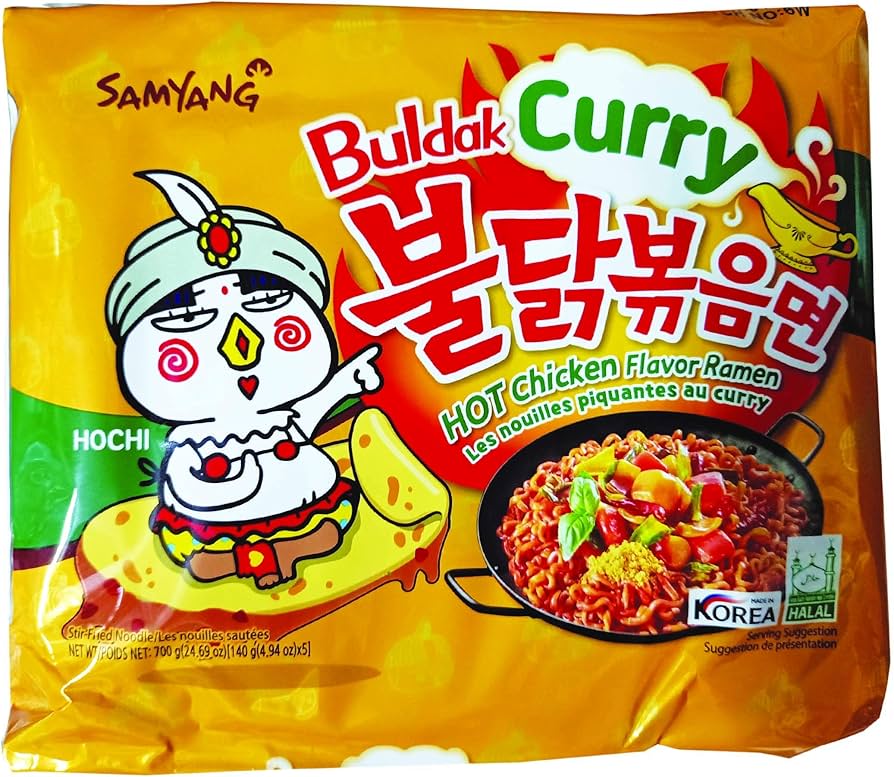

How Consumers Upgraded Buldak Jjamppong

Food creators loved this flavor because it almost begged to be customized. Popular additions include:

  • fresh squid or shrimp

  • mussels or clams

  • cabbage

  • scallions

  • bean sprouts

  • soft-boiled egg

  • toasted dried seaweed

  • chili crisp oil

Many users recreated full Korean jjamppong meals at home using the noodles as a base.

https://mykoreankitchen.com/wp-content/uploads/2016/04/2.-Jjampong.jpg?utm_source=chatgpt.comhttps://cdn.immieats.com/fdb970a5-791d-4003-8777-86626c7577c6/-/format/auto/-/quality/smart_retina/-/resize/x800/?utm_source=chatgpt.com


Why It Was Discontinued

Like many limited editions, Buldak Jjamppong was:

  • expensive to produce due to seafood powders

  • harder to export because seafood ingredients require strict import controls

  • targeted toward a niche audience

  • competing with Samyang’s growing Buldak core flavors

Because of these factors, Samyang produced it for only a short time.

Collectors and fans continue to request its return, making it one of the most “mythical” Buldak variants.


BULDAK CHEESE TOPOKKI (FIRE NOODLE RICE CAKE EDITION) 

https://i5.walmartimages.com/asr/b370fbc0-34f2-4c12-8053-4930ad462216.11486b92014fef5a568a45b0e6c29e52.jpeg?utm_source=chatgpt.comhttps://nomadette.com/wp-content/uploads/2022/10/Rabokki.jpg?utm_source=chatgpt.com

Buldak Cheese Topokki is a fusion that feels almost inevitable when you understand Korean food culture.
Topokki (떡볶이, also spelled tteokbokki) is one of Korea’s most iconic street foods: chewy rice cakes simmered in spicy chili sauce.
Buldak, meanwhile, is the definitive modern symbol of Korean heat.

This limited-edition release united those two cultural forces — tradition and trend — into a single, rich, saucy rice-cake meal.


The Cultural Significance of Topokki in Korea

To understand this product, it’s important to understand topokki itself.

Topokki is:

  • a beloved street snack dating back to the 1950s

  • originally served in a non-spicy soy sauce style

  • later transformed in the 1970s–1980s into the chili-red version known today

  • popular among students, office workers, and late-night diners

  • one of the most adaptable Korean dishes (cheese, cream, seafood, curry, black bean, etc.)

Its popularity has only grown over time. Today, topokki is:

  • sold in street carts

  • cooked in homes

  • eaten in casual restaurants

  • a staple of Korean convenience stores

  • featured on social media food trends

Because of its national popularity, many Korean food brands have created instant topokki kits for home cooking — but none captured the global imagination like Samyang’s Buldak version.


Why Samyang Created a Buldak Topokki

Samyang recognized a powerful opportunity:

Combine the fiery global fame of Buldak with the nostalgic comfort of Korean topokki.

This was a strategic move that aligned with:

  • rising global interest in Korean street food

  • the explosive popularity of Korean cheese-drenched dishes

  • the demand for convenient “meal kits” rather than just noodles

  • a growing trend of pairing spicy rice cakes with melted cheese

Buldak Cheese Topokki became a limited-run product that appealed to both Korean consumers and international fans seeking authentic street-style flavors.


Flavor Profile: Creamy, Spicy, and Addictively Saucy

This product blends two flavor pillars:

1. Buldak Heat

  • Samyang’s signature fire sauce

  • smoky, concentrated chili flavor

  • balanced sweetness

  • deep red color

2. Cheese Softness

  • creamy cheese powder

  • slightly sweet, dairy-rich coating

  • mellowing effect that enhances the rice cakes’ chew

The cheese does not eliminate the heat — it rounds it, creating the creamy-spicy balance that Korean diners love.

The sauce is thicker than typical Buldak noodle sauces because topokki requires a velvety, clingy consistency.

https://www.koreanbapsang.com/wp-content/uploads/2017/09/DSC_1886.jpg?utm_source=chatgpt.comhttps://jasmineandtea.com/wp-content/uploads/2021/05/cheese-tteokbokki-close-up.jpg?utm_source=chatgpt.comhttps://www.okonomikitchen.com/wp-content/uploads/2020/03/vegan-cheesy-korean-rice-cakes-tteokbokki-2-of-3.jpg?utm_source=chatgpt.com

Rice Cake Texture (The Heart of the Dish)

Chewy Korean rice cakes (tteok) define the entire eating experience.

Samyang uses cylindrical garae-tteok–style rice cakes, which are:

  • soft at the surface

  • chewy in the center

  • perfect for absorbing spicy sauce

  • satisfying to bite into

This texture contrasts beautifully with the spicy-cheesy sauce, making the dish far more indulgent than noodles alone.

Some versions also include:

  • mini noodle cakes

  • fish cake pieces (depending on region)

But the primary star is the chewy rice cake.


Why Cheese + Spice Is a Korean Favorite

Korean food culture uses cheese not the way Western cuisine does, but as:

  • a cooling agent

  • a creamy contrast to heat

  • a fast-melting topping for spicy dishes

Spicy topokki with cheese became popular around the 2010s, especially in college neighborhoods and casual dining shops.

Samyang simply took that trend and made it shelf-stable.


Cooking Experience: A Street Food Moment at Home

Fans love Buldak Cheese Topokki because it recreates a street-cart meal in minutes.

The cooking method usually involves:

  1. Adding rice cakes + sauce + water

  2. Simmering until thick

  3. (Optional) melting real cheese on top

The result is a restaurant-level topokki texture from a portable kit.

https://d2lswn7b0fl4u2.cloudfront.net/photos/pg-tteokbokki-spicy-rice-cakes-1636818785.jpg?utm_source=chatgpt.comhttps://stellanspice.com/wp-content/uploads/2022/02/IMG_4291.jpeg?utm_source=chatgpt.comhttps://i.ytimg.com/vi/WGrKS1V_PbI/maxresdefault.jpg?utm_source=chatgpt.com

Why It Was Limited Edition

Several factors make Buldak Cheese Topokki a short-run product:

  • Rice cake products have a shorter shelf life than dried noodles

  • Storage and distribution complexity

  • Higher production cost compared to noodle-only items

  • Targeted toward niche customers craving street food kits

  • Part of Samyang’s experimental expansion beyond noodles

Because of these factors, Samyang released it in select markets and moved on.

Today, it is considered one of the most memorable seasonal releases in the Buldak lineup.


    BULDAK CURRY CUP (INTERNATIONAL-ONLY VARIANT)

    https://i5.walmartimages.com/asr/aa85ce38-41b8-47f0-8dac-951f334e9613.fceddd902393d0c0d3e3fbcb56faf955.jpeg?odnBg=FFFFFF&odnHeight=328&odnWidth=328&utm_source=chatgpt.comhttps://m.media-amazon.com/images/I/81fLr9pJNTL._AC_UF894%2C1000_QL80_.jpg?utm_source=chatgpt.com

    Buldak Curry Cup is a unique release within the Buldak universe because it was produced specifically for international markets, not for Korea’s domestic retail shelves.
    While Samyang’s Curry Buldak packet version was widely available, the cup/bowl format was crafted to cater to regions where instant cup noodles dominate convenience eating, such as Southeast Asia, Europe, and the Middle East.

    This product showcases how Samyang adapts its most popular flavors to fit cultural eating habits outside Korea.


    The Global Appeal of Curry-Flavored Instant Noodles

    Curry-flavored instant noodles have long been popular across Asia, with each region having its own interpretation:

    • Japan uses sweeter, thicker curry broth

    • Malaysia and Singapore lean toward coconut-rich curry laksa

    • India enjoys masala-forward curry noodles

    • Korea traditionally uses mild, slightly sweet curry powder

    Samyang’s Curry Buldak combines elements of Korean curry with fiery Buldak heat — a fusion that resonated especially well outside Korea, where curry flavors are widely loved.

    The cup version helped Samyang enter markets where cup noodles outsell packet noodles, making this product strategically important even though it was not sold domestically on a large scale.


    Flavor Profile: Curry Meets Buldak Heat

    The Buldak Curry Cup balances:

    1. Korean-Style Curry Notes

    • mild turmeric

    • sweet onion

    • garlic

    • gentle spices (cumin, coriander)

    • slightly sweet, nostalgic curry flavor

    2. Buldak’s Signature Fire

    • smoky chili background

    • rising heat curve

    • sweet-spicy finish

    • concentrated sauce-style seasoning

    Compared to the packet version, the cup format has a slightly milder overall heat and a more rounded curry flavor to appeal to a broader international audience.

    https://www.lafujimama.com/wp-content/uploads/2020/05/Curry-Ramen-2-500x500.jpg?utm_source=chatgpt.comhttps://yejiskitchenstories.com/wp-content/uploads/2024/06/curry-udon-noodles-2.jpg?utm_source=chatgpt.com

    Cup Format: Designed for Global Convenience Culture

    Many countries prefer cup noodles over packet noodles due to:

    • workplace eating culture

    • university dorm convenience

    • travel-friendly food preferences

    • vending machine compatibility

    • easy preparation without stovetops

    Samyang created the Curry Buldak Cup to meet these needs.

    Distinct characteristics of the cup format include:

    • slightly thinner noodles than packet Buldak

    • sauce powder optimized for cup cooking

    • shorter cook time

    • consistent flavor dispersion

    This made the curry flavor more accessible, especially for consumers who found the original Buldak flavors too intense.


    Cultural Importance: Korean Curry and Buldak Fusion

    Korean curry is historically mild and comforting — introduced during the early 20th century and popularized through school lunches and home cooking.
    By merging this nostalgic flavor with the extreme heat of Buldak, Samyang created a product that represents two eras of Korean food:

    • Childhood comfort (Korean curry)

    • Modern spice culture (Buldak)

    This duality helped Buldak Curry Cup resonate internationally as both adventurous and familiar.
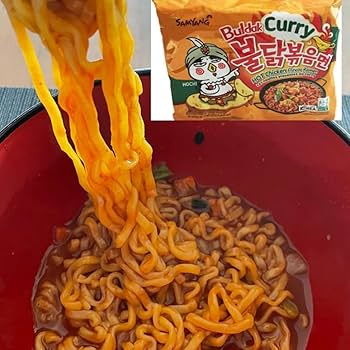

    Why It Was Limited Edition / Export-Only

    The curry cup format had a more specialized audience. Several factors limited its distribution:

    • Domestically, Koreans prefer packet-style ramyun over cups for sauced noodles

    • Cup manufacturing requires different production lines

    • Export markets demanded curry flavors more than Korea itself

    • Retailers often rotate limited flavors to test performance

    Because of this, the Buldak Curry Cup appears intermittently in international supply chains, making it somewhat rare and sought after by collectors.


    How People Customize Buldak Curry Cup

    International consumers frequently enhance this product with:

    • boiled egg

    • chicken chunks

    • sweet corn

    • sliced cheese

    • green onion

    • crispy fried onions

    • leftover curry or curry paste

    These additions transform the cup into a fuller, curry-inspired meal.

    https://images.themodernproper.com/production/posts/2022/EasyCurryRamen-_7.jpg?dm=1747762318&fit=crop&fm=jpg&h=960&q=82&s=49ae97198eec8aa953d13e0566310fc5&w=960&utm_source=chatgpt.comhttps://okonomikitchen.com/wp-content/uploads/2022/02/curry-ramen-1-of-1-4-576x1024.jpg?utm_source=chatgpt.com


    BULDAK BLACK CUP (PREMIUM ANNIVERSARY EDITION) 


    https://thepantrysa.com/cdn/shop/files/blackcup_700x700.png?v=1691074271&utm_source=chatgpt.com

    Buldak Black Cup is a premium, limited-edition version of Samyang’s iconic Fire Noodles, created to celebrate the brand’s anniversary milestones and to showcase a higher-end, richer interpretation of the classic Buldak flavor.
    This cup was produced in small quantities and released for a short time, making it one of the more collectible products in the Fire Noodle universe.

    Unlike traditional Buldak cups, the Black Cup was formulated to offer a fuller, deeper, more refined heat profile — something closer to a “restaurant-style” stir-fried spicy noodle experience.


    Why Samyang Created the Buldak Black Cup

    The Buldak brand rapidly expanded throughout the 2010s, becoming a global sensation with countless viral challenges and international demand.
    To commemorate its success and strengthen its premium brand identity, Samyang introduced the Buldak Black line, including:

    • Buldak Black packet version

    • Buldak Black liquid sauces

    • Buldak Black Cup (this product)

    The Black series wasn’t simply hotter — it aimed to be deeper, richer, and more gourmet.

    Samyang described the Black editions as having:

    • upgraded flavor

    • enhanced broth depth

    • improved sauce complexity

    • refined balance of sweetness and heat

    The goal was to elevate Buldak from a “challenge food” to a culinary experience.


    Flavor Profile: Deeper, Darker, More Complex

    The Black Cup used a modified version of the classic Buldak seasoning, often featuring:

    1. Darkened Gochugaru Heat

    A richer, deeper chili flavor rather than the brighter spike of the original.

    2. Enhanced Umami Base

    Often including ingredients like soy extract, garlic concentrate, onion powder, and kelp-derived umami.

    3. Slightly Reduced Sharpness

    A more rounded heat curve that builds gradually.

    4. Caramelized Sweetness

    A darker, almost smoky sweetness that adds depth.

    5. Sauce with Greater Body

    The Buldak Black sauce adheres more densely to the noodles.

    Fans often described it as:

    • smoother

    • richer

    • more layered

    • less harshly spicy

    • closer to restaurant-level Korean stir-fry heat

    https://i5.walmartimages.com/seo/Samyang-Hot-Chicken-Flavor-Ramen-Stir-Fried-Noodles-Buldak-Bokkeum-Myun-4-93-OZ-5-Pack_8190734f-c4d3-49df-8e73-0525baf6d077.f17d998e5b5e2d1e6a20402913884516.jpeg?utm_source=chatgpt.comhttps://aefoodstore.com/cdn/shop/files/11111_851dfe0c-a105-444c-b624-46b9b7a520bc.png?v=1699709407&utm_source=chatgpt.comhttps://www.halfbakedharvest.com/wp-content/uploads/2022/08/20-Minute-Korean-Beef-Sesame-Noodles-1.jpg?utm_source=chatgpt.com

    Noodle Style: Premium Noodle Quality

    The noodles in the Buldak Black Cup were slightly upgraded:

    • chewier

    • more elastic

    • thicker

    • designed to hold more sauce

    • closer to the packet version in texture (unusual for cup noodles)

    Cup noodles typically sacrifice chew due to packaging constraints, but the Buldak Black Cup was crafted to break that expectation.


    Packaging: A Symbol of Status

    The black-and-gold aesthetics of this cup distinguish it from any other Buldak product:

    • matte black background

    • gold typography

    • premium-grade lid finish

    • anniversary branding elements

    The packaging itself became a collectible — many fans kept the cup even after eating it because it represented a milestone in Fire Noodle history.


    Why Production Was Limited

    Several factors kept Buldak Black Cup a short-run product:

    • higher ingredient cost

    • more complex sauce formulation

    • premium packaging materials

    • targeted anniversary release

    • positioned as a showcase product rather than a long-term SKU

    It was intended to highlight the evolution of Buldak rather than replace the core lineup.


    Consumer Perception and Cultural Impact

    For fans who tried it, Buldak Black Cup offered:

    • a more sophisticated spicy experience

    • a smoother, less aggressively sharp burn

    • a gourmet-style instant noodle that still maintained Buldak’s identity

    It appealed especially to:

    • long-term Fire Noodle fans

    • consumers who wanted depth, not just heat

    • collectors of limited-edition items

    • markets where premium instant noodles were gaining popularity (Japan, Singapore, Hong Kong)

    In many regions, it sold out quickly and was never restocked.


    Next in the Limited Edition Lineup:

    Buldak Ice Cup (Cold Cup Edition)
    BULDAK ICE CUP (COLD FIRE NOODLE CUP EDITION) https://www.theramenrater.com/wp-content/uploads/2017/03/2017_3_4_2426_001.jpg?utm_source=chatgpt.comhttps://i0.wp.com/www.theramenrater.com/wp-content/uploads/2017/03/2017_3_4_2426_010.jpg?resize=300%2C124&ssl=1&utm_source=chatgpt.com

    Buldak Ice Cup is one of the rarest and most unusual instant noodle products Samyang has ever produced — a cold, ready-made Fire Noodle designed for hot summer weather. While the packet version of Buldak Ice was already considered elusive, the cup version was even more limited, often appearing only in convenience stores during peak summer months in Korea and select Asian markets.

    This seasonal release bridges two important parts of Korean food culture:

    • Korea’s long tradition of cold noodles

    • Samyang’s modern, global Buldak brand

    The result was a cup noodle that challenged every expectation of what “instant ramen” could be.


    Why Korea Loves Cold Noodles (and Why This Product Exists)

    Cold noodle dishes have been part of Korean cuisine for centuries. In summer — when humidity rises and temperatures reach their peak — Koreans turn to bowls of chilled noodles such as:

    • Mul Naengmyeon (icy buckwheat noodles)

    • Bibim Naengmyeon (cold spicy noodles)

    • Jjolmyeon (chewy cold wheat noodles with spicy-sweet sauce)

    These dishes cool the body while still delivering intense flavor.

    Samyang tapped directly into this tradition by creating a cold-style ramen, something almost unheard of in mainstream instant noodle production.

    The Buldak Ice Cup represents the meeting point of ancient Korean summer cuisine and Samyang’s signature heat culture.


    The Cup Format: Designed for Convenience Stores & Summer Lifestyle

    Unlike the packet version, the Buldak Ice Cup was tailored for:

    • convenience stores

    • travelers

    • students

    • office workers

    • people who needed cold meals on the go

    During Korean summers, convenience stores often stock special chilled noodles, cold soups, and iced snacks. The Buldak Ice Cup fit perfectly into this seasonal trend.

    The preparation was unique:

    1. Cook the noodles with hot water.

    2. Drain completely.

    3. Rinse thoroughly with cold water.

    4. Mix with the included cooling-style Buldak sauce.

    5. Add ice cubes (optional but common).

    The cup was engineered with drainage systems or markings that made cold preparation straightforward.

    https://hmartus.vtexassets.com/arquivos/ids/163451-800-800?aspect=true&height=800&v=638448916709100000&width=800&utm_source=chatgpt.comhttps://hmartus.vtexassets.com/arquivos/ids/161990-800-800?aspect=true&height=800&v=638448910725170000&width=800&utm_source=chatgpt.comhttps://m.media-amazon.com/images/I/81zYFOH1VlL._AC_UF894%2C1000_QL80_.jpg?utm_source=chatgpt.com

    Flavor Profile: Bright, Clean Heat with Refreshing Acidity

    The sauce formulation differs noticeably from the traditional Buldak line:

    Key Characteristics of Buldak Ice Cup Sauce

    • lighter chili presence

    • higher vinegar brightness

    • cleaner, refreshing finish

    • less oil

    • citrus-like top notes

    • restrained sweetness

    • a quicker, sharper spice hit that fades faster

    The flavor resembles a hybrid between:

    • bibim naengmyeon sauce (cold spicy Korean noodle sauce)

    • original Buldak flavor, but toned down and sharpened

    The goal was not to overwhelm with heat, but to create a refreshing spicy noodle suitable for hot weather.


    Noodle Style: Elastic, Chewy, and Cold-Optimized

    Samyang used cold-noodle–style formulation for this edition:

    • more elasticity

    • slightly firmer structure

    • ideal texture when rinsed in cold water

    • better ability to soak thin sauce without getting mushy

    Cold preparation tightens the noodle gluten, creating a texture closer to jjolmyeon or cold bibim noodles.

    This is a major contrast to typical Buldak cups, which rely on softer noodles suited for hot stir-fry methods.


    Why This Product Was Limited Edition

    Several logistical and economic factors explain its rarity:

    1. Seasonal Demand

    Cold noodles only sell well during Korea’s hot months.

    2. Cup Manufacturing Constraints

    Cold-prep cups require different drainage and packaging design.

    3. Non-standard Cooking Method

    Most consumers expect cup noodles to be cooked and eaten hot.

    4. Higher Distribution Cost

    Chilled noodle varieties move inconsistently outside Korea.

    5. Experimental Nature

    This was part of Samyang’s ongoing creative R&D rather than a long-term SKU.

    Because of these factors, the Buldak Ice Cup rarely appears in international markets and often sells out among collectors.


    How Fans Upgraded Buldak Ice Cup

    Just like the packet version, the cup edition inspired unique summer recipes:

    • adding cucumber strips

    • topping with sesame seeds

    • mixing in kimchi juice

    • adding cold broth to create hybrid “cold soup fire noodles”

    • adding boiled egg slices (classic bibim-naengmyeon style)

    • using extra ice for extreme chilled texture

    https://stellanspice.com/wp-content/uploads/2022/07/IMG_5772-2.jpg?utm_source=chatgpt.comhttps://www.simplyrecipes.com/thmb/NtPP3I8SyKTMkViwt_UuGdqKQNM%3D/1500x0/filters%3Ano_upscale%28%29%3Amax_bytes%28150000%29%3Astrip_icc%28%29/Simply-Recipes-Korean-Spicy-Cold-Noodles-LEAD-05-fa5c6343dded4b9984898bc138b65cbf.jpg?utm_source=chatgpt.com

    The creativity around this product helped popularize the idea of “cold ramen challenges” online.


    Cultural Importance in the Buldak Universe

    The Buldak Ice Cup represents:

    • Samyang’s willingness to break genre conventions

    • the blending of ancient Korean cold cuisine with modern K-food trends

    • a rare example of “cold ramen” becoming mainstream

    • a milestone in Fire Noodle evolution that proved Buldak is more than just heat

    This product also shows how instant noodle companies adapt to seasonal patterns, especially in countries with strong food traditions tied to climate.


    BULDAK SUMMER REFRESH EDITIONS 

    https://cdn.buldak.roundsquare.io/uploads/2025/07/20250322_080807-1164x1536-1-776x1024.webp?utm_source=chatgpt.comhttps://m.media-amazon.com/images/I/71Uvr2sEQ6L._AC_UF894%2C1000_QL80_.jpg?utm_source=chatgpt.comhttps://www.instacart.com/assets/domains/product-image/file/large_28e85faa-c930-45ba-ab59-cf591730445b.jpeg?utm_source=chatgpt.com

    Buldak Summer Refresh Editions refer to a series of limited seasonal releases created by Samyang for the Korean summer market.
    These were not entirely new flavors — they were seasonally adapted versions of existing Buldak products, featuring:

    • lighter heat profiles

    • slightly modified formulations

    • refreshed seasonal packaging

    • limited distribution windows

    The goal was to make Buldak more approachable during Korea’s intensely hot, humid summers when heavy or extremely spicy foods are less appealing.

    These editions reflect how instant noodle manufacturers in Korea adjust their products to the rhythm of the seasons — something rarely seen in the Western market.


    The Cultural Reason Behind Summer Editions

    Korea experiences extremely humid summers, with temperatures often reaching the 90s (F) and humidity above 70%.
    Traditional Korean food culture includes the practice of eating lighter, cooling, or refreshing foods during this time, such as:

    • cold noodles (naengmyeon, bibim-naengmyeon)

    • cold kimchi broth dishes

    • cucumber soups

    • seasonal fruits

    • lightly seasoned meals

    Simultaneously, there is also a tradition called iyeol chiyeol (이열치열), meaning “fight heat with heat”, where Koreans eat spicy foods to induce sweating and cooling.
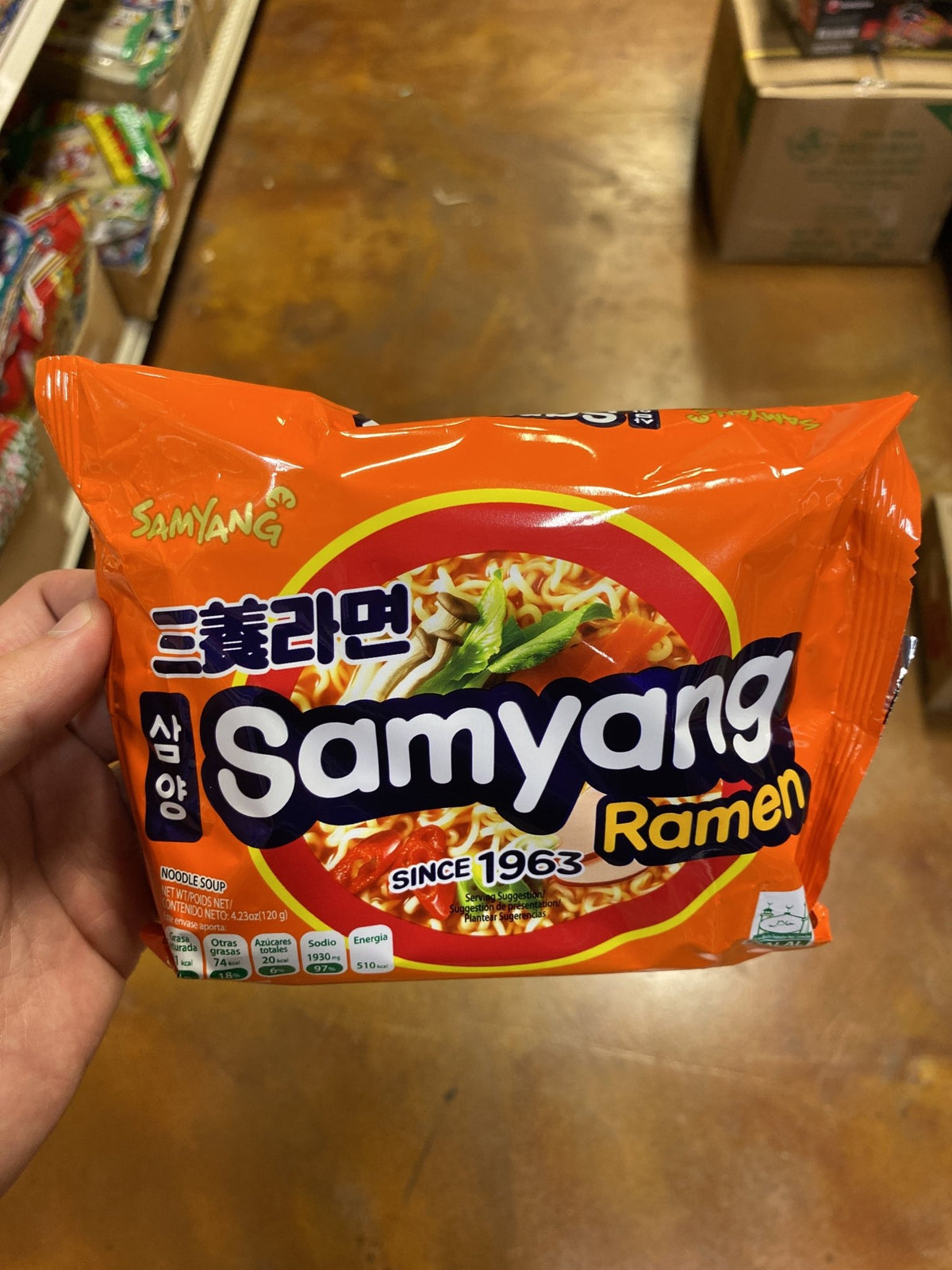
    The Buldak Summer Refresh Editions were created at the intersection of these two ideas:

    • not too heavy,

    • not too spicy,

    • still exciting,

    • still recognizably Buldak.


    What Products Received Summer Refresh Versions?

    Although Samyang did not release formal “new flavors,” they produced summer-limited versions of:

    1. Buldak Original – Summer Refresh Edition

    • lighter sauce

    • reduced oil content

    • slightly fresher chili tone

    • seasonal labeling

    2. Buldak Light – Summer Edition

    • emphasized clean flavor

    • marketed as lower-calorie, more refreshing

    3. Buldak Kimchi – Summer Cold Prep Version

    • suggested cold-prep option on packaging

    • designed for cold rinsing (bibim-style)

    4. Cup Versions of Select Flavors

    • often included cold-water cooking instructions

    • packaging updated with summer motifs (blue waves, ice graphics)

    These were not mass-distributed outside Korea, which is why they are almost unknown internationally.


    Flavor Adjustments: Subtle but Intentional

    Samyang altered several components to make summer versions more refreshing:

    1. Lighter Chili Heat

    Spice adjusted to be stimulating but not overwhelming in hot weather.

    2. Reduced Oil Content

    Less oil equals a cleaner, brighter taste.

    3. Increased Acidic or Citrusy Notes

    Some versions contained slightly more vinegar or citrus-like aromas.

    4. More Aerated Seasoning Powder

    This made the sauce feel less heavy on the palate.

    5. Modified Sweetness

    Sweetness was fine-tuned to avoid the heaviness associated with caramelized sugar notes.

    Fans described these editions as:

    • “crisper,”

    • “cleaner,”

    • “lighter but still Buldak,”

    • “summery and easy to finish.”

    https://mykoreankitchen.com/wp-content/uploads/2015/08/1.-Spicy-Cold-Kimchi-Noodles-500x500.jpg?utm_source=chatgpt.comhttps://www.maangchi.com/wp-content/uploads/2008/06/mul-naengmyeon.jpg?utm_source=chatgpt.comhttps://stellanspice.com/wp-content/uploads/2022/07/IMG_5772-2.jpg?utm_source=chatgpt.com


    bts.png

    Where to Find Us?

    Tap the link below to see our Mystery Box Monday series, Ramen or Ruin, Ramen Hot Take, and so much more! Click to see what Project Ramen is up to!


    Port_Final_Image.png

    Ramen or Ruin

    Ramen or Ruin: Bold taste tests of rare and wild instant noodles. We try them so you don’t have to—some amaze, some destroy.

    DSC00462.png

    Ramen Hot Take

    Ramen Hot Take: Bold, controversial noodle opinions—no flavor is safe. Love it or hate it, we’re stirring the pot and slurping the truth.

    DSC00399.jpg

    Ramen Overview

    Check out our videos where we give you an overview of how the ramen tastes and how to prepare it.

    Korean_BBQ_Ramen.png

    Mystery Box Monday

    Check out our videos where we take ingredients, make a recipe, and pair it with a ramen.

    bts.png

    Behind the Scenes

    Behind the Scenes: A raw look at how we pack, taste, and create Project Ramen—authentic, messy, and full of flavor, just like our noodles.

    Send Us Your Ramen Content

    Wanna be apart of Project Ramen TV? We want to see it! Tag us or click the link above to DM your unboxings, reviews, or recipes for a chance to be featured on our page.

    Ramen Content Feature Submission